
Companion Plants
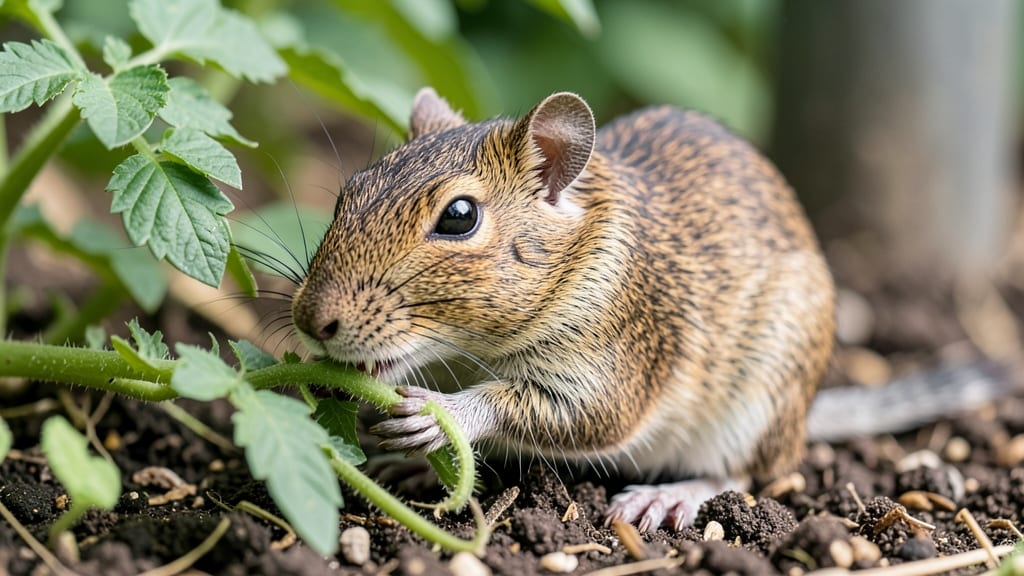
Voles eat tomato plants by chewing stems, roots, and leaves, particularly in damp soil where they thrive. Look for jagged bite marks near the plant base or surface tunnels in your garden. Organic solutions like castor oil sprays or raised planting beds offer effective protection without chemicals.
Tomato plants are especially vulnerable because voles prefer tender young stems and shallow roots, which they can easily access. 🌱 These rodents are most active during cooler months or after rain, when moisture softens the soil and makes their tunneling easier.
The damage often starts at the soil line, where you'll notice clean, jagged cuts rather than the ragged tears caused by deer or rabbits.
What makes this tricky is that voles are secretive—they avoid open areas and prefer ground cover like mulch or dense plantings. Their feeding patterns leave behind small, irregular holes in stems and telltale surface runways where they travel.
If you spot these signs near your tomato plants, you'll want to act quickly before the damage spreads to your entire garden.
💡 In This Article
- How Voles Damage Tomato Plants and Identify Their Feeding Patterns
- Effective Organic Deterrents to Protect Tomato Plants from Voles
How voles damage tomato plants and identify their feeding patterns
Voles primarily attack tomato plants by gnawing through stems at the soil line, creating clean, jagged cuts that differ from the ragged edges left by deer or rabbits.
Their teeth are designed for slicing plant material, and they target stems that are less than ½-inch in diameter, which is perfect for young tomato seedlings.
The damage often appears overnight, leaving plants suddenly wilted or toppled over. 🌱 What's particularly destructive is their habit of tunneling near roots, which disrupts nutrient and water flow, causing plants to collapse even if the stems aren't fully severed.
Their feeding patterns are heavily influenced by soil moisture—voles thrive in damp conditions because soft soil makes tunneling easier. After heavy rain or irrigation, you'll often see increased activity as they create surface runways (narrow, grassless paths) between plants.
These runways are typically 1-2 inches wide and follow garden edges or mulch lines. Another key clue is the presence of small, irregular holes in stems, often with no visible bite marks, since voles may drag plants into their burrows to eat them underground.
Seasonal behavior also plays a role: voles are most active during cooler months (spring and fall) when temperatures range between 50-70°F, and after rainfall when soil moisture peaks.
Their burrow entrances—small, hole-like openings about 2-3 inches in diameter—are often found near tomato plants, especially in areas with dense ground cover or mulch. Unlike mice, voles rarely climb, so damage will always appear at or below the soil surface, never on leaves or vines higher up.
One common misconception is that voles only eat roots, but they're actually more destructive to stems and foliage. Their chewing creates a distinctive pattern: stems are severed at a sharp angle, and leaves may show small, irregular notches along the edges.
This differs from slug damage, which leaves larger, slime-covered holes. The key to identifying vole activity is looking for these precise cuts near the base of plants, combined with the surface runways and burrow entrances. 🔍
Tomato plants are particularly vulnerable because their stems are tender and their shallow root systems make them easy targets. Voles can consume an entire young plant in just 12-24 hours, leaving behind only the root crown.
Even mature plants suffer when voles gnaw through the main stem, cutting off water and nutrient flow. The damage often goes unnoticed until plants suddenly wilt or die, making early detection crucial for prevention.
To confirm vole activity, check for these visual clues in your garden:
- Surface runways: Grassless paths 1-2 inches wide near plants
- Burrow entrances: Small holes 2-3 inches wide at soil level
- Chewed stems: Clean, jagged cuts at the soil line
- Missing plants: Entire seedlings vanished overnight