
Companion Plants
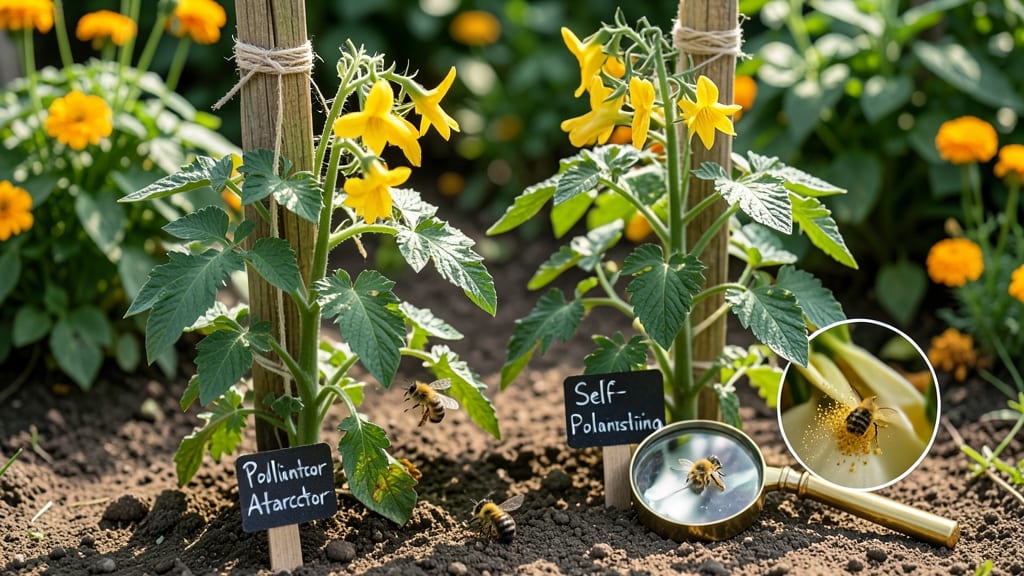
You don’t always need 2 tomato plants to pollinate—many varieties, like cherry tomatoes and self-pollinating types, produce fruit from a single plant. Wind, bees, or gentle shaking can trigger pollination, but hand-pollination may help in enclosed spaces or for determinate varieties needing cross-pollination.
Tomato pollination depends entirely on the plant type—some varieties are self-fertile, meaning their flowers contain both male and female parts, while others rely on external help like bees or wind. 🌱 For example, cherry tomatoes and Roma varieties often thrive alone, but heirloom or determinate types may need assistance to set fruit.
If you're growing in a greenhouse or small space, a gentle shake of the plant can mimic natural pollination triggers.
Understanding your tomato's needs saves space and effort. Indeterminate varieties (like 'Sungold') can produce all season with just one plant, while determinate types (like 'Celebrity') may benefit from a second plant for better fruit set.
Always check seed packets—many modern hybrids are bred for self-sufficiency, but older varieties often require cross-pollination.
💡 In This Article
- How Tomato Plant Pollination Works Naturally
- Best Tomato Varieties for Single-Plant Gardens
How tomato plant pollination works naturally
Tomato flowers are typically bisexual, meaning each bloom contains both male (stamens) and female (pistil) reproductive parts. When pollen from the stamens lands on the pistil, fertilization occurs, leading to fruit development.
This process is called self-pollination, and it happens naturally through vibrations from wind, bees, or even hummingbirds visiting the flowers. The pollen grains, which are about 0.0004 inches in diameter, are lightweight enough to be carried by even gentle breezes or the brush of an insect's legs.
The key difference lies in the plant's growth habit. Indeterminate varieties (like 'Sungold' or 'Sweet 100') produce flowers continuously throughout the season, and their individual blooms are often large enough that pollen transfer happens easily within the same plant.
In contrast, determinate varieties (like 'Roma' or 'Celebrity') grow to a fixed size and produce flowers in clusters. These clusters can sometimes benefit from cross-pollination between plants to ensure better fruit set, especially in enclosed spaces where wind and insects are limited. 🌬️
Environmental factors play a huge role in pollination success. In open gardens, bees and wind handle most of the work—studies show that a single bee can pollinate up to 50 tomato flowers per hour.
In greenhouses or small spaces, however, these natural pollinators may be absent, which is why you might see flowers drop off without setting fruit. The solution? A simple morning shake of the plant can mimic wind pollination, dislodging pollen onto the pistils.
Heirloom varieties often require more attention because they weren't bred for self-sufficiency. For example, 'Brandywine' tomatoes—known for their rich flavor—may need two plants to ensure proper cross-pollination. This is because their flowers sometimes produce pollen that's less effective at fertilizing their own pistils compared to modern hybrids.
The result? Fewer tomatoes if you rely on a single plant. Always check the variety's description to know whether it's self-pollinating or needs a partner.
Here's what's happening at the cellular level: When pollen lands on the pistil's stigma, it germinates and grows a pollen tube down through the style to the ovary. This tube takes about 24-48 hours to reach the ovules, where fertilization occurs.
The ovary then swells into a tomato, while the flower wilts and falls off. This entire process is why you sometimes see flowers on your tomato plants that don't turn into fruit—it could mean pollination failed or the plant is stressed.
Temperature also affects pollination efficiency. Tomatoes prefer daytime temperatures between 70-85°F for optimal flower development and pollen viability. Below 55°F, pollen production drops dramatically, and above 95°F, flowers may abort before setting fruit.
This is why late spring or early fall plantings often yield better results in hot climates—you avoid the peak heat stress that can interfere with pollination.