
Companion Plants
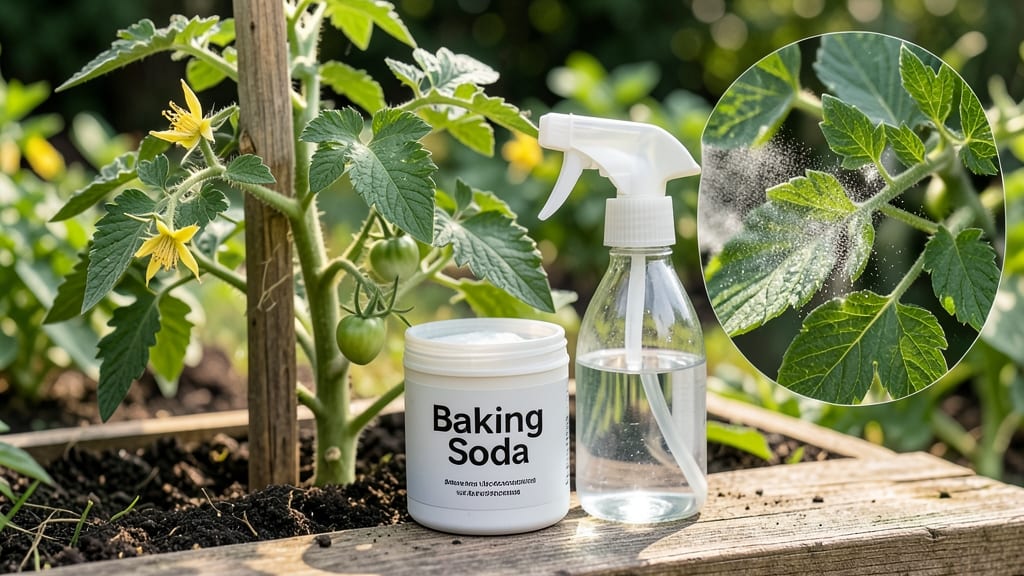
Baking soda helps tomato plants by raising soil pH and preventing blossom end rot, but overuse risks harming soil microbes and plant roots. Use sparingly—1 teaspoon per gallon of water—as a foliar spray or soil amendment, testing pH first.
Tomatoes thrive in slightly acidic to neutral soil, and baking soda acts as a natural pH balancer by neutralizing excess acidity.
When soil pH drops below 6.0, calcium uptake suffers, leading to blossom end rot—a common tomato problem. 🌱 However, baking soda's alkalinity can backfire if overused, disrupting beneficial soil bacteria that help nutrient absorption.
The key is precision: a diluted solution (like a mild foliar spray) mimics natural rainfall's pH adjustment without shocking the plant system.
For best results, test your soil's pH before applying baking soda. Most garden centers sell affordable test kits that reveal whether your soil needs adjustment.
If your tomatoes show signs of calcium deficiency—like brown, leathery spots on fruit bottoms—this simple remedy can work wonders, but always pair it with a balanced fertilizer to support overall plant health.
💡 In This Article
- How Baking Soda Adjusts Soil pH for Tomato Growth
- Safe Baking Soda Application Methods for Tomato Plants
How baking soda adjusts soil pH for tomato growth
Baking soda, or sodium bicarbonate (NaHCO₃), works as a mild alkaline agent that reacts with acidic hydrogen ions in soil to form water and carbon dioxide.
This chemical reaction effectively raises pH by reducing acidity, which is crucial for tomatoes that prefer a slightly acidic to neutral range of 6.0–6.8.
When soil pH drops below 6.0, calcium becomes less available, leading to blossom end rot—a condition where fruit develops dark, sunken lesions at the blossom end. 🌿 The key is that baking soda doesn't permanently alter soil chemistry but provides a temporary buffer, similar to how a weak base neutralizes stomach acid.
Tomatoes absorb nutrients through their roots, and calcium deficiency—triggered by low pH—disrupts cell wall formation in developing fruit. The optimal pH range ensures calcium remains soluble in soil water, allowing roots to uptake enough for strong cell structures.
Think of it like adjusting the acidity in a sauce: too much vinegar (low pH) makes flavors harsh, while just enough (balanced pH) brings out the best flavors.
Baking soda acts as that gentle vinegar neutralizer, but overdoing it can swing the pH too far toward alkalinity (7.0+), locking out other essential nutrients like iron and manganese.
Here's what happens chemically: When baking soda dissolves in water, it dissociates into sodium (Na⁺), bicarbonate (HCO₃⁻), and hydroxide (OH⁻) ions. The OH⁻ ions react with H⁺ ions in acidic soil, forming water (H₂O) and releasing CO₂. This process reduces soil acidity without introducing harmful salts if used correctly.
However, the sodium ions can accumulate over time, potentially displacing beneficial potassium in the soil—another reason why moderation is critical. 🔬 For example, a soil pH of 5.5 might need adjustment, but jumping to 7.5 could create new problems like micronutrient deficiencies.
Blossom end rot occurs because acidic conditions prevent calcium from moving into the fruit. The plant can't transport enough calcium to the growing tips, causing those characteristic dark, rotting spots. Baking soda helps by improving calcium availability, but it's not a standalone solution.
Pair it with calcium-rich amendments like crushed eggshells or gypsum for best results. The visual difference is striking: healthy tomatoes develop firm, glossy skin without blemishes, while affected ones show those telltale brown patches that spread as the fruit matures.
To visualize the impact, imagine your tomato plant's roots as a straw trying to sip from a glass. In acidic soil, the "straw" can't properly absorb the calcium "soda" because the liquid is too sour.
Baking soda acts like a pH-adjusting straw cleaner, making the liquid neutral so the plant can drink up the nutrients it needs.
However, if you over-clean (over-apply baking soda), you might clog the straw entirely, preventing all nutrient absorption. 💧 The goal is to find that sweet spot where the soil chemistry supports, rather than hinders, your plants.
Most gardeners achieve the best results by monitoring soil pH regularly. A simple test kit reveals whether your soil needs adjustment—aim for that 6.0–6.8 range. If your tomatoes show early signs of stress like yellowing leaves or stunted growth, it could signal either under- or over-correction.
The key takeaway is that baking soda is a tool, not a cure-all: use it judiciously to create the perfect growing environment for your tomato plants.