
Companion Plants
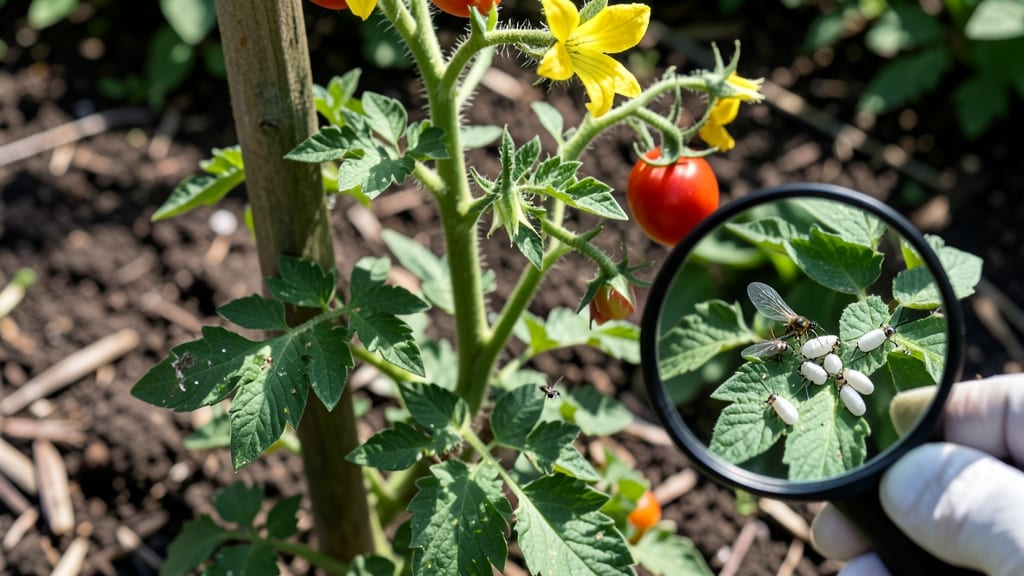
Those tiny flies buzzing around your tomato plants? 🌱 They’re not just annoying—they’re stealing your harvest. Whiteflies, fruit flies, and hornworms all target tomatoes, but chemical sprays leave residue and kill beneficial bugs.
I’ve battled them for years, and now I’m sharing the foolproof organic methods that actually work—no fancy gear needed.
The worst part? These pests multiply fast, leaving sticky residue and stunted growth. My first year, I lost half my crop to whiteflies before I learned to spot the early signs: yellowing leaves, tiny eggs on stems, or flies swarming when you shake the plant.
But the good news? Nature has solutions—companion plants like basil and marigolds, homemade sprays, and simple traps that outsmart flies without harming your garden.
By the end of this, you’ll have a disease-resistant tomato patch where flies stand no chance. We’ll cover the 3 most effective natural remedies (including one that takes just 10 minutes to make) and how to keep your plants thriving all season.
No more helplessly watching your tomatoes get eaten alive—let’s reclaim your garden the right way.
Works for all tomato varieties, from cherry to heirloom, and adapts to containers or in-ground beds. Whether you’re dealing with a sudden infestation or just want to prevent one, these methods are your new secret weapon. Ready to take back your harvest?
Root Causes Of Fly Infestations
Flies buzzing around your tomato plants aren’t just a nuisance—they’re often a sign of deeper issues in your garden’s ecosystem. Understanding why these pests target your tomatoes is the first step to stopping them naturally. Below, we break down the science behind their attraction, from environmental triggers to plant vulnerabilities.
Flies, especially fruit flies and hornworms, are drawn to tomatoes that are soft, bruised, or rotting. Here’s why:
- Sugar and fermentation: Overripe tomatoes release sugars and alcohols (from fermentation) that emit a sweet, fruity scent—a dinner bell for flies. A study in Journal of Chemical Ecology found that flies can detect these compounds from up to 3 feet away.
- Moisture buildup: Cracked or split tomatoes create pockets of moisture, which attract fungus gnats and houseflies. These flies lay eggs in damp organic matter, where larvae thrive.
- Physical damage: Wounds from hail, birds, or poor harvesting expose the tomato’s jelly-like interior, which flies mistake for a high-protein snack.
Actionable fix: Harvest tomatoes as soon as they ripen (even if not fully red) and remove any fallen or damaged fruit immediately. Companion plants like basil or marigolds can also mask these scents.
Flies thrive in cluttered, unclean environments. Your garden’s hygiene plays a huge role:
- Decaying organic matter: Leaves, weeds, and old plant debris harbor fly larvae. For example, housefly eggs hatch in 8–24 hours in moist, decaying material.
- Compost piles: While compost is great for soil, fruit flies and dung flies are drawn to the heat and moisture. If your pile is too close to tomato plants, flies will migrate.
- Animal waste: Bird droppings, slug slime, or even compost tea left near plants can attract fungus gnats, which then target tomato roots.
Actionable fix:
- Clear debris weekly, especially after rain.
- Move compost piles 10+ feet away from tomato beds.
- Use diatomaceous earth (food-grade) around the base of plants to deter larvae.
Tomatoes under stress—whether from drought, overwatering, or poor soil—become more attractive to flies. Here’s how:
- Root damage: Fungus gnats and root-knot nematodes (often carried by flies) target stressed roots. Weak plants produce volatile organic compounds (VOCs) that signal distress, luring predators.
- Waterlogged soil: Excess moisture creates anaerobic conditions, which fungus gnats prefer for egg-laying. Their larvae then feed on tomato roots, weakening the plant further.
- Nutrient deficiencies: Tomatoes lacking nitrogen or potassium produce thinner skins, making them easier for flies to penetrate and lay eggs.
Actionable fix:
- Water deeply 1–2 times per week (check soil moisture 2 inches down—it should be dry).
- Amend soil with compost or worm castings to improve drainage and nutrient uptake.
- Use beneficial nematodes (e.g., Steinernema feltiae) to target fungus gnat larvae in soil.
While some plants repel flies, others attract them away from tomatoes. If your garden lacks strategic spacing or repellent companions, flies will zero in:
- Attractive nearby plants: Crops like corn, squash, or melons can draw fruit flies and hornworms, which then spread to tomatoes.
- Lack of fly-repelling herbs: Plants like basil, mint, or thyme disrupt fly navigation with their strong scents. Without them, flies have a clear path to your tomatoes.
- Monoculture planting: Large blocks of tomatoes create a fly buffet. Flies can overwhelm a single crop, whereas interplanting disrupts their life cycle.
Actionable fix:
- Interplant tomatoes with basil, marigolds, or nasturtiums to confuse flies.
- Avoid planting tomatoes next to brassicas (e.g., cabbage) or alliums (e.g., onions), which can attract shared pests.
- Use traps with apple cider vinegar (1 cup vinegar + 1 drop dish soap in a jar) near high-risk areas.
Pro tip: 💡 Rotate crops annually to break fly life cycles. Flies often return to the same spots year after year if given the chance!
Natural Ways to Kick Flies Off Your Tomatoes
Now that you know why those pesky flies are crashing your tomato party, let’s get them out of your garden for good—without harsh chemicals! 🚫🪰 The key is a mix of prevention, manual removal, and eco-friendly deterrents.
Below, we’ll break down the best fixes for each type of fly infestation, plus long-term strategies to keep them away.
1. Trap Them Before They Multiply 🪰🍎
Fruit flies and hornworm flies are drawn to ripe or rotting fruit. Outsmart them with traps before they lay eggs in your soil.
- DIY Apple Cider Vinegar Trap 🍏✨ Fill a small jar with apple cider vinegar and a drop of dish soap. Cover with plastic wrap, poke holes, and place near tomato plants.
Flies get trapped and drown—no more egg-laying! Pro tip: Refresh the bait every 3–4 days for max effectiveness.
- Commercial Fly Traps 🏷️ Hang yellow sticky traps (like those for whiteflies) near plants. Flies are attracted to yellow and get stuck—easy cleanup!
2. Remove Infested Fruit Immediately 🍅🚫
- Pick up overripe, damaged, or fallen tomatoes and toss them in a sealed bin (not the compost!).
Flies lay eggs in decaying fruit, so eliminate their buffet. - Pro tip: Check under leaves and around the base of plants—flies love hiding spots!
3. Use Beneficial Nematodes 🐛💥
These microscopic worms attack fly larvae in the soil. Mix them with water and apply to the soil around plants. They’re safe for plants and pets but deadly to pests. Best for: Hornworm flies and other soil-dwelling larvae.
1. Blast Them Off with Water 💦🚿
Whiteflies and aphids hate a strong stream of water. On a sunny day, spray plants with water to knock them off—repeat every few days until gone.
2. Introduce Natural Predators 🐞🦋
- Ladybugs 🐞 – Release them near infested plants; they devour aphids and whiteflies.
- Lacewings 🦋 – Their larvae are voracious pest eaters.
Buy them online or attract them with dill or fennel as companion plants. - Parasitic Wasps 🐝 – Tiny but mighty! They lay eggs in whitefly pupae, killing them from within.
3. Neem Oil Spray (Gentle but Effective) 🌿💦
Mix 1 tsp neem oil + 1 tsp mild soap + 1 quart water, then spray under leaves where pests hide.
Reapply every 5–7 days until flies are gone. Pro tip: Spray in the early morning or evening to avoid harming bees.
1. Keep Your Garden Clean & Tidy 🧹🌱
- Remove weeds and debris—flies love hiding in clutter.
- Mulch properly with straw or grass clippings (avoid thick, damp mulch that attracts flies).
- Rotate crops—don’t plant tomatoes in the same spot yearly to break pest cycles.
2.
Use Companion Plants as Bodyguards 🛡️🌿 Plant these fly-repelling companions near your tomatoes: - Basil 🌿 – Mask tomato scent (which attracts flies). - Marigolds 🌼 – Their strong smell deters many pests. - Garlic & Onions 🧅 – Flies hate the sulfur smell. - Nasturtiums 🌺 – Trap aphids away from tomatoes.
3. Cover Young Plants 🛡️🍅
Use floating row covers (lightweight fabric) over seedlings to block flies entirely until plants are established.
4. Encourage Healthy Soil 🌍💪
- Compost regularly – Healthy soil = stronger plants that resist pests.
- Add diatomaceous earth (food-grade) around plant bases—it dehydrates fly larvae without harming plants.
5. Timing Is Everything ⏰🌅
- Plant tomatoes at the right time—avoid late spring/early summer when flies are most active.
- Harvest promptly—don’t let tomatoes overripe on the vine.
| Problem | Fast Solution |
|---|---|
| Fruit flies swarming | Place a red wine trap (1/4 cup red wine + dish soap in a jar). |
| Whiteflies on leaves | Wipe leaves with a soapy sponge (1 tbsp soap per gallon of water). |
| Hornworm flies in soil | Sprinkle café grounds around plants (flies dislike the smell). |
| Aphids clustering | Spray with water + a few drops of rubbing alcohol (safe and fast). |
Final Thought: Flies may be a nuisance, but with these natural, chemical-free methods, you can keep your tomato plants thriving—and your harvest fly-free! 🍅💚 The key is consistency: combine traps, predators, and prevention for the best results. Happy gardening!
Frequently asked questions
What types of flies are most harmful to tomato plants?
The most common and damaging flies include whiteflies (tiny white insects on undersides of leaves), fruit flies (attracted to rotting tomatoes), and fungus gnats (small black flies near soil). Hornworm flies also target tomato plants, laying eggs that hatch into destructive caterpillars.
How quickly can a fly infestation spread if left untreated?
Flies reproduce rapidly—whiteflies can double their population in just 10 days, while fruit flies lay eggs that hatch in 24-48 hours. Fungus gnats can turn soil infested in 2-3 weeks if conditions are right. Early action is critical to prevent total crop loss!
Can I use coffee grounds to repel flies from tomato plants?
Yes! Sprinkle used coffee grounds around plant bases—they repel fungus gnats and deter other flies with their strong scent. However, use sparingly (about 1 cup per plant every 2 weeks) as too much can acidify soil.
Will neem oil harm beneficial insects like bees?
Neem oil is safest when applied in the evening or early morning when bees aren't active. Always avoid spraying flowers directly. For maximum bee safety, use 1 tsp neem oil + 1 quart water with minimal soap (just enough to create suds).
How do I know if my tomato plants have a fly infestation?
Look for these signs: tiny white dots on leaves (whitefly eggs), sticky residue (honeydew from aphids), small black flies near soil (fungus gnats), or swarms of flies when shaking plants. Check under leaves and around stems most carefully.