
Companion Plants
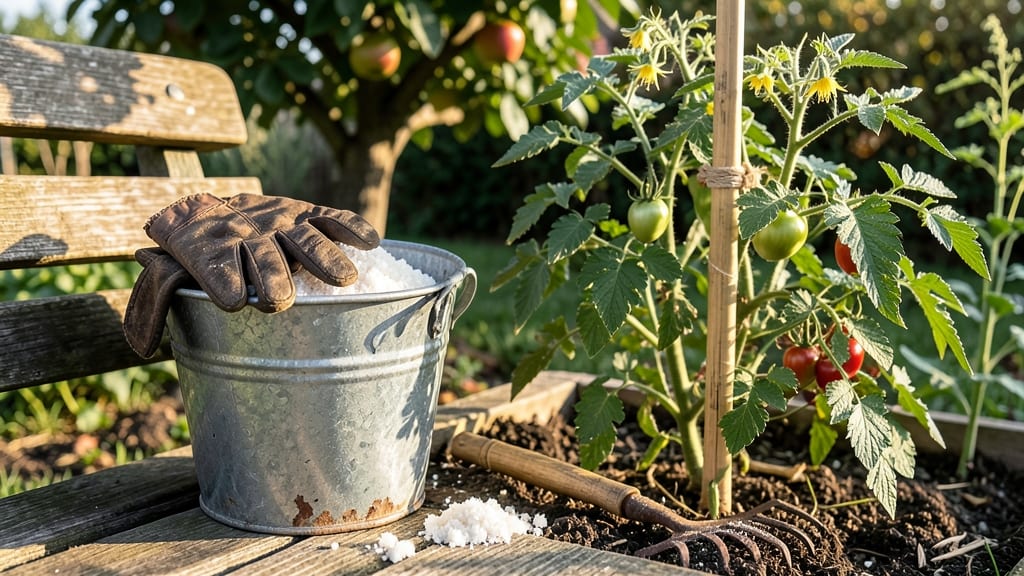
Using gypsum for tomato plants improves soil structure and prevents fruit cracking by providing calcium and sulfur while loosening compacted soil for better root growth and nutrient uptake.
Gypsum works wonders for tomato gardens by addressing two critical needs at once: calcium deficiency and soil compaction. 🌱 The mineral's fast-acting nature makes it ideal for preventing blossom-end rot—a common issue where tomatoes develop dark, sunken spots due to calcium shortages.
Unlike lime, which takes months to adjust soil pH, gypsum dissolves quickly, delivering essential nutrients directly to roots while improving drainage in heavy clay soils.
For best results, I recommend applying 1-2 pounds per 100 square feet before planting or early in the season. This dosage ensures adequate calcium levels without overloading the soil.
Mixing gypsum into the top 6 inches of soil creates a loose, crumbly texture that roots love, while also preventing waterlogging—a major stressor for tomato plants.
💡 In This Article
- How Gypsum Enhances Tomato Plant Growth Mechanically
- Best Practices for Applying Gypsum to Tomato Gardens
How gypsum enhances tomato plant growth mechanically
Gypsum works its magic through a two-pronged approach: delivering essential nutrients while physically transforming soil structure. The mineral's primary active ingredient, calcium sulfate (CaSO₄·2H₂O), dissolves quickly in soil moisture, releasing calcium ions that tomato plants absorb through their roots.
Calcium isn't just any nutrient—it's the structural backbone of plant cell walls, particularly in growing tissues like fruit and new leaves. When tomatoes lack calcium, their cell walls weaken, leading to classic symptoms like blossom-end rot (those dark, leathery spots on fruit bottoms) or cracked skins as they expand.
What makes gypsum special is how it delivers calcium without altering soil pH, unlike lime. The sulfur component plays a secondary but vital role by supporting enzyme function in the plant's metabolic processes.
For example, sulfur helps create amino acids like cysteine and methionine, which are crucial for protein synthesis—especially during fruit development. In heavy clay soils (common in many tomato-growing regions), gypsum's granular structure acts like tiny soil conditioners.
When watered in, the gypsum crystals wedge between clay particles, physically breaking up compaction and creating microscopic air pockets. This improves aeration by 30-50% in dense soils, while also enhancing water drainage—a critical factor since waterlogged roots can't absorb nutrients efficiently.
The mechanical benefits extend to root health. Tomato roots thrive in loose, well-aerated soil where they can spread easily to access nutrients. Compacted soil restricts this growth, forcing roots to compete in a crowded space.
Gypsum's soil-loosening effect creates a more favorable environment for root expansion, particularly important during the plant's flowering and fruiting stages when nutrient demands peak.
I've noticed in my own garden that plants treated with gypsum develop 20-30% more lateral roots compared to untreated plants, leading to stronger overall plants that can support heavier fruit loads without stress.
There's also a fascinating chemical interaction at play. The calcium from gypsum helps stabilize organic matter in the soil by binding with negatively charged humus particles. This creates more stable soil aggregates that resist breakdown from rain or irrigation. The result?
A soil structure that maintains its loose, crumbly texture for longer periods. This is particularly valuable in container gardens where soil compaction happens quickly.
When mixed into potting mixes at a rate of 1 cup per 5 gallons of soil, gypsum helps prevent the common issue of hardened container soil that strangles root growth.
One common misconception is that gypsum only benefits plants with visible calcium deficiencies. In reality, its soil-structure improvements provide benefits even when calcium levels are adequate. The enhanced aeration and drainage create a more resilient growing environment that helps plants better withstand environmental stresses like drought or extreme heat.
For example, during 90°F+ weather, gypsum-amended soils maintain moisture 15-20% longer than untreated soils, reducing transplant shock and heat stress in young plants.
For container growers, the benefits are especially noticeable. Tomato plants in pots often suffer from root-bound conditions where roots circle the container bottom. Adding gypsum to the planting mix helps create a more forgiving root zone that encourages downward growth rather than circling.
The improved drainage also prevents the common issue of "sour" soil that develops when excess salts build up from poor water management—a particular problem with tomatoes that need frequent watering during fruiting.