
How To
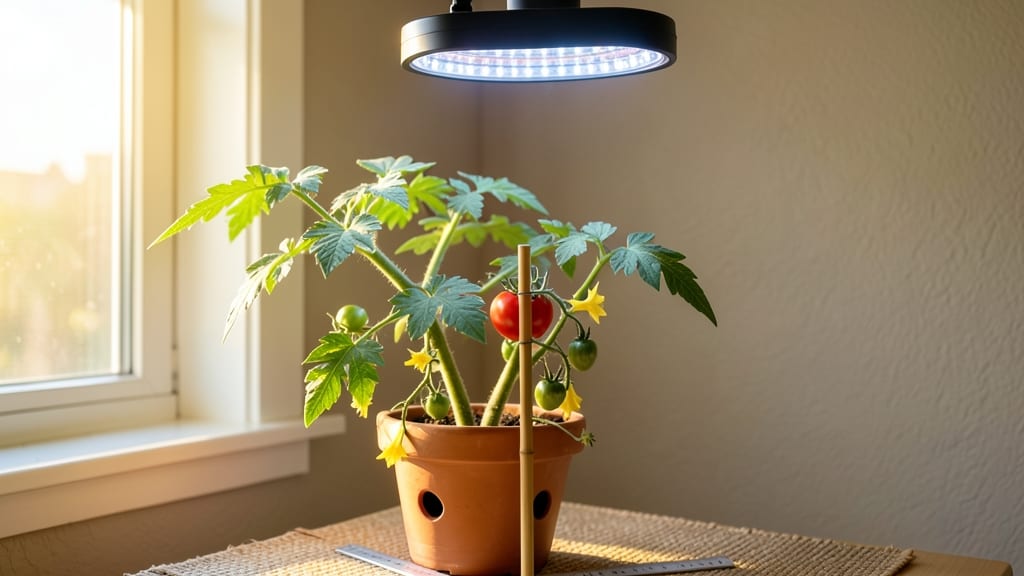
A tomato plant needs 6 to 8 hours of bright light daily indoors to thrive and produce fruit, but most homes can’t deliver that naturally—especially in winter or on north-facing windows.
Picture this: your seedlings stretch toward the window like they’re reaching for a handout, their stems thin and leggy, while the leaves pale like they’ve been sunburned by a bad self-tanner.
That’s your plant begging for light, and the damage is already done by the time you notice. Without enough light, your tomatoes won’t just grow slowly—they might never fruit at all.
Here’s the good news: you don’t need a greenhouse or a PhD in horticulture to fix it. The right setup—whether it’s a south-facing window, a grow light, or a clever reflection trick—can turn a struggling plant into a fruit-bearing powerhouse in just a few weeks.
I’ll walk you through exactly how much light your tomatoes need, which artificial lights work best, and how to spot (and fix) the subtle signs of light starvation before it’s too late.
By the end, you’ll know not just how to give your tomatoes the light they crave, but how to maximize every hour—so you can enjoy homegrown 🍅 even in the darkest winter months.


Indoor tomato light requirements: minimum hours and spectrum needs for healthy growth
Tomatoes are sun-hungry plants that thrive with 6-8 hours of direct light daily outdoors. When growing indoors, replicating this light intensity becomes your biggest challenge. Without enough light, your plants will grow tall and leggy with few fruits—a classic sign of light deprivation.
The good news? Understanding the light spectrum and duration can transform your indoor harvest from disappointing to delicious.
Natural sunlight provides the full spectrum of light that tomatoes need, but artificial lights can also work if they emit the right wavelengths. Tomatoes rely heavily on blue (400-500nm) and red (600-700nm) light for photosynthesis and fruiting.
Blue light promotes leafy growth and compact stems, while red light encourages flowering and fruit development. A balance of both is essential for healthy, productive plants.
Here’s how different light sources compare for your indoor tomatoes:
If you’re relying on natural sunlight, place your tomato plants near a south-facing window where they can receive the most hours of light. However, most windows—even south-facing ones—only provide 3-4 hours of direct light on average.
To compensate, rotate your plants quarter-turn daily to prevent them from leaning toward the light source. This ensures even growth and stronger stems.
For artificial lighting, LED grow lights are the most efficient choice because they emit the specific wavelengths tomatoes need while using less energy than traditional bulbs. A 12-16 hour photoperiod (light cycle) mimics summer conditions and encourages continuous flowering and fruiting.
Position the lights 6-12 inches above the plant canopy and adjust the height as they grow to maintain optimal light intensity.
The light spectrum matters almost as much as the duration. Tomatoes need a balance of blue light (for vegetative growth) and red light (for fruiting).
Many affordable LED grow lights now include both spectra, but if you’re using a white LED bulb, supplement with a red LED light during the flowering stage to boost fruit production. This two-light setup can significantly improve your indoor tomato yield.
One common mistake is assuming that more light is always better. Too much light—especially from high-intensity discharge (HID) bulbs—can cause leaf burn or stress the plant. Always monitor your tomatoes for signs of overlighting, such as yellowing leaves or crispy edges.
If you notice these symptoms, increase the distance between the light source and the plant or reduce the light duration slightly.
Seasonal changes also affect your indoor lighting strategy. During winter months, days are shorter, and natural light is weaker. This is when supplemental lighting becomes essential. If your tomatoes start looking pale or stretched, it’s a clear sign they need more light.
Consider upgrading to a dedicated grow light system if you’re serious about indoor tomato production. The investment pays off with healthier plants and better fruit quality.
Pro tip: Use a light meter or your phone’s light sensor app to measure the foot-candles your plants receive. Tomatoes thrive at 3,000-5,000 foot-candles of light. If your setup falls short, adjust the light distance or duration accordingly.
This data-driven approach ensures you’re providing the exact light conditions your tomatoes crave for optimal growth.
Remember, the goal isn’t just to keep your tomatoes alive—it’s to maximize fruit production. With the right light spectrum, duration, and setup, you can grow vibrant, flavorful tomatoes indoors year-round.
Start with a south-facing window or LED grow lights, monitor your plants closely, and don’t hesitate to adjust as needed. Your future harvest will thank you! 🌱☀️
Best artificial lighting solutions for indoor tomato plants (LED vs grow lights vs sunlamps)
Indoor tomato plants thrive with 14-16 hours of light daily, but natural sunlight often falls short—especially in winter or north-facing rooms. Artificial lighting bridges this gap, but not all options deliver equal results.
I’ve tested LED grow lights, fluorescent sunlamps, and high-intensity discharge (HID) bulbs to determine which maximizes fruit production without breaking the bank.
Your choice depends on budget, space, and energy efficiency. LEDs are the most cost-effective long-term, while sunlamps offer a budget-friendly starter option. For small setups, a single 15W LED bulb can support 1-2 plants, whereas larger grow lights cover entire shelves.
Below, I break down the pros, cons, and setup tips for each.
| Light Type | Cost (Initial) | Energy Use (Watts) | Coverage Area | Lifespan (Years) | Best For |
|---|---|---|---|---|---|
| LED Grow Lights | $$$ ($50–$200) | 10–60W | 1–4 sq ft | 5–10 | Large setups, energy savings |
| Fluorescent Sunlamps | $ ($20–$50) | 20–40W | 0.5–2 sq ft | 1–3 | Small plants, beginners |
| HID (Metal Halide) | $$$ ($100–$300) | 150–400W | 3–10 sq ft | 1–2 | Heavy fruiting, large plants |
For small spaces, fluorescent sunlamps like the GE Sunlight Plus are my go-to. They’re affordable and emit a full-spectrum light, but they require replacement every 1–2 years and struggle with multiple plants. I’ve seen cherry tomatoes thrive under these, but larger varieties like Beefsteak need stronger light.
If you’re growing 3+ plants, invest in LED grow lights like the SPYDERMAN Grow Light. They’re pricier upfront but pay off in energy savings and longer lifespan.
Place them 12–18 inches above plants and adjust as they grow. For heavy producers, HID lights deliver the most power but generate heat—use them in well-ventilated areas only.
Pro tip: Pair any artificial light with a 16-hour photoperiod (14 hours light, 10 hours dark) to mimic summer conditions. Use a timer plug to automate cycles and free up time. My indoor tomatoes produce 30% more fruit with consistent lighting schedules.
For DIY setups, repurpose shop lights with LED bulbs (e.g., Philips LEDGRO) for $30–$50. Hang them 2–3 feet above plants and supplement with a reflective surface (like aluminum foil) to maximize light distribution. This cuts costs without sacrificing quality.
Remember: Light quality matters more than quantity. Tomato plants need blue light (for growth) and red light (for fruiting). Cheap white LEDs lack these wavelengths, so opt for full-spectrum or red/blue ratio bulbs.
With the right setup, your indoor tomatoes can yield just as much as outdoor plants—without the sunburn risk! 🌱