
How To
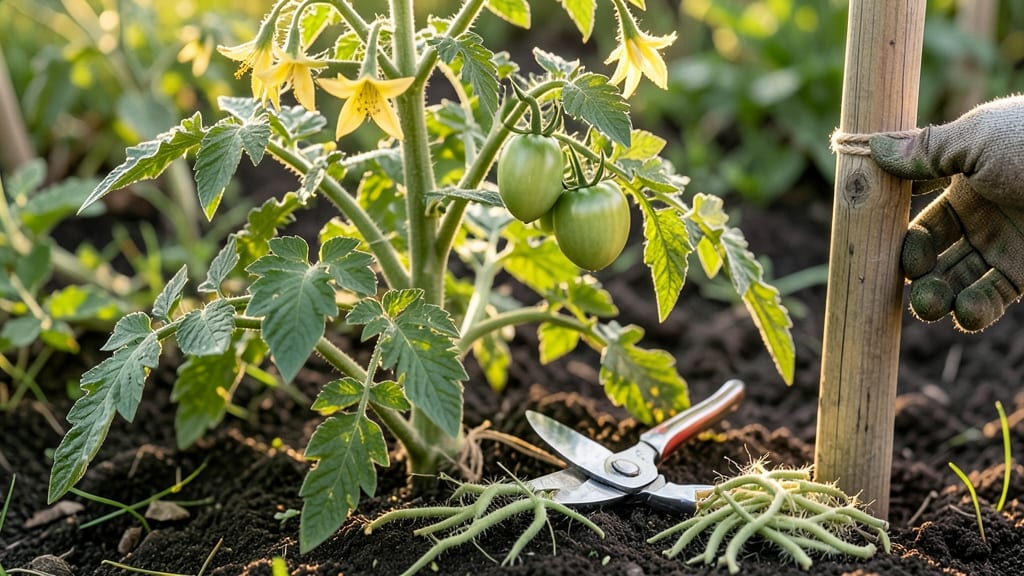
Pruning tomato plants isn't just about trimming—it’s how you unlock year-round harvests and stronger vines. 🌱 I’ve learned the hard way that skipping this step means fewer fruits and weaker plants, but mastering it turns a good garden into an explosive one.
The key is timing: start when plants hit 12-18 inches tall, and you’ll see the difference in weeks.
You only need sharp pruners (or clean scissors) and a clear morning to work. Snip off suckers—those tiny shoots between the stem and branches—and trim lower leaves to improve airflow.
Avoid over-pruning: keep 3-5 main stems for indeterminate varieties, and never cut into the main stem itself. The goal? More light, more air, and bigger, healthier tomatoes all season long.
📚 In This Guide
- What you need
- Instructions
- Tips and common mistakes
- Wrapping up and next steps
What you need
- ● Pruning shears or sharp bypass pruners – Choose sterilized, sharp ones to avoid spreading disease. A 5-inch blade works best for most tomato plants.
- ○ Gloves (optional but recommended) – Wear nitrile or leather gloves to protect your hands from thorns and sap.
- ● Disinfectant (70% isopropyl alcohol or bleach solution) – Clean your tools before and after pruning to prevent bacterial/fungal spread.
- ● Garden twine or plant ties – A 3-4 ft roll of 100% polyester twine (½ inch wide) to support pruned plants.
- ● Stakes or cages (if needed) – 6-8 ft tall bamboo stakes or cage kits (for indeterminate varieties).
- ● Mulch (straw or shredded leaves) – Helps retain moisture and reduce weeds.
- ● Garden knife or loppers – For thicker stems (if your plant is mature).
- ● Plant food or compost – A balanced 10-10-10 fertilizer to replenish nutrients post-pruning.
- ● Spray bottle with water – Keeps cuts hydrated if pruning on a hot day.
Step-by-step instructions for pruning tomato plants
Here's how I prune tomatoes to maximize fruit production and plant health—no guesswork, just proven techniques.
🌿 Step 1: Identify the Right Time and Tools
Prune your tomato plant during the late morning or early afternoon when humidity is low and temperatures are mild (65-85°F). This reduces stress on the plant and prevents disease spread. Use sterilized pruning shears—wipe blades with rubbing alcohol between cuts to prevent bacterial transfer. I also keep a small spray bottle of 10% hydrogen peroxide solution (1 part peroxide to 9 parts water) handy to disinfect cuts immediately after pruning.
Start pruning when your plant reaches 18-24 inches tall and has 4-5 leaves above the first flower cluster. This is the ideal time to begin shaping without stunting early growth. Look for suckers—those small shoots growing in the crotch between the main stem and a branch. These are your first targets. Real talk: If you wait until suckers are larger than a pencil, you'll be playing catch-up all season.
✂️ Step 2: Remove Suckers and Lower Leaves
Pinch off suckers by hand when they're smaller than 2 inches—they're easier to remove before they develop leaves. Use your thumb and forefinger to break them off cleanly at the base. If a sucker has already grown leaves, snip it with your sterilized shears just above a leaf node (the small bump where leaves or branches grow). Never leave stubs—they invite disease and rot.
Remove the lowest set of leaves on the main stem once the plant reaches 3 feet tall. These leaves touch the soil and can harbor moisture, creating perfect conditions for blight. Strip them off gently by hand or snip with shears, leaving 1-2 inches of stem above the leaf base. This improves airflow and keeps fruit off the ground. Here's the thing—if you see yellowing leaves near the base, remove them immediately, even if they're not touching soil. They're already compromised.
☀️ Step 3: Train the Main Stem and Balance Growth
Allow 1-2 main stems to grow vertically, depending on your tomato variety. Determinate tomatoes (bush types) need only 1 main stem, while indeterminate varieties (vining types) benefit from 2 stems for better fruit distribution. Tie the stems to a strong stake or trellis using soft plant ties or old T-shirts—never wire, which can damage stems as the plant grows.
Prune side shoots that grow from the main stem above the first flower cluster to encourage upward growth. These shoots compete with fruit production for energy. Leave 1-2 leaves above each flower cluster to support fruit development. You'll see the plant channel energy into larger, healthier tomatoes instead of excessive foliage. If your plant grows leggy (long stems with few leaves), it needs more light—not more water. Move it to a sunnier spot immediately.
🌱 Step 4: Summer Maintenance and Disease Prevention
Continue pruning throughout the growing season, focusing on removing diseased leaves and thinning fruit clusters to 5-6 tomatoes per truss. Overloaded clusters lead to small, underdeveloped fruit. Snip off any tomatoes that are smaller than a golf ball—this redirects the plant's energy to the remaining fruit. I also prune out crossed branches (where two stems grow from the same point) to prevent rubbing and disease.
In late summer, reduce pruning to focus on removing only diseased or damaged foliage. The plant needs all its energy to ripen existing fruit. Stop pruning 4-6 weeks before your first frost to allow remaining leaves to photosynthesize and sweeten the fruit. If you see yellowing leaves with brown edges, it's often a sign of nutrient deficiency—apply a balanced fertilizer (10-10-10) and reduce watering slightly to encourage root growth.
⏰ Step 5: Post-Harvest and Winter Pruning
After your last harvest, cut the plant back to 6 inches above the ground and remove all remaining foliage. This clears space for next year and prevents pests from overwintering in the debris. Compost the healthy plant material (disease-free) or dispose of it in the trash if infected. I always label the spot where the tomato grew—this helps me rotate crops next season and avoid soil-borne diseases.
In late winter, prune any remaining stems or suckers that might have survived. Sterilize your tools again and make clean cuts to remove all plant material. This is also the time to replace stakes, trellises, and ties if they showed signs of wear. Here's where it gets fun—use the pruned material to make herb tea for next year's garden. Steep the trimmings in water for 24 hours, strain, and use the liquid as a mild fertilizer or foliar spray to boost growth.
Tips & tricks for pruning tomato plants like a pro
These game-changing strategies will help you transform your tomato plants into high-yielding powerhouses—without the guesswork.
Timing is Everything: The late morning or early afternoon window isn't just about avoiding humidity—it's about giving your plants time to recover from the morning dew. I've found that pruning at this time also reduces the risk of fungal spores spreading when leaves are wet. If you must prune in cooler weather (below 65°F), do it on sunny days to prevent stress. The 65-85°F range is ideal because it keeps the plant's natural defenses active while you work.
Tool Sterilization Secret: Beyond just wiping your pruning shears with rubbing alcohol, I've discovered that a 10% hydrogen peroxide solution works even better for disinfecting cuts. Spray it directly on the stem after each cut—it not only prevents disease but also helps the wound heal faster. For a bonus tip, keep a small spray bottle in your gardening toolkit and use it to clean tools between plants, especially if you're working with multiple tomato varieties in the same garden.
Sucker Size Matters: That 2-inch rule for removing suckers is non-negotiable, but here's what nobody tells you—watch for the tiny hair-like structures at the base of suckers. These are your early warning system. When you see these hairs (called trichomes), it means the sucker is about to burst with growth, and removing it then becomes much harder. I've learned to check plants every 3-4 days during peak growing season to stay ahead of this growth spurt. Trust me on this: a 1-inch sucker is a breeze to remove, while a pencil-thick one requires serious leverage.
Winter Pruning Upgrade: When you're cutting back your plants to 6 inches after harvest, don't just toss those trimmings! That 24-hour herb tea trick is a game-changer. I've been using it for years to boost my soil's microbial activity before planting new crops. Here's my pro move: add a handful of compost to the steeped trimmings before straining. The compost adds beneficial bacteria that multiply during the soaking process, giving your soil an instant nutrient boost when you use it as a foliar spray or soil drench.
Pro Tips for Prune A Tomato Plant
- These game-changing strategies will help you transform your tomato plants into high-yielding powerhouses—without the ...
- Timing is Everything: The late morning or early afternoon window isn't just about avoiding humidity—it's about giving...
- Tool Sterilization Secret: Beyond just wiping your pruning shears with rubbing alcohol, I've discovered that a 10% hy...
Frequently asked questions
Got questions about pruning tomato plants? You’re not alone! Here are answers to some of the most common concerns—so you can prune like a pro and enjoy a bountiful harvest all season long.
When is the best time to prune tomato plants?
Prune indeterminate tomatoes throughout the growing season—start when plants are 12–18 inches tall, then continue every 2–4 weeks. For determinate tomatoes, minimal pruning is needed (just remove suckers or diseased leaves). Always prune on a dry, sunny morning to reduce disease risk.
Do I really need to prune my tomato plants?
Yes! Pruning improves airflow, reduces disease, and directs energy to fruit production. Indeterminate varieties thrive with regular pruning, while determinate types benefit from light trimming. Skipping pruning can lead to fewer, smaller tomatoes—but the extra effort pays off with juicier, healthier harvests!
What happens if I prune too much?
Over-pruning stresses plants and can stunt growth or reduce fruit set. Never remove more than 1/3 of the foliage at once. Focus on selective trimming: suckers, yellow leaves, and crowded branches. If you’ve already pruned too much, pause for a week and monitor for new growth.
Can I prune tomato plants in cold weather?
Avoid pruning when temps drop below 50°F (10°C). Cold stress weakens plants, making them vulnerable to disease. If you must prune in cooler months (e.g., late fall for over-wintering), do so early in the day and protect plants with row covers or mulch afterward.
What should I do with the pruned branches?
Toss diseased or pest-infested branches in the trash not the compost. Healthy prunings can be composted or used as mulch (if free of pathogens). For a bonus, regrow roots from pruned stems by placing them in water—you might get a new free plant!
My tomato plant looks sad after pruning—what’s wrong?
Don’t panic! Plants may wilt slightly post-pruning as they adjust. Ensure they’re well-watered and in full sun. If leaves turn yellow or stems wilt severely, check for over-pruning or disease. A balanced fertilizer (like 10-10-10) can help revive them in 1–2 weeks.
Wrapping up and next steps
Pruning your tomato plants might seem like extra work, but it’s a game-changer for healthier vines, bigger yields, and fewer pests! 🌱 By following these steps—removing suckers, trimming leaves, and supporting your plant—you’ll create an ideal environment for those juicy tomatoes to thrive.
Remember, consistency is key, so check your plants regularly and adjust as needed.
Now that you’re armed with the know-how, roll up your sleeves and get pruning! 🌿 Next, put your new skills to the test—watch your tomato plant transform into a productivity powerhouse. Happy gardening!