
Pruning
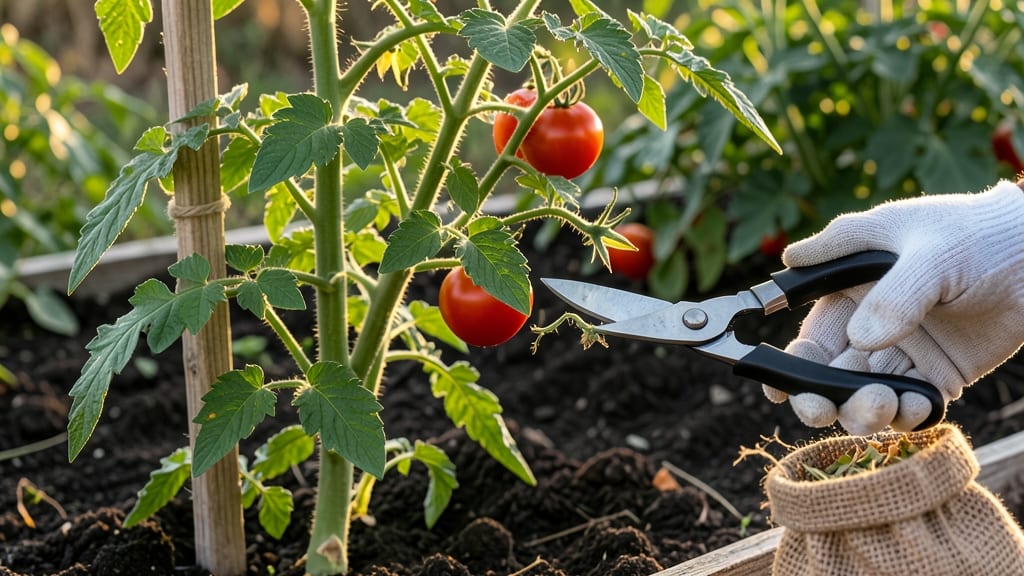
Trimming overgrown tomato plants turns chaotic vines into productive powerhouses. ✂️ I used to dread this task—until I learned the simple rules that actually boost fruit production while keeping plants healthy. The key is timing, technique, and knowing which growth to keep (and which to snip).
You’ll need just three tools: sharp pruning shears, clean gloves, and a spray bottle of diluted bleach water (1 part bleach to 9 parts water) to sterilize cuts. Start when plants are 12–18 inches tall, focusing on removing "suckers"—those tiny shoots that form in the leaf axils.
These energy vampires drain your plant instead of feeding tomatoes. Within 2–3 weeks, you’ll see thicker stems, more flowers, and fewer leaves shading fruit. Air circulation improves, reducing disease risk, and the plant directs energy where it counts—into bigger, sweeter tomatoes. The result?
A harvest that rivals (or surpasses) what you’d get from unpruned plants. This method works for indeterminate varieties (like Roma or Beefsteak) but skip it for determinate types—they fruit all at once and don’t need pruning. Let’s get those vines under control!
📚 In This Guide
- What you need
- Instructions
- Tips and common mistakes
- Wrapping up and next steps
What you need
- ● Pruning shears or bypass pruners – Opt for sharp, high-quality shears (e.g., Felco or Fiskars) to make clean cuts. Size: 6-8 inch blades for medium-sized plants.
- ● Garden gloves – Protect your hands from thorns, dirt, and blisters. Choose durable, breathable gloves (e.g., leather or reinforced fabric).
- ● Disinfectant (70% isopropyl alcohol or bleach solution) – Sterilize tools before and after use to prevent disease spread. Mix: 1 part bleach to 9 parts water (rinse tools with water afterward).
- ● Small shovel or trowel – For removing weeds or excess soil around the base of the plant. Size: 6-10 inch blade.
- ● Rake or hoe – Helps clear debris and mulch around the plant for better airflow.
- ● Compost or mulch – Quantity: 2-3 inches to replenish nutrients after pruning.
- ● Watering can or hose with a gentle spray nozzle – Keep plants hydrated before and after trimming.
- ● Hand pruners (smaller than shears) – For delicate trimming in tight spaces or small plants.
- ● Knee pad or stool – If your plants are tall or you have mobility concerns.
- ● Plant tie or soft twine – To support stems if your tomatoes need extra stability post-pruning.
- ● Garden twine or clips – For securing suckers or training vines if you’re growing indeterminate varieties.
- ● Spray bottle with water – Quickly mist cuts to reduce stress on the plant.
Step-by-Step guide to pruning overgrown tomato plants
Here's how I prune my tomato plants to boost fruit production while keeping them healthy and sturdy.
✂️ Step 1: Identify Suckers and Weak Growth
Start by examining your tomato plant for suckers—those little shoots that grow in the V-shaped junction between the main stem and a branch. These are the first things to remove. I look for them every 5-7 days during the growing season, especially after a rain or watering when new growth is most visible.
Also, remove any weak or spindly stems that aren't growing upright. These compete with your main plant for nutrients and sunlight, reducing your harvest. Use your fingers or a small pair of pruners to gently pinch off suckers—no need to cut the main stem, just the unwanted growth. This ensures the plant directs energy to fruit production instead of unnecessary foliage.
✂️ Step 2: Prune Strategically for Airflow and Light
Once you've removed suckers, focus on lower leaves that touch the soil. These are prime targets for disease, especially in humid climates. Use clean, sharp pruners to cut them off at the stem, leaving 1/4 inch of stem to prevent infection. I start about 12 inches from the base and work my way up, removing leaves until the first flower cluster.
This pruning improves air circulation and allows more sunlight to reach the fruit. You'll notice the remaining leaves turn a deeper green, and the plant's structure becomes more open. Avoid over-pruning—leave enough leaves to keep the plant photosynthesizing efficiently. A good rule is to remove no more than 20% of the foliage at one time.
✂️ Step 3: Support and Shape the Plant
After pruning, check your plant's support system. If you're using stakes or cages, gently tie the main stem to the support as it grows. I use soft plant ties or strips of old T-shirt fabric to avoid damaging the stem. This keeps the plant upright and prevents it from snapping under the weight of fruit.
For indeterminate varieties, continue pruning suckers and lower leaves as the plant grows. For determinate varieties, which grow to a fixed size, you can stop pruning once the plant starts flowering heavily. Watch for yellowing leaves or stunted growth, which can signal over-pruning or nutrient deficiency. Adjust your approach based on what you observe.
💧 Step 4: Monitor and Maintain Post-Pruning
After pruning, give your plant a deep watering to help it recover. I water at the base in the early morning to reduce stress and allow the plant to absorb moisture before the heat of the day. Avoid wetting the leaves, as this can promote fungal diseases like early blight.
Keep an eye on your plant over the next 3-5 days for any signs of stress, such as wilting or leaf drop. If you see new suckers forming, remove them promptly to maintain the shape and health of your plant. Regular pruning sessions every 1-2 weeks will keep your tomato plant productive and healthy throughout the season.
Tips & tricks for perfect tomato plant pruning
Here’s what I’ve learned after years of trial and error—these tricks will help you prune like a pro without stressing your plants.
Timing Secret: The 5-7 day inspection window in Step 1 is perfect for catching suckers early, but don’t wait until they’re large and woody. I’ve found that morning pruning (after dew has dried but before the heat peaks) gives plants a full day to recover. This reduces stress and prevents disease entry points. Also, prune after rain or watering—new growth becomes visible when foliage is turgid.
Tool Technique: Your pruners should be sharp and clean to make precise cuts that heal faster. I sterilize mine with rubbing alcohol between plants to prevent spreading fungal spores. For suckers, pinch them off with your fingers—no need for tools unless they’re stubborn. This avoids damaging the main stem and keeps pruning quick.
Pruning Strategy: When removing lower leaves in Step 2, focus on those touching the soil first—they’re the most vulnerable to rot. I work upward in 6-inch increments, stopping just below the first flower cluster. This maintains the plant’s energy balance while maximizing airflow. Pro tip: Leave a few leaves near the top to shade developing fruit from harsh afternoon sun.
Support System: The stakes or cages you use matter more than you’d think. I’ve seen plants snap under fruit weight because their ties were too tight or made of rough material. Use soft fabric strips or plastic plant ties that can stretch slightly as the stem grows. Re-tie every 7-10 days to accommodate growth without restricting circulation.
Pro Tips for Trim Overgrown Tomato Plants
- Here’s what I’ve learned after years of trial and error—these tricks will help you prune like a pro without stressing your plants.
- Timing Secret: The 5-7 day inspection window in Step 1 is perfect for catching suckers early, but don’t wait until they’re large and woody.
- Tool Technique: Your pruners should be sharp and clean to make precise cuts that heal faster.
Frequently asked questions
Got questions about trimming your overgrown tomato plants?
Here are answers to the most common concerns—so you can prune with confidence and keep those vines thriving!
When is the best time of day to prune tomato plants?
Prune in the early morning when temperatures are cool (ideally between 60–75°F). This reduces stress on the plant and minimizes disease risk from open wounds. Avoid pruning in the heat of the day—it can shock the plant and slow recovery. If you must prune later, do it in the evening after the sun goes down.
Can I prune tomato plants too much? What are the signs?
Yes! Over-pruning removes too much foliage, reducing the plant’s ability to photosynthesize and support fruit. Signs include yellowing leaves, stunted growth, or fewer blossoms. For indeterminate varieties, never remove more than 1/3 of the plant’s foliage at once. Determinate tomatoes (bush types) need minimal pruning—focus only on diseased or crowded branches.
Will trimming tomato plants reduce my harvest?
Not if done correctly! Pruning actually boosts productivity by improving airflow (reducing disease) and directing energy to fruit production. However, over-pruning can backfire—leave enough leaves to support the plant’s needs. Indeterminate varieties (like Roma or Cherry) benefit most from pruning, while determinate types (like Bush Early Girl) need little to none.
What should I do if my tomato plant looks stressed after pruning?
Stress is normal, but you can help your plant recover! Water deeply at the base (not overhead) to reduce shock, and avoid fertilizing for 1–2 weeks to let wounds heal. If leaves wilt or turn yellow, prune less aggressively next time. For severe stress, trim only small, healthy sections until the plant stabilizes.
Are there any tomato varieties that don’t need pruning?
Yes! Determinate (bush) tomatoes like ‘Celebrity,’ ‘Patio,’ or ‘Better Boy’ are designed to produce fruit all at once without needing pruning. Their compact growth habit also makes them low-maintenance and great for containers. Indeterminate varieties (like ‘Sungold’ or ‘Brandywine’) require regular pruning to maximize yield and plant health.
Wrapping up and next steps
Trimming your overgrown tomato plants is a simple yet powerful way to boost your harvest—healthier plants, more fruit, and fewer pests are all within reach! 🌱 With the right tools, timing, and technique, you’ll turn chaos into a thriving garden in no time.
Now that you’re armed with tips and answers to common questions, it’s time to roll up your sleeves and give your tomatoes the care they deserve.
Ready to see those vines flourish? Start with one plant today—prune, observe, and adjust as you go. Before you know it, you’ll be basking in the glory of a bountiful, well-maintained tomato patch! 🍅✨