
Container Gardens
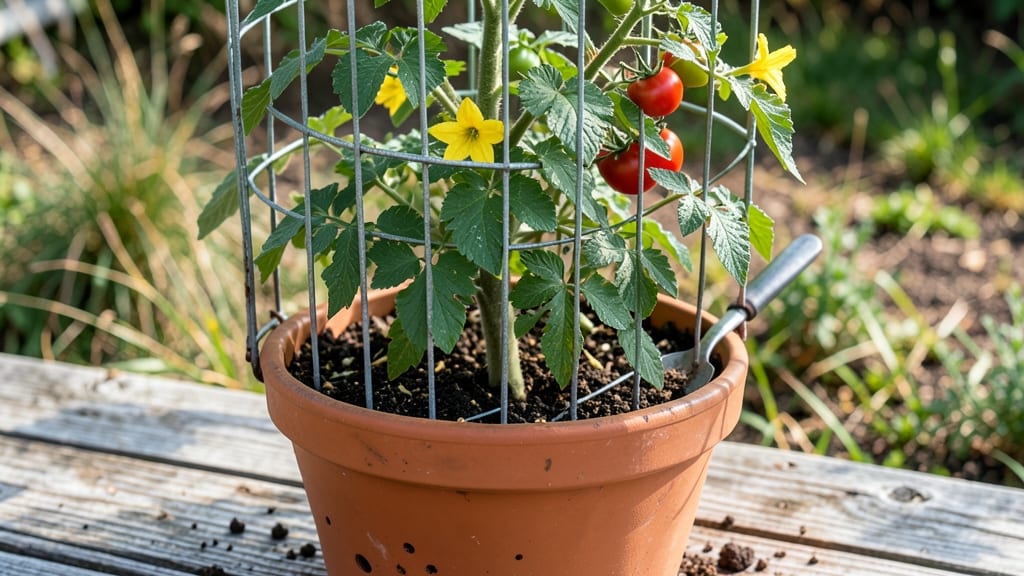
How to use a tomato cage in a container turns floppy plants into sturdy producers. 🌱 I’ve seen 20-pound tomatoes topple weak supports, but the right cage—paired with proper pruning—keeps plants upright and harvests bountiful. The secret isn’t just the cage; it’s how you position it, prune the plant, and reinforce it as the season progresses.
Start with a 5-foot-tall cage (or taller for indeterminate varieties) that fits snugly in your container—at least 12 inches deep—to prevent root circling. Bury the cage’s bottom 2-3 inches into the soil for stability, then tie the main stem to the center stake with soft plant ties.
This keeps the plant centered as it grows, preventing it from leaning or toppling when fruit swells.
Pruning is where most gardeners go wrong. Pinch off suckers (those little shoots in the leaf axils) to focus energy on the main stem and fruit.
By mid-summer, your plant will look like a single, strong stalk with heavy clusters of tomatoes—no more flopping—and the cage will barely budge. Reinforce with stakes if needed, but proper pruning does 80% of the work.
Troubleshooting is simple: if the cage leans, add a second stake at the base for support. If branches sag, prune lower leaves to reduce weight. With this setup, you’ll harvest 30-50 pounds of tomatoes from one 5-gallon container—no more sad, sprawling plants collapsing under their own fruit.
Here’s how to make it work every time.
📚 In This Guide
- What you need
- Instructions
- Tips and common mistakes
- Wrapping up and next steps
What you need
- ● Tomato cage: 1 sturdy 5- to 6-foot-tall metal or plastic cage (choose galvanized steel for extra durability or heavy-duty plastic for lightweight ease).
- ● Container: 1 5-gallon pot or larger (minimum 12–18 inches deep and 12–18 inches wide for dwarf varieties; 20+ gallons for indeterminate types). Ensure it has drainage holes!
- ● Potting mix: 1 bag of high-quality, well-draining container mix (avoid garden soil—it compacts!). Look for blends with perlite, vermiculite, or coconut coir.
- ● Tomato plant: 1 container-friendly variety (e.g., ‘Tiny Tim,’ ‘Patio,’ ‘Roma,’ or ‘Sungold’). Check your USDA hardiness zone for best timing!
- ● Support ties: 2–3 soft plant ties (fabric or Velcro) or twist ties (avoid wire—it can damage stems).
- ○ Stakes or additional support (optional but helpful): 1–2 bamboo stakes or wooden dowels (3–4 feet long) for extra stability if your cage is lightweight.
- ● Gloves: 1 pair of gardening gloves (to protect your hands from thorns and dirt).
- ● Trowel or small shovel: 1 hand trowel for planting and mixing soil.
- ● Watering can or hose with nozzle: 1 gentle watering tool (containers dry out fast!).
- ● Mulch: Straw, shredded leaves, or landscape fabric (1–2 inches thick) to retain moisture and suppress weeds.
- ● Fertilizer: Balanced liquid fertilizer (10-10-10) or slow-release granules (follow package instructions).
- ● Pruning shears: 1 small pair for trimming suckers and dead leaves.
- ○ Sunlight meter (optional): A light meter app or device to ensure your container gets 6–8 hours of sunlight daily.
Step-by-step instructions for using tomato cages in containers
Here's how to transform your container garden into a sturdy, high-yield tomato haven using cages.
🪴 Step 1: Select the Right Container and Cage
Choose a container with a minimum 18-inch diameter and 12-inch depth to accommodate a mature tomato plant's root system. The wider the base, the more stable your cage will be—especially important when fruit begins to weigh down the plant. I prefer containers with built-in saucers to catch water and prevent soil erosion around the base.
For your cage, opt for one with 16-18 inches of height and 18-24 inches of diameter at the base. These dimensions provide enough support for indeterminate varieties that can grow 6+ feet tall. Avoid flimsy wire cages—they'll bend under the weight of a single large tomato. Look for cages made from heavy-gauge galvanized steel or sturdy plastic.
🌱 Step 2: Prepare the Container and Install the Cage
Fill your container with high-quality potting mix (never garden soil—it compacts in containers) mixed with compost or worm castings for nutrients. Leave about 2-3 inches of space between the soil surface and the container rim. This gap prevents soil from spilling when you water and gives you room to add more mix later if needed.
Position the cage in the center of the container before adding your plant. Push it down firmly so it stands upright on its own—about 1/3 of the cage's height should be buried in the soil. This creates stability and prevents the cage from toppling when the plant grows. I like to add a handful of small rocks around the base to further anchor it, especially in windy locations.
☀️ Step 3: Plant Your Tomato and Secure Initial Growth
Dig a hole in the center of the container, large enough to accommodate the root ball of your tomato transplant. Place the plant so that the top of the root ball sits just below the soil surface—never bury the stem. Gently firm the soil around the roots to eliminate air pockets, then water thoroughly until water runs out the drainage holes.
As your tomato plant grows, gently weave the main stem through the cage's openings every 6-8 inches of growth. This encourages the plant to climb and prevents it from leaning or breaking under fruit weight. I use my fingers to guide the stem through the openings—no need to tie anything yet. Watch for the plant to naturally curl around the cage's wires; this is a good sign it's finding support.
💧 Step 4: Maintain Support as the Plant Matures
Once your tomato plant reaches the top of the cage, you'll need to secure the growing tip to prevent it from flopping over. Use soft plant ties or strips of old fabric to loosely bind the main stem to the cage's top wires. Avoid tight ties that can girdle the stem as it grows. I check these ties weekly to ensure they're not cutting into the plant and adjust as needed.
As fruit begins to develop, you may notice branches growing outward from the main stem. These suckers can divert energy from fruit production, but they also create additional fruiting sites. If you choose to remove them, do so early when they're small—pinch them off with your thumb and forefinger. For heavy fruit loads, consider adding a second cage or sturdy stakes tied to the first for extra support.
Tips & tricks for sturdy tomato cage support in containers
Container gardening with tomatoes gets tricky without proper support—here's how to avoid common pitfalls and maximize your harvest.
Container Stability: The 18-inch diameter isn't just a minimum—it's your best defense against tipping. I've seen cages topple when planted in containers with narrow bases, even with heavy-duty cages. For extra security, especially in windy areas, bury the bottom third of the cage deeper than the instructions suggest and add a few large river rocks around the base to weigh it down. This creates a wider, more stable foundation that won't shift when your plant reaches maturity.
Cage Material Matters: While galvanized steel is ideal, sturdy plastic cages work just fine if you reinforce them. I've had success with reinforced plastic cages that cost less but still provide excellent support. The key is to check the cage's weight rating—look for ones labeled for at least 10 pounds of fruit weight. Avoid flimsy wire cages that bend under pressure, as they'll fail when your tomatoes reach their peak weight.
Growth Monitoring: The 6-8 inch spacing for weaving the main stem through cage openings is perfect, but here's what I've learned: Watch for the plant to naturally curl around the cage wires—this is your plant telling you it's finding support. If you notice the stem growing away from the cage, gently guide it back through the nearest opening. This natural curling behavior indicates healthy growth and proper support engagement.
Fruit Load Management: When your plant reaches the top of the 16-18 inch cage and you need to secure the growing tip, use soft plant ties made from old fabric strips or even strips from an old T-shirt. These materials are gentler on the plant than commercial ties and won't cut into the stem as it grows. I check these ties weekly to ensure they're not too tight—you should be able to slide your finger between the tie and the stem.
Pro Tips for Use A Tomato Cage In A Container
- Container gardening with tomatoes gets tricky without proper support—here's how to avoid common pitfalls and maximize your harvest.
- Container Stability: The 18-inch diameter isn't just a minimum—it's your best defense against tipping.
- Cage Material Matters: While galvanized steel is ideal, sturdy plastic cages work just fine if you reinforce them.
Frequently asked questions
Got questions about using a tomato cage in containers?
You’re not alone! Here are some of the most common concerns—and their simple solutions—to help you grow like a pro.
What size tomato cage do I need for a container?
A standard 4- to 5-foot cage works for most container tomatoes (like cherry or Roma varieties). For larger varieties (e.g., beefsteak), opt for a 6-foot cage or a sturdy tomato trellis to prevent bending. Always match the cage height to your container’s depth—aim for at least 18 inches of soil for strong roots.
When is the best time to install a tomato cage in a container?
Install the cage right after transplanting seedlings (about 2–3 weeks before the last frost). This gives roots time to anchor before vines get heavy. If you’re topping (pinching the main stem), add a tie or clip to the cage every 1–2 feet to guide growth upward.
How do I protect my container tomatoes from wind or storms?
Wind can snap cages or uproot containers! Bury the cage 1–2 inches deep around the edges for stability, and weight the container with rocks or sand. For extreme winds, use soft ties (like old T-shirts) to loosely secure vines to the cage—never tighten until the fruit sets.
Can I reuse a tomato cage in a container year after year?
Yes! Clean the cage with a 10% bleach solution or soapy water to kill pests/diseases, then rinse and dry in the sun. Replace rusted or bent cages—sturdy support = happier tomatoes. Pro tip: Store cages vertically to save space!
What if my tomato plant outgrows the cage?
If vines escape the cage, prune aggressively to redirect energy to fruit-bearing branches. For stubborn sprawlers, add a second cage or bamboo stakes as a backup. Avoid overcrowding—one main stem + 2–3 side shoots per plant keeps growth manageable.
Still stumped? Drop your question below—we’ve got you covered!
Wrapping up and next steps
Using a tomato cage in a container is a game-changer for small-space gardeners! With the right setup, you’ll enjoy bountiful, healthy tomatoes without sacrificing stability or style. Whether you’re a beginner or a seasoned pro, this simple support system makes container gardening effortless and rewarding.
Now that you’re equipped with the know-how, grab your supplies and start planting! Ready for even bigger harvests? Try experimenting with pruning techniques or companion planting to maximize your container garden’s potential. Happy growing! 🌱🍅