
Diseases
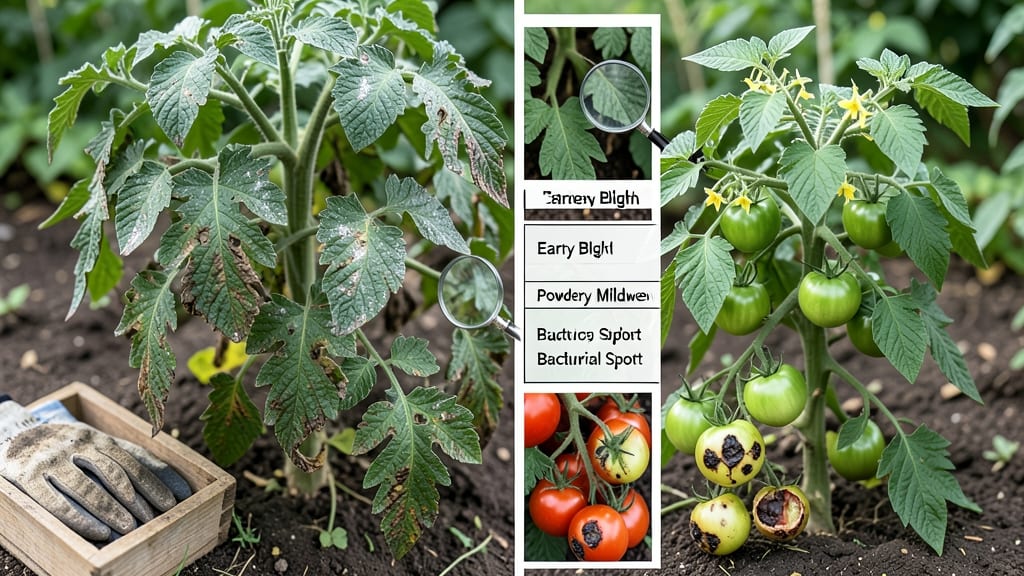
Identifying tomato plant diseases early can mean the difference between a bountiful harvest and a disappointing season. 🌱 I’ve lost entire plants to diseases I didn’t recognize until it was too late—so I’ve trained myself to spot the warning signs early, before they spread. The key is knowing what to look for: yellowing leaves, strange discoloration, or sudden wilting that isn’t from heat or drought.
Most tomato diseases start with fungal spores lurking in soil, old plant debris, or even last year’s compost. Early blight shows up as concentric rings on lower leaves, while late blight (the infamous potato blight) spreads as greasy-looking spots that turn the whole plant to mush in days.
Powdery mildew? It’s exactly what it sounds like—a white, powdery coating that chokes your plants if you ignore it.
You’ll learn to stop these diseases before they ruin your garden by rotating crops, removing infected leaves immediately, and using simple organic sprays like neem oil or baking soda mixtures. The goal isn’t just to treat symptoms—it’s to break the cycle so next season’s plants stay healthy from day one.
This isn’t about fear—it’s about confidence. With these visual cues and quick fixes, you’ll spot trouble early and save your tomatoes. Let’s get your plants thriving again, starting with the first signs of trouble.
Root Causes Of Tomato Plant Struggles
Tomato plants don’t just decide to get sick—they’re reacting to invisible enemies lurking in their environment. Understanding why these diseases strike is half the battle in stopping them. Below, we break down the real culprits behind tomato plant decline, from microscopic invaders to environmental missteps.
Tomato diseases are primarily caused by fungi, bacteria, or viruses that exploit weak spots in your plants. These pathogens thrive under specific conditions, often introduced through:
- Contaminated soil or tools – Fungal spores (like those from Phytophthora or Fusarium) can survive in soil for years, waiting for the right moment to strike. Even old garden stakes or pruners can carry bacteria like Xanthomonas.
- Infected seedlings or transplants – Buying diseased plants (or saving seeds from infected tomatoes) spreads viruses (e.g., Tomato Mosaic Virus) or fungal infections directly to your garden.
- Wind, water, or pests as hitchhikers – Fungal spores (Alternaria, Septoria) hitch rides on raindrops or splashing soil, while aphids and whiteflies spread viruses between plants.
💡 Pro Tip: Rotate crops yearly and sterilize tools with a 10% bleach solution (1 part bleach to 9 parts water) to break the pathogen cycle.
Pathogens need the right weather cocktail to take hold. Tomato diseases flourish when:
- High humidity + warm nights – Fungal spores (Late Blight, Early Blight) germinate best in 70–85°F temps with 90%+ humidity. That’s why late summer often brings outbreaks.
- Poor air circulation – Crowded plants or thick foliage trap moisture, creating a fungal sauna. Diseases like Powdery Mildew love this environment.
- Overhead watering – Wet leaves for prolonged periods give fungi (Septoria Leaf Spot) a direct entry point. Drip irrigation or early-morning watering prevents this.
⚠️ Warning: If your area gets consistent rain, prioritize resistant varieties (e.g., ‘Mountain Merit’ for blight) and space plants 18–24 inches apart.
A healthy tomato plant fights off diseases, but stress opens the door for infections. Common stress triggers include:
- Nutrient deficiencies – Lack of potassium or calcium weakens cell walls, making plants vulnerable to Blossom End Rot (fungal/bacterial entry) or Verticillium Wilt.
- Over/under-watering – Wilting or soggy roots disrupt nutrient uptake, leaving plants starved and susceptible. Fusarium and Pythium thrive in waterlogged soil.
- Physical damage – Pruning wounds, hail, or even harvesting too roughly create entry points for bacterial spot (Xanthomonas perforans).
🔥 Quick Fix: Test your soil’s pH (aim for 6.0–6.8) and amend with compost or balanced fertilizer (e.g., 5-10-10) to boost resilience.
Some pests don’t just eat your tomatoes—they spread diseases. Key culprits:
- Aphids & Whiteflies – Inject viruses (e.g., Cucumber Mosaic Virus) while feeding.
- Nematodes – Microscopic worms (Root-Knot Nematodes) damage roots, making plants 3x more likely to succumb to Fusarium.
- Slugs & Snails – Leave ragged holes that invite bacterial infections.
🎯 Prevention: Use row covers early in the season to block pests, and introduce beneficial nematodes (Steinernema species) to combat soil-dwelling enemies.
Even the best gardeners accidentally invite diseases. Avoid these pitfalls:
- Ignoring crop rotation – Planting tomatoes (or nightshades like peppers/eggplants) in the same spot yearly lets soil-borne fungi (Verticillium, Fusarium) build up.
- Skipping mulch – Without mulch, soil splashes onto leaves during watering, spreading Early Blight spores.
- Over-fertilizing with nitrogen – Too much N promotes leafy growth over fruit, weakening defenses and inviting Powdery Mildew.
✨ Expert Hack: Try straw or grass clippings as mulch—they dry faster than wood chips, reducing fungal risks.
Fixing Fungal Foes in Your Garden
Tomato plants may look tough, but fungal diseases can turn them into a sad, wilted mess—fast! 🍅😬 The good news? Most issues are fixable with the right approach.
Below, we’ll match each disease to its cure, plus prevention tips to keep your plants thriving. Think of this as your emergency first-aid kit for tomato troubles!
Signs: Yellow lower leaves with concentric brown spots (like bullseyes).
How to Fix It:
- 🍳 Prune & Toss: Remove infected leaves immediately—don’t compost them! Place them in a sealed bag to prevent spores from spreading.
- 👨🍳 Copper Fungicide Spray: Apply a copper-based fungicide (like Bordeaux mixture) every 7–10 days for 2–3 weeks. This disrupts the fungus’s lifecycle.
- 🥘 Mulch Matters: Switch to straw or black plastic mulch (not grass clippings) to reduce soil splashing onto leaves.
💡 Prevention Pro Tips:
- 🌡️ Space plants 18–24 inches apart for airflow.
- ✨ Rotate crops—don’t plant tomatoes in the same spot yearly.
- 🎯 Water at the base (not overhead) to keep leaves dry.
Signs: Dark, greasy-looking spots on leaves (and stems!) that spread rapidly in damp weather.
How to Fix It:
- 🔪 Emergency Pruning: Snip off all infected foliage (even if it’s 50% of the plant) and sterilize shears with rubbing alcohol.
- 💦 Adjust Watering: Water early in the morning so leaves dry by evening. Use a drip irrigation system to avoid wetting leaves.
- 🍄 Fungicide Blitz: Spray with a chlorothalonil or mancozeb-based fungicide every 5–7 days until the threat passes.
💡 Prevention Pro Tips:
- 🔥 Remove all tomato debris from last season (burn if possible).
- 🌱 Choose resistant varieties like ‘Mountain Merit’ or ‘Defiant PhR’.
- 🚨 Monitor weather forecasts—late blight thrives in cool, wet conditions (50–77°F).
Signs: Tiny dark spots with yellow halos on leaves, often on the lower canopy.
How to Fix It:
- 🍳 Thin the Canopy: Remove overlapping leaves to improve airflow—aim for sunlight on all sides.
- 👨🍳 Baking Soda Spray: Mix 1 tsp baking soda + 1 quart water + a drop of dish soap. Spray weekly (it’s a mild fungicide!).
- 🥘 Solarize the Soil: If the disease persists, cover the soil with clear plastic for 4–6 weeks in hot sun to kill spores.
💡 Prevention Pro Tips:
- 🌡️ Avoid overhead watering—use soaker hoses instead.
- 🎯 Crop rotation is non-negotiable—wait 3 years before replanting tomatoes in the same spot.
- ✨ Use row covers early in the season to block spores.
Signs: White, powdery coating on leaves (like flour dust).
How to Fix It:
- 🔪 Wipe It Off: Gently dust off mildew with a soft cloth or hose (avoid strong pressure).
- 🍄 Neem Oil Spray: Mix 1 tbsp neem oil + 1 tsp mild soap + 1 quart water. Spray every 7–10 days.
- 🥘 Improve Airflow: Stake or cage plants to prevent leaves from touching.
💡 Prevention Pro Tips:
- 💪 Plant resistant varieties like ‘Super Sweet 100’ or ‘Defiant PhR’.
- 🌱 Space plants properly—crowding = mildew’s best friend.
- 🎯 Reflect sunlight with white mulch or aluminum foil around the base to deter spores.
🚨 General Rescue Tips for All Fungal Fights:
- 🌡️ Heat Treatment: If possible, move pots indoors to a warm, dry spot (fungi hate heat!).
- 🔪 Sterilize Tools: Clean pruners with rubbing alcohol between cuts to avoid cross-contamination.
- 🍄 Companion Plants: Interplant with marigolds, basil, or garlic—they naturally repel fungi.
Remember: The key to beating tomato diseases is speed + prevention. Once you spot trouble, act fast, and soon your plants will be back to vining, flowering, and fruiting like champions! 🍅💪
Frequently asked questions
How do I tell the difference between early blight and late blight?
Early blight shows up as concentric brown rings on lower leaves, while late blight creates dark, greasy spots that spread rapidly to stems and fruit. Early blight progresses slowly, while late blight can destroy a plant in days—especially in cool, wet conditions. Check the undersides of leaves for yellowing halos around spots.
Can I still eat tomatoes from a diseased plant?
Only if the disease is bacterial spot or early blight and the fruit itself shows no signs. Remove all infected leaves first! With late blight or Verticillium wilt, the entire plant is compromised—toss it. Always wash tomatoes thoroughly before eating, even from healthy-looking plants.
Why does my tomato plant have yellow leaves but no spots?
This could be nutrient deficiency (lack of nitrogen or magnesium), overwatering (root rot), or viral infection (like mosaic virus). Check soil moisture and leaf undersides for pests. If it's viral, the plant is likely beyond saving—remove it immediately to prevent spread.
How often should I spray fungicide for prevention?
Start with preventative sprays every 7–10 days during humid seasons. Use copper fungicide or neem oil as needed. Stop once temperatures drop below 50°F—fungi become dormant in cooler weather. Always spray early in the morning so leaves dry completely.
What’s the best way to dispose of infected tomato plants?
Never compost diseased plants—burn them if possible, or bag them tightly and send to landfill. Fungal spores survive composting! Sterilize garden tools with rubbing alcohol or bleach solution after handling infected plants. If you must compost, bury deep or use solarization (cover with plastic for 4–6 weeks).