
Planting
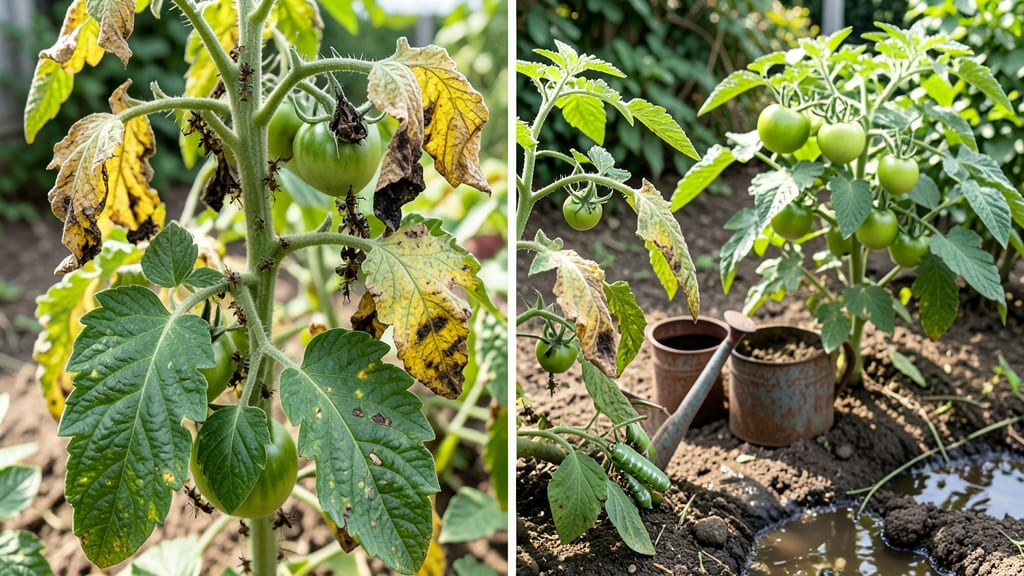
Is my tomato plant dying? There’s still hope—we can nurse it back to life. 🌱 I’ve nursed back more struggling plants than I’d like to admit, and the key is spotting the right symptoms fast.
Wilting leaves, brown spots, or stunted growth? Each points to a different fix, and I’ll walk you through exactly what to check first.
Most dying tomato plants fall into three camps: water woes (too much or too little), nutrient starvation (pale leaves or weak stems), or pest/blight attacks (spots, holes, or sticky residue).
The good news? Each has a simple solution—whether it’s adjusting your watering routine, adding compost, or spraying neem oil. No fancy tools or gardening degree required.
By the end, you’ll have a thriving plant that’s back to producing juicy, vine-ripened tomatoes in weeks. The secret is acting fast—so grab your gloves and let’s diagnose. (Yes, even black thumbs can save this plant.)
We’ll cover the top five fixes, from root rot rescue to aphid eradication, so you know exactly where to start. No guesswork, just results.
Hidden Stressors Harming Your Tomatoes
Tomato plants may look resilient, but they’re actually delicate indicators of environmental and care-related imbalances. When your plant starts wilting, yellowing, or dropping fruit prematurely, the issue is often rooted in unseen stressors—some subtle, others glaring.
Understanding these hidden culprits is the first step to saving your harvest. Below, we break down the scientific reasons why your tomato plant might be struggling, along with actionable fixes to turn things around.
Tomatoes thrive in consistent moisture, but too much water suffocates roots by cutting off oxygen. This triggers anaerobic conditions, where roots rot and can no longer absorb nutrients.
Signs include: - Yellowing lower leaves (a classic sign of root stress). - Mushy stems or blackened roots when dug up. - Foul, sulfur-like smells from the soil.
Why it happens:
- Compacted or clay-heavy soil holds excess water, preventing drainage.
- Overzealous watering (especially without checking soil moisture).
- Lack of mulch, which can cause water to evaporate unevenly, leading to root zone flooding.
Fix it:
- Test soil moisture by sticking your finger 1–2 inches deep—water only if dry.
- Amend soil with perlite, sand, or compost to improve aeration.
- Use raised beds or containers if your garden soil drains poorly.
Tomatoes are heavy feeders, and deficiencies show up as distinct symptoms. For example:
- Yellowing between leaf veins? Likely magnesium deficiency (chlorosis).
- Purple stems or undersides of leaves? A phosphorus shortage.
- Stunted growth or small leaves? Could be nitrogen deficiency or potassium issues.
Why it happens:
- Soil depletion after multiple harvests (tomatoes exhaust nutrients like nitrogen and potassium).
- Improper fertilization (e.g., too much nitrogen = lush foliage but few tomatoes).
- pH imbalances—tomatoes prefer 6.0–6.8 pH; outside this range, nutrients become unavailable.
Fix it:
- Soil test first! A simple kit reveals deficiencies.
- Use balanced fertilizer (10-10-10 or 5-10-10) at planting, then switch to low-nitrogen, high-potassium (like 0-10-10) when fruiting begins.
- Add compost or worm castings for slow-release nutrients.
Invisible invaders like aphids, spider mites, or fungal pathogens (e.g., early blight, fusarium wilt) drain energy and block nutrient uptake.
Common red flags: - Sticky residue on leaves? Aphids or whiteflies. - Holes in leaves or webbing? Spider mites or caterpillars. - Brown spots with yellow halos? Early blight (a fungal disease).
Why it happens:
- Stressed plants (from over/underwatering or poor soil) are easier targets.
- Crowded gardens reduce airflow, promoting fungal growth.
- Infected seeds or tools spread diseases like verticillium wilt.
Fix it:
- Inspect leaves daily (especially undersides) for pests.
- Spray neem oil (natural pesticide/fungicide) preventatively.
- Remove infected leaves and rotate crops annually to prevent soil-borne diseases.
Tomatoes are sensitive to temperature swings and sunburn.
Sudden changes trigger stress responses like: - Blossom end rot (black, sunken spots on fruit) from calcium deficiency (often caused by inconsistent watering). - Leaf scorch (brown edges) from high heat + low humidity. - Wilting in heat due to transpiration stress (plant loses water faster than roots can absorb it).
Why it happens:
- Inconsistent watering (e.g., deep soaking one day, drought the next).
- Late-season heat waves (tomatoes struggle above 90°F/32°C).
- Wind exposure increases water loss and physical damage.
Fix it:
- Mulch heavily to retain moisture and regulate soil temperature.
- Provide afternoon shade in extreme heat with shade cloth.
- Water deeply in the morning to reduce evaporation.
If your tomato is in a container, roots may circle the pot or get pruned during repotting, stunting growth. Signs include:
- Slow growth despite good care.
- Leaves curling inward (a sign of root restriction).
- Sudden wilting after repotting (transplant shock).
Why it happens:
- Small pots (tomatoes need 5+ gallons per plant).
- Root damage during transplanting (even if gentle).
- Poor root-to-soil contact after moving plants.
Fix it:
- Upgrade containers to at least 18–24 inches deep with drainage holes.
- Loosen roots before repotting to encourage outward growth.
- Use root stimulator (like mycorrhizal fungi) when transplanting.
Pro Tip: 💡 Keep a garden journal! Track watering, fertilizing, and weather patterns to spot patterns in your plant’s decline. Often, the solution is as simple as adjusting one variable—like switching to drip irrigation or adding calcium-rich eggshell tea.*
Revive Your Tomato Plant Now
Don’t panic—your tomato plant might just need a little TLC to bounce back! Below are practical, step-by-step solutions tailored to the most common causes of tomato plant distress. Follow the fixes for your specific issue, then use the prevention tips to keep your plant thriving all season.
If your leaves are turning yellow (especially lower ones), it’s likely a sign of:
- Overwatering (root rot risk)
- Nitrogen deficiency (common in fast-growing plants)
🔥 Step 1: Check the Soil Moisture
- Stick your finger 1-2 inches deep into the soil. If it’s soggy, you’re overwatering.
- Fix: Let the top 1-2 inches dry out between waterings. Use a well-draining pot or raised bed if needed.
🍳 Step 2: Flush the Soil (If Overwatered)
- Mix 1 part hydrogen peroxide (3%) with 4 parts water and pour it into the soil to kill fungus and aerate roots.
- OR water deeply with a fungicide solution (1 tsp baking soda + 1 quart water).
👨🍳 Step 3: Feed with Nitrogen
- Use a balanced fertilizer (10-10-10) or compost tea for a quick nitrogen boost.
- Pro Tip: 💡 Epsom salt (1 tbsp per gallon of water) can help if yellowing is severe—it provides magnesium.
🌡️ Prevention Tips
- Water early in the morning to reduce fungal growth.
- Mulch with straw or grass clippings to retain moisture without suffocating roots.
- Rotate crops next season—don’t plant tomatoes in the same spot yearly.
Wilting can mean:
- Underwatering (especially in hot weather)
- Blossom end rot (calcium deficiency from uneven watering)
🔥 Step 1: Deep Water Immediately
- Water slowly at the base (not the leaves) until it drains from the bottom.
- Fix: Use drip irrigation or soaker hoses for consistent moisture.
🥘 Step 2: Treat Blossom End Rot
- Remove affected fruit (they won’t recover).
- Add calcium with:
- Crushed eggshells (dry them, grind, and mix into soil)
- Calcium nitrate (1 tbsp per gallon of water)
- Pro Tip: 🌡️ Keep soil pH between 6.0–6.8—too acidic locks out calcium.
⏰ Prevention Tips
- Water consistently—never let soil dry out completely.
- Mulch heavily to lock in moisture.
- Use a rain gauge to track watering—tomatoes need 1–2 inches per week.
Common tomato pests:
- Aphids, hornworms, or spider mites (visible damage)
🔪 Step 1: Inspect & Remove Pests
- Handpick hornworms (they’re huge and easy to spot!).
- Spray with soapy water (1 tsp mild soap + 1 quart water) for aphids/mites.
- Neem oil spray (1 tbsp neem oil + 1 tsp soap + 1 quart water) for stubborn infestations.
🎯 Prevention Tips
- Plant basil or marigolds nearby—they repel pests naturally.
- Check leaves daily (especially undersides) for early signs.
- Use row covers if pests are severe in your area.
Common fungal issues:
- Early blight, late blight, or powdery mildew
🧴 Step 1: Prune & Remove Infected Parts
- Cut off spotted leaves with sterilized scissors (dip in rubbing alcohol).
- Dispose of infected plant debris (don’t compost it!).
🍄 Step 2: Apply Fungicide
- Copper fungicide (follow label instructions).
- Baking soda spray (1 tsp baking soda + 1 quart water + a drop of soap) for mildew.
✨ Prevention Tips
- Space plants 18–24 inches apart for airflow.
- Water at the base (avoid wetting leaves).
- Rotate crops—don’t plant tomatoes in the same spot next year.
If your plant is slow-growing or leggy:
- Weak roots (from overcrowding or poor soil)
- Lack of sunlight
🌱 Step 1: Improve Soil & Roots
- Add compost or worm castings for nutrients.
- Gently loosen roots if in a pot (if they’re circling, trim and replant).
☀️ Step 2: Ensure Proper Sunlight
- Tomatoes need 6–8 hours of direct sun daily.
- Move potted plants to a sunnier spot if indoors.
💪 Prevention Tips
- Start with high-quality potting mix (add perlite for drainage).
- Use a trellis to encourage upward growth and airflow.
With these fixes, your tomato plant should perk up in days to a week—just stay consistent with care! 🍅🌟 Which issue does your plant have? Try the matching solution and share your progress in the comments below!
Frequently asked questions
Why are my tomato plant's leaves curling inward?
Curling leaves usually signal underwatering or pest stress. Check soil moisture first—if dry, water deeply at the base. For pests like spider mites, spray leaves with soapy water or neem oil. Curling can also mean your plant needs more shade if it's getting too much afternoon sun.
Can I save a tomato plant with blackened stems?
Blackened stems often mean root rot from overwatering. If the rot hasn't spread to the main stem, trim away damaged areas with sterilized scissors, repot in fresh, well-draining soil, and reduce watering. For severe cases, propagation from healthy stems may be your only option.
What's the fastest way to fix blossom end rot?
Blossom end rot is caused by calcium deficiency. Remove affected fruit immediately, then add crushed eggshells to the soil or water with calcium nitrate (1 tbsp per gallon). Keep soil consistently moist (not soggy) and maintain pH between 6.0–6.8 for best calcium uptake.
Is it too late to revive my tomato plant if it's completely brown?
Not always! If only the leaves are brown but stems are still firm, prune back dead growth and check roots. Healthy roots mean your plant can regrow. If stems are mushy or black, the plant is likely beyond saving—but you can still save cuttings from healthy stems for propagation.
How often should I fertilize a struggling tomato plant?
Start with a balanced fertilizer (10-10-10) every 2–3 weeks at half-strength. Once flowering begins, switch to low-nitrogen, high-potassium (5-10-10) every 2 weeks. Over-fertilizing stresses plants—always water thoroughly after applying fertilizer to prevent root burn.