
Companion Plants
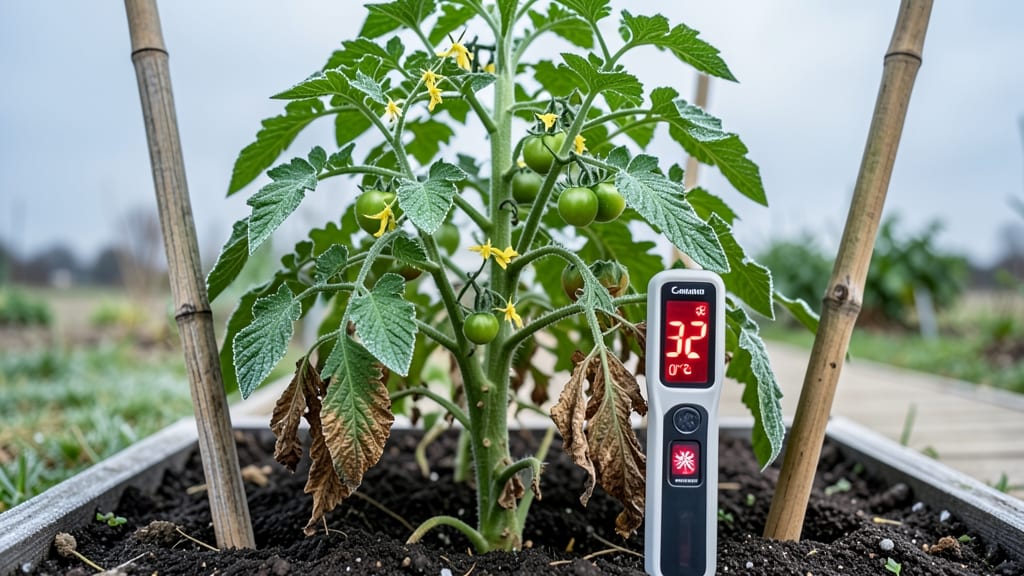
The lowest temperature tomato plants can tolerate is 32°F (0°C) for brief periods, though sustained exposure below 50°F (10°C) threatens growth, leaf damage, or death. Cold-sensitive hybrids require protection near freezing, while hardier heirloom varieties may endure light chills with proper precautions.
Tomato plants suffer most from prolonged cold rather than sudden dips. 🌱 When temperatures hover between 32°F (0°C) and 50°F (10°C), their cellular structure weakens—especially in young seedlings where roots struggle to absorb nutrients.
Mature plants can handle brief cold snaps better, but nighttime frosts are particularly damaging because they disrupt photosynthesis overnight.
The key difference lies in how quickly you can recover the plant: a single 32°F (0°C) night might cause minor leaf spotting, while repeated exposure below 50°F (10°C) leads to irreversible damage.
For gardeners in marginal climates, understanding these thresholds helps plan protective measures. Row covers and mulching create microclimates that raise soil temperatures by 2-4°F, while container-grown tomatoes benefit from moving them indoors during cold snaps.
Some varieties like 'Cherokee Purple' or 'Stupice' show better cold resistance, but no tomato thrives indefinitely in freezing conditions without intervention.
💡 In This Article
- How Cold Affects Tomato Plant Physiology
- Protecting Tomatoes from Freezing Temperatures
How cold affects tomato plant physiology
Cold temperatures trigger a cascade of cellular damage in tomato plants, starting with chilling injury when temps drop below 50°F (10°C). The plant's cell membranes, composed of phospholipids, become rigid and leaky, allowing essential nutrients like potassium and magnesium to escape.
This disruption happens most severely in young leaves and growing tips, where new cells are most vulnerable. At 32°F (0°C), ice crystals form in the extracellular spaces, physically rupturing delicate plant tissues—a process called freezing injury.
The real danger lies in how cold affects photosynthesis. Tomato leaves contain chlorophyll that functions optimally between 68-86°F (20-30°C). Below 50°F (10°C), photosynthesis slows dramatically, while respiration continues at near-normal rates, creating an energy deficit.
Nighttime cold is particularly damaging because it interrupts the plant's overnight recovery process. 🌱 Mature plants can store some energy in their stems, but seedlings have almost no reserves—exposing them to 40°F (4°C) for more than a few hours often results in permanent stunting.
Root systems suffer silently during cold snaps. Soil temperatures below 50°F (10°C) restrict root growth and nutrient uptake, while 32°F (0°C) can cause root cells to burst.
The roots' ability to absorb water and minerals drops by 50% or more when soil temps hit 45°F (7°C), leading to wilting even if the air appears dry. This is why mulching with straw or black plastic becomes critical—it maintains soil temps 5-10°F warmer than exposed ground.
Variety plays a surprising role in cold tolerance. Heirloom tomatoes like 'Stupice' or 'Black Krim' often handle brief cold snaps better than hybrid varieties because their thicker leaves and waxy cuticles provide some natural insulation.
However, no tomato can photosynthesize effectively below 45°F (7°C), making prolonged cold periods particularly dangerous. The plant's natural antifreeze proteins (like dehydrins) can only provide temporary protection—think of them as a biological hand warmers that eventually lose effectiveness.
Visual signs of cold damage appear quickly. Look for water-soaked spots on leaves (early chilling injury), brown edges (cellular dehydration), or blackened stems (freezing damage). These symptoms often appear 24-48 hours after the cold event, giving gardeners a false sense of security.
The most resilient tomatoes show only temporary wilting after cold exposure, recovering within 3-5 days of warmer weather.
What most gardeners don't realize is how humidity amplifies cold damage. Dry air at 32°F (0°C) causes leaves to lose moisture rapidly through transpiration, while high humidity creates a damp, cold environment that accelerates fungal growth.
This is why cold frames with ventilation become essential in marginal climates—they balance temperature and moisture to minimize stress.