
Watering
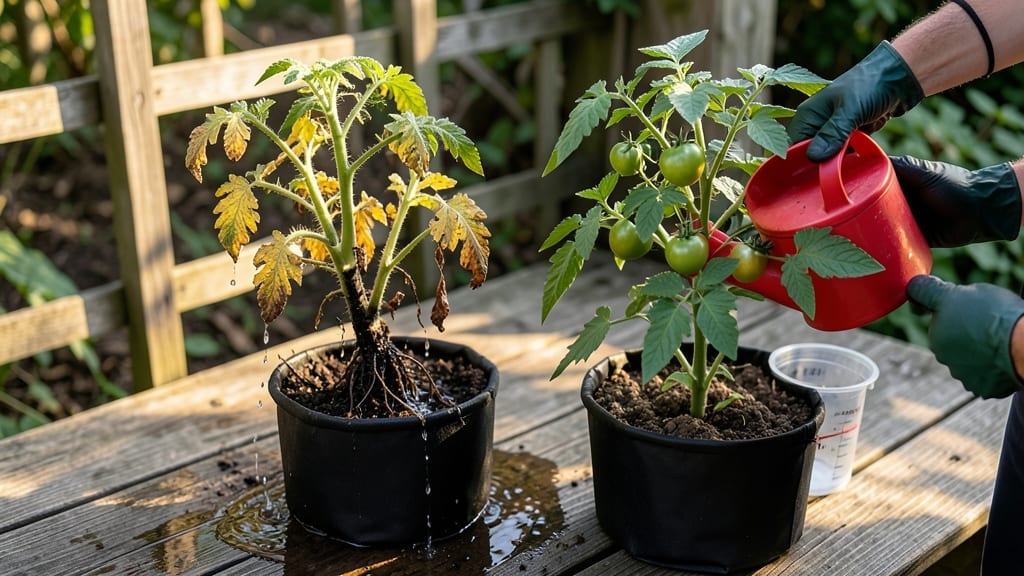
Your tomato plants are drowning in water, not thriving. 🌱 Overwatering tomato plants is the silent killer of harvests, and the damage often starts before you even notice—wilting leaves, yellowing stems, and that telltale foul smell from root rot.
The problem usually comes down to two things: soil that holds too much moisture and a watering schedule that doesn’t match your plants’ needs. Even well-draining soil can turn into a swamp if you’re watering every day or if your containers lack proper drainage holes.
The good news? Fixing it is simpler than you think—with a few adjustments, your plants can bounce back in just a few weeks.
You’ll learn to spot the early warning signs (like leaves curling or stems feeling mushy) and how to adjust your watering routine to match your climate.
By the end, you’ll have a foolproof system that keeps roots happy, prevents future rot, and ensures your tomatoes grow strong enough to support those heavy vines.
Whether you’re dealing with a raised bed, pots, or in-ground plants, these fixes work for any setup. The key is balancing moisture, airflow, and consistency—no more guesswork, just healthy plants and a harvest you can be proud of.
Why Too Much Water Ruins Tomatoes
Overwatering tomato plants may seem counterintuitive—after all, they’re plants, right? But too much water can be just as deadly as too little. Let’s break down the science behind why soggy soil sabotages your harvest.
💡 The Fix: Test your soil’s drainage—dig a hole, fill it with water, and time how long it takes to drain. If it’s still wet after 2 hours, your soil is compacted or lacks organic matter.
Tomatoes thrive in well-draining soil, but heavy clay, sand, or poorly amended garden beds hold excess moisture like a sponge. When water pools around roots, oxygen gets squeezed out, suffocating them. Without oxygen, roots can’t absorb nutrients or fight off diseases like root rot (Phytophthora or Pythium).
Even worse? Waterlogged soil creates anaerobic conditions, where harmful bacteria thrive and release toxic compounds like ethylene, which stunts growth.
Actionable Tip: Mix in compost, perlite, or coconut coir to loosen soil. For containers, use a 50/50 blend of potting mix and perlite to prevent compaction.
🌱 The Fix: Water deeply but infrequently—aim for 1–1.5 inches per week, including rain.
Tomato roots are delicate and need a balance of moisture and air. Frequent shallow watering (like daily sprinkles) encourages roots to stay near the surface, where they’re more prone to drying out or drowning.
Deep, infrequent watering (every 3–4 days in hot weather) forces roots to grow downward, accessing moisture and nutrients while avoiding waterlogged zones.
Pro Tip: Use a moisture meter to check soil depth—roots should be in the top 6–12 inches, not sitting in a swamp.
🍄 The Fix: Water at the base, not overhead, and prune foliage for airflow.
Tomatoes aren’t just drowning in soil—they’re also at risk from leaf fungi like early blight (Alternaria) and late blight (Phytophthora). Wet leaves create the perfect breeding ground for spores, which spread like wildfire in humid conditions. Overwatering keeps foliage damp longer, accelerating infection.
Science Alert: Fungal spores thrive in temperatures above 75°F (24°C) with high humidity—common in summer gardens. A single infected leaf can reduce yields by 30–50% if left unchecked.
Action Steps:
- Water early in the morning so leaves dry by afternoon.
- Use a soaker hose or drip irrigation to bypass leaves entirely.
- Prune lower leaves (up to 12 inches from the ground) to improve airflow.
📉 The Fix: Flush soil with plain water every 4–6 weeks to reset nutrient balance.
Excess water wasn’thes just oxygen—it also leaches away essential nutrients like nitrogen, phosphorus, and potassium. When soil stays soggy, beneficial microbes that break down nutrients suffocate, and your tomatoes can’t access what they need. Symptoms? Yellowing leaves (chlorosis), stunted growth, or blossom end rot (even with calcium!).
Nutrient Rescue:
- Test soil with a DIY kit (or send to a lab) to check pH and nutrient levels.
- Add a balanced fertilizer (10-10-10) after soil dries out.
- For containers, use slow-release granules to prevent runoff.
🐜 The Fix: Inspect plants weekly for early signs of stress or pests.
Stressed tomatoes are like open invitations to pests. Overwatering weakens the plant’s defenses, making it easier for aphids, whiteflies, or spider mites to move in. These pests sap nutrients and spread viruses like tomato mosaic virus, which can devastate your crop.
Early Warning Signs:
- Sticky residue on leaves (aphids).
- Silvery webbing (spider mites).
- Holes in leaves (caterpillars or beetles).
Prevention: Spray leaves with neem oil or introduce beneficial insects like ladybugs.
Fixing Overwatered Tomato Plants
Overwatering can turn your thriving tomato plants into a sad, soggy mess—but don’t worry, it’s not too late to save them! The key is to act fast, adjust your watering habits, and give your plants the right conditions to recover.
Below, we’ll break down practical fixes for the most common signs of overwatering, along with prevention tips to keep your tomatoes happy and productive.
If your tomato leaves are turning yellow (especially the lower ones), it’s often a sign of root rot or poor drainage. Here’s how to fix it:
- Stop Watering Immediately 🚰
- Let the soil dry out completely before watering again. Stick your finger 2 inches deep—if it’s damp, wait.
- Improve Drainage Fast 🏗️ - For potted tomatoes: Move the plant to a container with drainage holes. If none exist, drill them yourself! - For in-ground plants: Amend the soil with compost, perlite, or coarse sand to loosen it up.
A 2-inch layer of mulch (like straw) can also help.
- Repot if Necessary 🪴
- If the roots are mushy or black (signs of rot), gently remove the plant, trim the damaged roots with sterilized scissors, and repot in fresh, well-draining soil.
💡 Pro Tip: Water deeply once a week (or every 5–7 days) rather than daily shallow waterings. Early morning is best—avoid evening water to prevent fungal growth.
If your tomatoes look limp or sad, they might be drowning in water. Try this:
- Test the Soil Moisture 🧪
- Grab a handful of soil. If it clumps tightly or smells sour, it’s too wet. Let it dry out for 2–3 days before watering again.
- Aerate Compacted Soil 🪓
- Use a garden fork to loosen the top 6 inches of soil around the plant. This helps roots breathe and water drain.
- Prune Damaged Foliage ✂️
- Remove yellow, brown, or mushy leaves to redirect energy to healthy growth. Snip at the base with clean shears.
✨ Prevention Hack: If your garden soil stays soggy, consider raised beds or containers for better control over moisture.
Overwatering invites blight, mold, or mildew. Here’s how to combat it:
- Space Plants for Airflow 🌬️
- Thin out crowded foliage so air circulates. Aim for 18–24 inches between plants.
- Apply Fungicide 🛡️
- Use copper-based fungicide or a baking soda spray (1 tsp baking soda + 1 quart water + a drop of dish soap) to prevent spread.
- Water at the Base Only 💦
- Avoid wetting leaves—use a soaker hose or drip irrigation to deliver water directly to the roots.
🔥 Emergency Fix: If you see black spots or white fuzz, remove infected leaves immediately and sterilize your tools with rubbing alcohol.
Too much water can cool the soil too fast, shocking the roots—especially in hot climates.
- Water in Stages ⏳
- Give short bursts of water every 30 minutes (instead of one long soak) to let the soil absorb gradually.
- Use Mulch to Regulate Temp 🌡️
- Spread straw or wood chips around the base to keep roots cool and moisture even.
- Monitor Weather ☀️
- On extreme heat days, water early in the morning to reduce evaporation.
🎯 Golden Rule: Tomatoes need 1–2 inches of water per week—adjust based on rain and heat!
To keep your tomatoes thriving and drought-smart, follow these habits:
- Check soil before watering (stick your finger in—if it’s dry 2 inches down, it’s time).
- Water deeply but infrequently (better to soak once than sip daily).
- Upgrade your pots (ensure they have drainage holes and are the right size).
- Rotate crops (don’t plant tomatoes in the same spot yearly to avoid soil fatigue).
- Invest in a moisture meter (saves guesswork and overwatering).
Final Thought: Overwatering is a fixable problem—your tomatoes can bounce back with the right care! Start with drainage fixes, adjust your routine, and soon you’ll be harvesting juicy, vine-ripened tomatoes like a pro. 🍅💦
Frequently asked questions
How do I know if my tomato plants are overwatered vs. underwatered?
Check the soil and leaves: Overwatered plants have yellowing lower leaves, mushy stems, and soil that smells sour or stays clumpy. Underwatered plants show crispy brown edges on leaves and dry, pulling soil. Stick your finger 2 inches deep—if it's damp, you're overwatering; if dry, it's thirsty.
Can I save a tomato plant with root rot from overwatering?
Yes, but act fast! Remove the plant, trim black/mushy roots with sterilized scissors, and repot in fresh, well-draining soil. Stop watering for 3–4 days to let roots recover. For containers, ensure they have drainage holes and use a 50/50 mix of potting soil and perlite.
Why do my tomato leaves turn yellow when I water them regularly?
Yellow leaves often signal root rot or nutrient leaching from overwatering. Test soil drainage (should drain within 1–2 hours) and adjust your schedule to 1–1.5 inches per week. Add compost to improve soil structure and use a moisture meter to avoid guesswork.
Is it better to water tomato plants in the morning or evening?
Morning is ideal—water between 6–10 AM so leaves dry by afternoon, reducing fungal risks. Avoid evening watering, as damp foliage overnight creates perfect conditions for blight. Use a soaker hose to deliver water directly to roots and skip the leaves entirely.
How often should I water potted tomatoes vs. in-ground plants?
Potted tomatoes dry out faster—water when the top 1–2 inches of soil feel dry (often every 2–3 days). In-ground plants need 1–1.5 inches weekly, adjusting for rain. Containers also need drainage holes—without them, roots suffocate from excess moisture.