
Watering
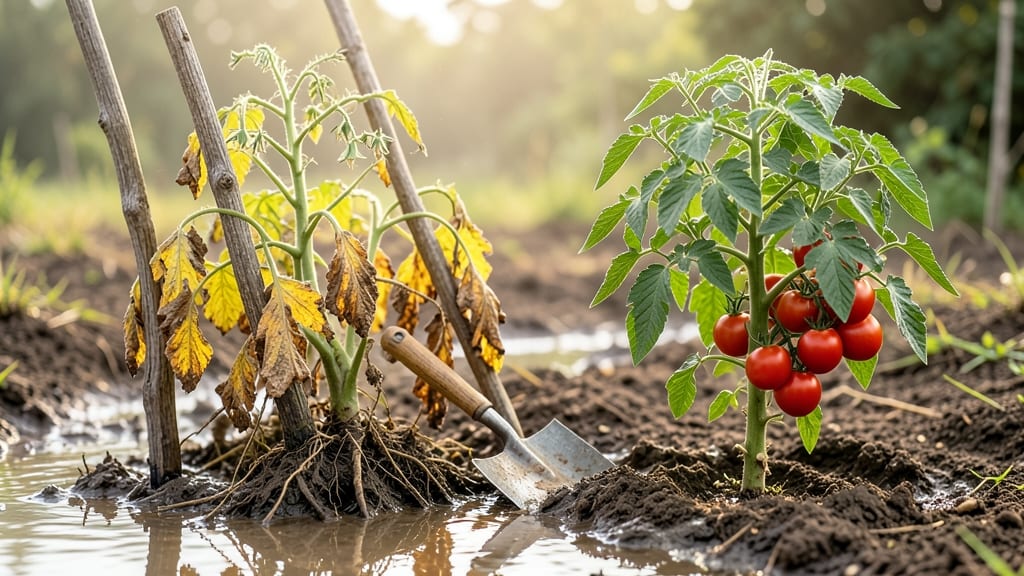
Those pictures of overwatered tomato plants—sad, droopy versions of their usual selves—yellowing leaves, wilting vines, and that musty smell—are more common than you think. 🌱 Overwatered tomato plants are more common than you think, but the good news is they can bounce back with the right moves.
I’ve nursed enough soggy vines back to health to know exactly what works.
The problem starts when roots drown, cutting off oxygen and inviting fungal growth like blight or root rot. Too much water also leaches nutrients, leaving plants starving even when the soil feels damp. The fix isn’t just cutting back on water—it’s about improving drainage and giving roots room to breathe.
Within 3-5 days of adjusting your watering, you’ll see new green leaves pushing through. Focus on watering deeply but infrequently—aim for 1-1.5 inches per week—and amend heavy soil with compost to help it dry faster. Mulch helps too, keeping moisture where it belongs.
Prevention is easier than recovery: stick your finger in the soil before watering—if it’s still damp 2 inches down, wait another day. Your tomatoes will thank you with juicy, vine-ripping fruit by summer’s end.
Root Causes of Overwatering
Overwatered tomato plants may look sad or even drown, but the problem often stems from a few key factors. Understanding these causes helps you avoid common mistakes and keep your plants thriving. Let’s break down the science behind why too much water can harm your tomatoes.
💧 The Problem: Tomato plants thrive in well-draining soil, but when waterlogged, their roots suffocate. Oxygen is critical for root respiration—without it, roots can’t absorb nutrients or grow properly. Overwatering also creates anaerobic conditions, where harmful bacteria and fungi thrive, leading to root rot.
Why It Happens:
- Poor Drainage: Compacted or clay-heavy soil holds water like a sponge, preventing excess moisture from escaping.
- Frequent Watering: Watering daily (or more) without checking soil moisture can drown roots, especially in containers or raised beds where drainage is limited.
- Lack of Mulch: Without mulch, soil stays soggy longer, increasing evaporation but also trapping moisture near the roots.
Actionable Fix: Test soil moisture by sticking your finger 1-2 inches deep—if it’s damp, wait before watering. Amend heavy soil with compost or perlite to improve drainage.
🌊 The Problem: Tomato plants prefer deep, infrequent watering over shallow, frequent sessions. When you water lightly but often, roots stay near the surface, making them vulnerable to moisture fluctuations. This inconsistency stresses the plant, leading to wilting or overwatering symptoms.
Why It Happens:
- Surface-Level Watering: Light sprinkles or short hoses sessions only wet the top inch of soil, encouraging shallow root growth.
- Automatic Irrigation Mistakes: Timers or drip systems set too frequently can deliver more water than the plant needs, especially in humid climates.
- Weather Ignorance: Rainy days followed by dry spells confuse plants, making them crave water at the wrong times.
Actionable Fix: Water deeply (1-2 inches per session) at the base of the plant in the morning. Use a moisture meter or the "squeeze test" (grab a handful of soil—if it crumbles, it’s dry; if it sticks, it’s too wet).
🏺 The Problem: Containers and raised beds can trap water if they lack drainage holes or are overfilled with water-retentive soil. Without escape routes, excess water pools at the bottom, suffocating roots.
Why It Happens:
- No Drainage Holes: Pots without holes act like bowls, holding water indefinitely.
- Overpotting: Using containers too large for the plant’s size means excess soil stays damp longer.
- Wrong Soil Mix: Potting mixes with high peat or coconut coir retain moisture for days, choking roots if not balanced with perlite or vermiculite.
Actionable Fix: Ensure containers have drainage holes and use a mix designed for tomatoes (e.g., 60% potting soil, 30% perlite, 10% compost). Elevate pots on saucers to catch runoff.
🌡️ The Problem: Humidity, temperature, and airflow play huge roles in how quickly soil dries. High humidity slows evaporation, while cold or windy conditions can trick you into overwatering.
Why It Happens:
- High Humidity: In tropical or rainy climates, soil stays damp longer, increasing rot risk.
- Cold Soil: Chilly temperatures reduce root activity, making plants less efficient at using water.
- Wind or Shade: Plants in sheltered spots transpire less, so they don’t "drink" as much, leading to overwatering mistakes.
Actionable Fix: Adjust watering based on weather—reduce frequency in humidity and increase airflow with pruning or spacing. Use a thermometer to monitor soil temp (ideal: 60–75°F).
🌱 The Problem: Too much nitrogen or soluble fertilizer can burn roots and disrupt water absorption. Fertilizer salts accumulate in soil, drawing moisture out of root cells via osmosis, causing dehydration-like symptoms.
Why It Happens:
- Over-Fertilizing: Following package instructions too literally (especially with synthetic fertilizers) can overload soil.
- Wrong Fertilizer Type: High-nitrogen feeds (like lawn fertilizers) encourage leafy growth but weaken roots’ water regulation.
- Lack of Flushing: After fertilizing, not rinsing the root zone can leave excess salts behind.
Actionable Fix: Use balanced fertilizers (e.g., 5-5-5 or 10-10-10) and flush soil monthly with plain water. Test soil pH (ideal: 6.0–6.8) to ensure nutrients are available.
Key Takeaway: Overwatering is rarely just about "too much water"—it’s about how, when, and where you water. By addressing drainage, consistency, and environmental conditions, you’ll give your tomato plants the perfect balance to flourish. 🍅✨
Reviving Your Tomato Plants Fast
Overwatering can turn your thriving tomato plants into sad, droopy messes—but don’t panic! With the right steps, you can nurse them back to health and even prevent future soggy soil disasters.
Below, we’ll break down practical fixes for the most common signs of overwatering, paired with prevention tips to keep your plants happy and productive.
Cause: Too much water suffocates roots, cutting off oxygen and nutrients. Fix:
- Stop Watering Immediately 🚰 – Let the soil dry out for 1–2 days. Check moisture by sticking your finger 1–2 inches deep; if damp, wait longer.
- Loosen the Soil 🪴 – Gently aerate the root zone with a fork or trowel to improve drainage. Avoid compacting it further!
- Add Organic Matter 🌱 – Mix in compost or aged manure to help soil absorb excess moisture and improve structure.
- Raise Plant Beds (If Possible) 🏗️ – If growing in containers or raised beds, ensure they have drainage holes. For in-ground plants, consider mounding soil to lift roots slightly.
💡 Prevention Tip: Water deeply 2–3 times per week (early morning) instead of daily shallow sprinkles. Use a moisture meter to monitor soil health.
Cause: Overwatering + poor air circulation = root rot or fungal issues. Fix:
- Trim Damaged Foliage ✂️ – Snip off yellow or blackened leaves to redirect energy to healthy growth.
- Improve Airflow 🌬️ – Space plants 18–24 inches apart and prune suckers to encourage airflow.
- Apply Fungicide (If Needed) 🛡️ – Use a copper-based or neem oil spray to prevent fungal growth on soggy leaves.
- Adjust Watering Schedule ⏰ – Switch to drip irrigation (instead of overhead watering) to keep foliage dry and roots hydrated.
✨ Pro Tip: If roots are mushy and black, repot the plant in fresh, dry soil and trim affected roots with sterilized scissors.
Cause: Overwatering leaches nutrients, starving plants of essential minerals. Fix:
- Fertilize Lightly 🌿 – Use a balanced fertilizer (10-10-10) or compost tea to replenish nutrients. Avoid heavy doses—too much can burn roots!
- Flush the Soil 💦 – Run clean water through the soil for 10–15 minutes to remove excess salts from fertilizers.
- Support with Calcium 🥛 – Sprinkle crushed eggshells or use a calcium supplement to prevent blossom end rot (a common overwatering side effect).
🎯 Prevention Tip: Water at the base of the plant (not leaves) to reduce nutrient runoff and evaporation.
Cause: Chronic overwatering leads to anaerobic roots that rot. Fix:
- Remove the Plant Gently 🌱 – Shake off old soil to inspect roots. Healthy roots are firm and white; rotten roots are brown/mushy.
- Trim Rotten Roots ⚰️ – Cut away blackened or slimy roots with clean pruners.
- Repot in Fresh Soil 🏺 – Use a well-draining potting mix (add perlite or sand if needed) and a pot with drainage holes.
- Hold Off on Watering ⏳ – Let the plant acclimate for 3–5 days before resuming light watering.
🔥 Warning: If >50% of roots are rotten, the plant may not recover. Start fresh with a new transplant!
Final Thought: Overwatering is fixable—act quickly to save your tomatoes! Monitor soil moisture, improve drainage, and adjust your watering habits. Soon, your plants will be back to producing juicy, vine-ripened tomatoes in no time. 🍅💚
Frequently asked questions
How do I tell if my tomato plant is overwatered vs. underwatered?
Check the soil first: stick your finger 1-2 inches deep. If it's damp but the leaves are yellowing or wilting, it's likely overwatered. Underwatered plants have dry, crispy soil and brown leaf edges. Another clue: overwatered plants often smell musty, while underwatered ones feel light and dry.
Can I save a tomato plant with root rot from overwatering?
Maybe! First, stop watering immediately and remove the plant to check roots. Trim away any black, mushy roots with clean scissors. Repot in fresh, well-draining soil with perlite or compost added. If more than 50% of roots are rotten, the plant may not recover—start fresh with a new transplant.
Why do my tomato leaves turn yellow after watering?
Yellowing leaves often signal overwatering, especially if the soil stays soggy for days. Roots need oxygen—too much water blocks it, causing stress. Check for other signs like wilting or black stems. Improve drainage by adding compost or sand to heavy soil and water only when the top 1-2 inches are dry.
How often should I water tomato plants to avoid overwatering?
Tomatoes prefer deep but infrequent watering: aim for 1-1.5 inches per week, delivered in 2-3 sessions (morning is best). Use the "squeeze test"—grab a handful of soil: if it crumbles, it's dry; if it sticks, wait. Mulch helps retain moisture without drowning roots.
What’s the fastest way to dry out soggy tomato soil?
Stop watering and loosen the soil with a fork to help air circulate. Move potted plants to a shady, breezy spot to speed evaporation. For in-ground plants, mound soil around the base to lift roots slightly. If possible, add dry compost or perlite to absorb excess moisture. Check soil moisture daily—it should dry within 2-3 days.