
Watering
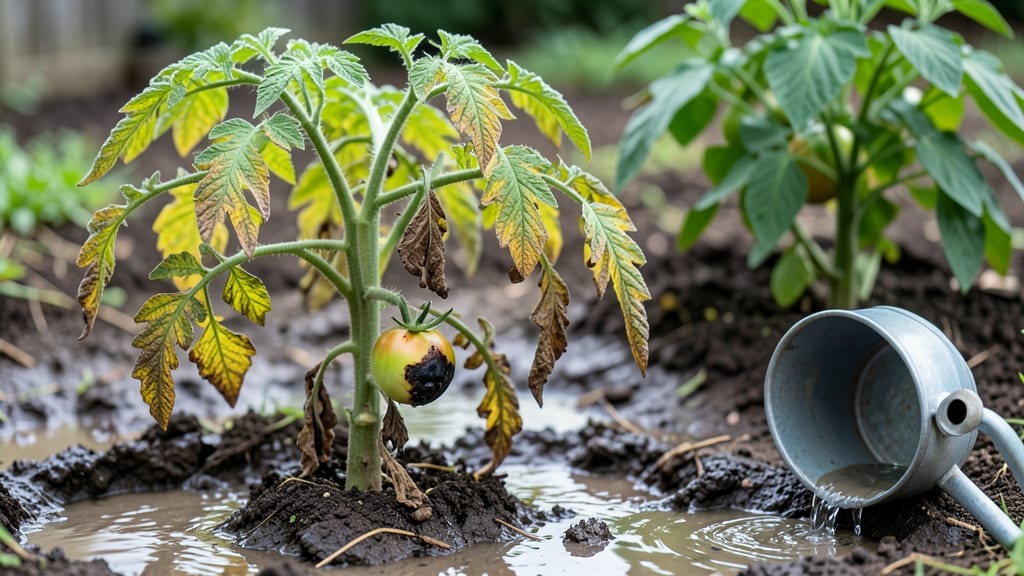
Your tomato plants are drowning in water, and the yellow leaves are the first symptoms of tomato plant overwatering—a red flag that’s easy to miss until it’s too late. 🌱 Overwatering turns lush green foliage into a sad, mushy mess—sometimes before you even notice the roots rotting underground.
I’ve seen healthy plants wilt in days just from too much love (yes, water is love, but too much is smothering). The real damage happens below the soil: root rot starts as soft, brown roots that smell foul, while above ground, leaves yellow first at the bottom before curling inward.
Blossoms may drop, and new growth looks stunted. The good news? Catching it early means saving your plants with simple adjustments—better drainage, less frequent watering, and maybe a breath of fresh air for those roots. Fixing overwatered tomatoes starts with stopping the flood.
Let the top inch of soil dry out between waterings, and if your pots don’t have drainage holes, drill them now—this is your first line of defense. For container plants, lift them to check weight: a soggy pot means you’re overdoing it.
Mulch helps too, keeping moisture steady without drowning the roots. Recovery takes patience, but pruning the worst yellow leaves gives your plant energy to focus on new, healthy growth. If root rot has set in, trim away the mushy parts with clean scissors and repot in fresh, well-draining soil.
Within a week, you’ll see the difference: firmer stems, perky leaves, and a plant that’s finally breathing again. Prevention is easier than cleanup: water deeply but less often, and always in the morning so foliage dries out by night.
A moisture meter is worth the investment—it tells you exactly when to hold back. With these tweaks, your tomatoes will thrive instead of turning into a sad, waterlogged puddle.
Root Causes Of Overwatering
When your tomato plants show signs of distress—like yellowing leaves or mushy stems—overwatering is often the silent culprit. But why does this happen? The answer lies in a mix of environmental, soil, and plant biology factors.
Let’s break down the key reasons your tomatoes might be drowning in their own moisture.
Tomatoes thrive in well-draining soil, but heavy clay or compacted soil acts like a sponge, holding excess water around roots. When water can’t escape, roots suffocate from lack of oxygen, leading to:
- Anaerobic conditions: Without oxygen, beneficial soil microbes die, and harmful bacteria (like Pythium) multiply, causing root rot.
- Nutrient lockout: Excess water washes away essential nutrients (nitrogen, phosphorus, potassium), starving the plant even as it sits in "wet" soil.
- Fungal infections: Fungi like Phytophthora thrive in soggy soil, clogging root cells and blocking water/nutrient uptake.
Actionable fix: Amend soil with perlite, vermiculite, or compost to improve aeration. Test drainage by filling a container with soil and water—if it drains slower than 1 hour, it’s too dense.
Even "good" soil can become a swamp if you water on a strict schedule without checking moisture levels. Common mistakes:
- Ignoring weather: Rainy days + scheduled watering = double the moisture. Use a rain gauge or soil moisture sensor to adjust.
- Shallow watering: Light, frequent watering keeps the topsoil wet but dries deeper layers, encouraging roots to stay near the surface—where they’re more prone to rot.
- No "dry spell": Tomatoes need 1–2 days between waterings to let roots breathe. Overwatering daily prevents this.
Pro tip: Water deeply 2–3 times per week (adjust for heat/clay soil) and always in the morning to reduce evaporation and fungal risks.
Hot, humid climates speed up evaporation, but they also slow soil drying. Here’s how it backfires:
- Evaporative cooling fails: In heatwaves, plants transpire (sweat) more, but if roots can’t keep up, excess water pools.
- Humidity traps moisture: High air humidity reduces evaporation from soil, keeping it damp longer—ideal for root rot pathogens.
- Mulch overkill: Thick mulch (like plastic or thick straw) can suffocate roots by blocking airflow and trapping heat/moisture.
Solution: Use organic mulch (straw, wood chips) in a 2-inch layer to regulate temperature, and water earlier in the day to let foliage dry before nighttime humidity sets in.
Potted tomatoes are high-risk for overwatering because:
- Limited root space: Small containers dry out faster, but if they’re overpotted (too big), excess water lingers.
- No drainage holes: Even "self-watering" pots can become death traps if water has nowhere to escape.
- Material matters: Terracotta dries faster than plastic, but plastic retains moisture longer—choose based on your climate.
Fix it: Ensure pots have drainage holes + saucers, and use cactus/succulent mix blended with compost for better airflow.
Most overwatering issues stem from well-intentioned but misinformed habits. The key is monitoring—check soil moisture with your finger (top 1–2 inches should be dry) and adjust before symptoms appear. Your tomatoes will thank you with vibrant leaves and juicy fruit! 🍅💦
Revive Your Tomato Plants Now
Overwatering can feel like a silent killer for your tomato plants—soft, yellowing leaves and mushy stems are red flags that demand action. But don’t panic! With the right steps, you can nurse your plants back to health and prevent future disasters.
Below, we’ll map out cause-specific fixes to rescue your tomatoes, plus pro tips to keep them thriving.
Yellow leaves are often the first sign of overwatering, but they can also mean nutrient deficiencies or disease. Here’s how to tell—and fix—if it’s water-related:
1️⃣ Adjust Your Watering Schedule
- Stop watering immediately if the soil is soggy or smells like rot.
- Wait until the top 1–2 inches of soil are dry before watering again.
Stick your finger in—if it feels damp, wait longer. - Water deeply but less frequently (1–2 times per week, depending on climate). Shallow, frequent watering keeps roots waterlogged.
2️⃣ Improve Soil Drainage Poor drainage is a top culprit.
Try these quick fixes: - Add organic matter: Mix in compost or coconut coir to loosen heavy soil. - Raise plant beds: If growing in containers, elevate them with bricks or a stand to allow excess water to drain. - Use well-draining soil: Avoid garden soil—opt for a 50/50 mix of potting soil and perlite or vermiculite.
3️⃣ Prune Damaged Foliage
- Snip off yellow or mushy leaves with clean scissors to prevent disease spread.
- Focus on lower leaves first, as they’re most susceptible to rot.
If your plant’s stems feel soft or blackened, root rot has set in. Act fast:
1️⃣ Remove the Plant and Inspect Roots
- Gently dig up the plant and rinse the roots under cool water.
- Healthy roots are firm and white; rotten roots are mushy, black, or smell foul. Trim away the bad ones with sterilized scissors.
2️⃣ Repot in Fresh, Dry Soil
- Choose a clean pot (or a new spot in the garden) with drainage holes.
- Use a fungicide (like copper fungicide or hydrogen peroxide solution) to soak the roots for 10 minutes before replanting.
- Plant in fresh, well-draining soil and hold off on watering for 3–5 days to let roots recover.
3️⃣ Adjust Future Watering Habits
- Water only when the soil is bone-dry (2–3 inches down).
- Use a moisture meter to avoid guesswork—aim for 40–60% moisture (never soggy).
- Mulch lightly (with straw or wood chips) to retain moisture without suffocating roots.
Once your tomatoes are back on track, keep them happy with these long-term strategies:
💡 Use the Right Tools
- Drip irrigation or soaker hoses deliver water directly to roots, reducing waste.
- Self-watering containers (with reservoirs) help maintain steady moisture without drowning plants.
⏰ Water at the Best Times
- Early morning (6–8 AM) is ideal—water evaporates faster, and leaves dry quickly, reducing fungal risks.
- Avoid evening watering, as damp foliage overnight invites disease.
🌡️ Monitor Weather and Season
- Adjust for rain: If forecasted, skip watering for 24–48 hours.
- Slow down in winter: Tomato plants (even in warm climates) need less water when growth slows.
🎯 Pro Tip: The "Knuckle Test"
Press your knuckle into the soil—if it springs back, water; if it stays dented, wait. It’s foolproof!
- New green leaves emerge from the center.
- Stems firm up and stop wilting.
- Roots grow white and strong when inspected (if repotted).
With these fixes, your tomato plants will bounce back—and you’ll become a watering pro in no time! 🚀
Frequently asked questions about tomato plant overwatering
Why do my tomato leaves turn yellow first at the bottom?
Yellowing at the bottom is a classic overwatering symptom! Excess moisture washes away nutrients from the lower leaves first, while the plant prioritizes keeping upper leaves alive. Check the soil—if it's soggy or smells foul, you're likely drowning your roots.
How can I tell if my tomato plant has root rot?
Gently pull up your plant and check the roots: healthy roots are firm and white, while rotten ones are mushy, black/brown, and smell foul. If you see this, trim away the bad roots immediately and repot in fresh, dry soil with improved drainage.
What's the best way to fix overwatered tomato plants in containers?
First, stop watering and let the soil dry completely. Then, remove the plant, trim any mushy roots, and repot in fresh soil with perlite or sand for better drainage. Water lightly only after 3-5 days to help roots recover.
Can I save my tomato plant if the stems feel soft?
Soft stems indicate severe root rot, but you can still try! Prune all damaged foliage, repot in sterile, well-draining soil, and avoid watering for several days. With proper care, new growth should emerge within 1-2 weeks.
How often should I water tomatoes to prevent overwatering?
Water deeply 2-3 times per week, always in the morning, and let the top 1-2 inches of soil dry between waterings. Use your finger to check moisture—if it's damp, wait longer. A moisture meter helps avoid guesswork!