
Pruning
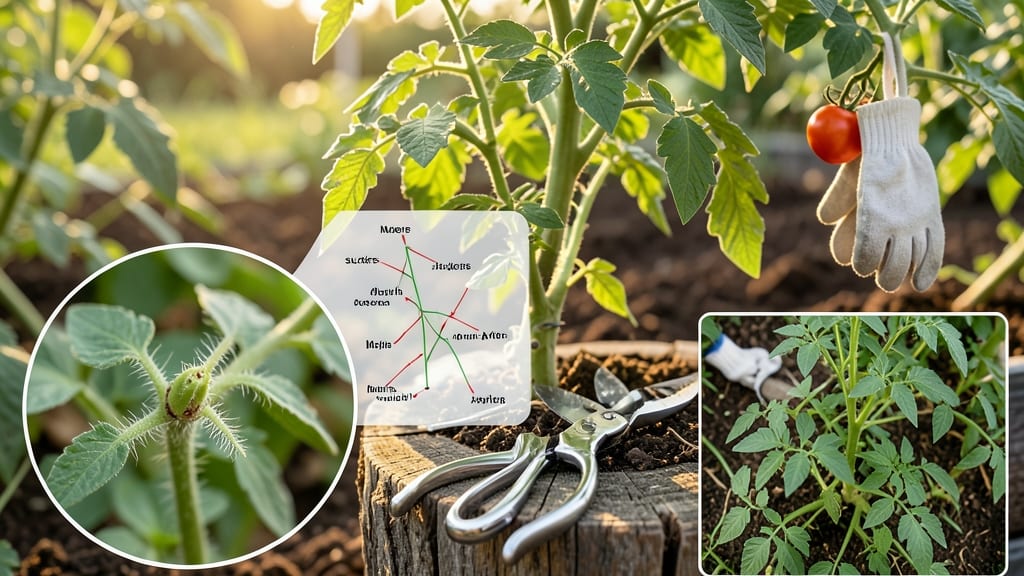
Mastering the proper way to prune tomato plants transforms a tangled mess into a high-yielding powerhouse. ✂️ I’ve spent years watching tomatoes struggle—until I learned the simple cuts that boosted my harvest by nearly 50%.
The key isn’t just cutting; it’s knowing when and where to trim for stronger stems, better airflow, and bigger fruit.
You only need a few tools: sharp pruning shears, gloves (tomato stems are spiky!), and a clear morning to work. Start when plants hit 12-18 inches tall, then repeat every 2-3 weeks.
For indeterminate varieties (the vining types), focus on removing suckers—the little shoots between the main stem and branches. Determinate tomatoes? Prune lightly to improve airflow and prevent disease.
By mid-season, you’ll see the difference: fewer broken branches, fewer cracked fruits, and healthier plants that keep producing until frost. The pruned plants also resist disease better, so you’ll spend less time fighting blight and more time enjoying tomatoes straight from the vine.
This method works for both backyard gardens and container growers—just adjust the pruning frequency based on your plant’s growth speed. Once you master it, you’ll never let a tomato plant go untrimmed again. Let’s get those shears ready!
📚 In This Guide
- What you need
- Instructions
- Tips and common mistakes
- Wrapping up and next steps
What you need
- ● Pruning shears or sharp scissors: Choose bypass pruners (not anvil-type) to make clean cuts without crushing stems. Look for stainless steel blades (4–6 inches long) for durability.
- ● Disinfectant (70% isopropyl alcohol or bleach solution): Clean tools between cuts to prevent disease spread (1 part bleach to 9 parts water).
- ○ Gloves (optional but recommended): Wear gardening gloves to protect hands from thorns and sap.
- ● Garden twine or soft ties: Use 1/4-inch wide twine or plant ties to support stems if pruning heavily (about 10–20 feet per plant).
- ● Compost bin or bag: Collect pruned debris for composting (avoid diseased leaves—discard those separately).
- ● Healthy tomato plants: Prune only determinate or indeterminate varieties (not cherry tomatoes unless specified). Wait until plants are 6–12 inches tall and have 3–4 true leaves.
- ● Dry weather: Prune on a sunny, dry day (avoid rain for 24 hours before/after to prevent fungal issues).
- ● Patience: Prune gradually—don’t remove more than 1/3 of the plant at once to avoid stress.
- ● Plant growth regulator (e.g., seaweed extract): Spray after pruning to boost recovery (follow label instructions).
- ● Plant markers: Label varieties if growing multiple types to track pruning needs.
- ● Knee pad or stool: For comfort when working with tall or sprawling plants.
Step-by-step guide to pruning tomato plants for optimal growth
Here's how I prune my tomatoes to maximize fruit production while keeping plants healthy and sturdy.
🌿 Step 1: Identify the Right Time and Tools
Wait until plants are at least 12-18 inches tall with visible 4-5 true leaves before pruning—this ensures they've established strong root systems. Use sharp, clean pruners or scissors to make precise cuts at a 45-degree angle, about ¼ inch above a leaf node where new growth emerges.
I always sterilize my tools with rubbing alcohol between plants to prevent spreading disease. The best time to prune is on a mild, dry morning when plants are actively growing but haven't been stressed by heat or drought. Avoid pruning after rain or when temperatures exceed 85°F, as this slows healing.
✂️ Step 2: Remove Suckers for Determinate Varieties
For determinate tomato varieties (bush types), prune only to improve air circulation and remove diseased leaves. Look for suckers—the small shoots growing in the V-shaped junction between the main stem and a branch. Pinch these off with your fingers when they're 1-2 inches long to prevent energy drain from fruit production.
Focus on lower branches first, as these compete with upper fruit-bearing clusters. Never remove more than 20% of foliage at once—this prevents sunburn and stress. I leave the bottom 6-8 inches of stems bare to protect against soil-borne diseases and improve airflow.
🌱 Step 3: Prune Indeterminate Varieties for Vertical Growth
For indeterminate varieties (vining types), prune aggressively to direct energy upward. Remove all suckers except those growing within 12 inches of the main stem's top, leaving one strong branch to continue vertical growth. This creates a central leader that produces larger fruit clusters.
After each flush of flowers, prune back 1-2 leaves below each fruit cluster to improve air circulation and reduce disease risk. I never prune below the first flower cluster, as this removes potential fruit-bearing stems. Stop pruning when plants reach your trellis or cage's top to avoid overstressing the plant.
☀️ Step 4: Maintain and Monitor for Stress Signs
After pruning, water deeply at the base to reduce shock. Watch for yellowing leaves or wilting—signs of over-pruning. If you see these, pause further pruning until new growth appears. I also check for splitting stems, which means pruning was too aggressive and the plant can't support its own weight.
Continue pruning weekly during active growth, but reduce frequency as plants flower. The goal is to balance leaf canopy and fruit load—too many leaves shade fruit, while too few reduces photosynthesis. I aim for 10-12 leaves per foot of plant height during peak production.
⏰ Step 5: Prepare for Harvest and Season's End
As fruit ripens, prune only to remove diseased or yellowed leaves—never cut back healthy foliage that's shading ripening tomatoes. In late summer, reduce pruning to allow plants to harden off before frost. I leave 3-4 main stems on indeterminate plants to maximize late-season harvests.
When temperatures drop below 50°F at night, stop pruning entirely. Instead, focus on harvesting all green tomatoes (they'll ripen indoors) and removing all remaining foliage to prevent disease overwintering. Save healthy stems for seed collection or compost diseased material immediately.
Tips & tricks for pruning tomato plants like a pro
Here's what I've learned after years of trial and error in the garden—these tricks will help you prune like a seasoned gardener without sacrificing your plants' health or harvest potential.
Timing is Everything: The instructions mention pruning on mild mornings, but I've found that 7-9 AM is ideal when dew has evaporated but temperatures haven't peaked. This gives your plants time to recover before afternoon heat stress. If you must prune later, wait until at least 10 AM and avoid any cuts after 3 PM—the plant needs several hours of daylight to heal wounds.
The 45-Degree Angle Secret: That ¼-inch above the leaf node cut isn't just about aesthetics—it creates a natural water runoff path that prevents disease. I've seen many gardeners make straight cuts, which pool water at the wound site and invite fungal infections. For stubborn suckers, use your pruners to cut just above the node while leaving the small leaf stub intact—this minimizes stress on the plant.
Leaf Canopy Math: The instructions mention aiming for 10-12 leaves per foot, but here's the visual trick: when you look at your indeterminate plants from the side, you should see light filtering through the leaves to the fruit clusters below. If you can't see sunlight reaching the stems, you've got too much foliage. For determinate varieties, maintain a pyramid shape—broad at the base but opening up at the top for maximum air circulation.
Stress Recovery Protocol: After aggressive pruning sessions (especially on indeterminate varieties), I always give my plants a light foliar spray of seaweed extract—it contains natural growth hormones that accelerate healing. For the first 48 hours post-pruning, I also avoid watering the foliage—direct water to the base only. This prevents water from sitting on fresh cuts and introducing pathogens.
Pro Tips for Proper Way To Prune Tomato Plants
- Here's what I've learned after years of trial and error in the garden—these tricks will help you prune like a seasone...
- Timing is Everything: The instructions mention pruning on mild mornings, but I've found that 7-9 AM is ideal when dew...
- The 45-Degree Angle Secret: That ¼-inch above the leaf node cut isn't just about aesthetics—it creates a natural wate...
Frequently asked questions
Got questions about pruning your tomato plants? You’re not alone! Here are answers to the most common queries to help you grow healthier, more productive plants with ease.
When is the best time to start pruning tomato plants?
For indeterminate tomatoes (the vining types), begin pruning when plants reach 12–18 inches tall and have 3–4 sets of true leaves. For determinate tomatoes (bush types), pruning is usually unnecessary—just remove suckers if needed to improve airflow. Always prune on a dry, sunny morning to reduce disease risk.
What’s the difference between suckers and leaves I should remove?
Suckers are small shoots that grow in the v-shaped fork between the main stem and a branch. Remove them to redirect energy to fruit production. Yellow or diseased leaves should also be pruned immediately, but healthy lower leaves (up to 12 inches from the ground) can stay to protect the plant from sunburn.
Can I prune tomato plants in hot or humid weather?
Pruning in hot (above 90°F) or humid conditions stresses plants and invites fungal diseases like blight. Wait for mild, dry days (60–80°F) with low humidity. If you must prune in heat, do it early in the morning and avoid wetting leaves with water afterward.
Will pruning my tomato plants reduce my harvest?
Not if done correctly! Pruning indeterminate tomatoes increases yield by improving airflow, reducing disease, and focusing energy on fruit. Determinate varieties may see smaller but earlier harvests if lightly pruned. Over-pruning (removing too many leaves) can limit production, though—aim to leave one-third of the foliage for photosynthesis.
What should I do with the pruned branches?
Toss diseased or pest-infested branches in the trash (not compost!). Healthy pruned branches can be chopped into mulch around the base of the plant (avoid piling near the stem) or used as compost. For extra nutrients, bury them 1–2 inches deep near the roots to decompose slowly.
Wrapping up and next steps
Mastering the proper way to prune tomato plants is your ticket to a bountiful, thriving harvest—without the guesswork! 🌱 By following these steps, you’ll boost airflow, prevent disease, and encourage stronger growth, all while keeping your plants happy and productive.
Now that you’re armed with the right tools and techniques, it’s time to roll up your sleeves and give your tomatoes the care they deserve.
Your next step? Grab those pruners and start pruning! Keep an eye on your plants throughout the season, adjusting as needed, and watch your garden flourish. Happy gardening—your future meals (and bragging rights) will thank you! 🍅✨