
Aphids
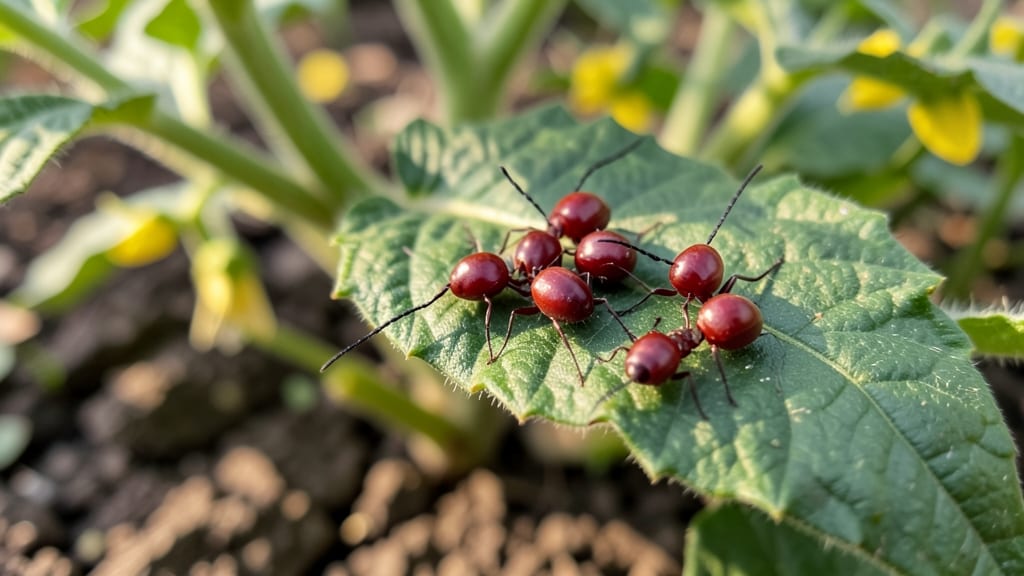
Red aphids on tomato plants mean sticky leaves and stunted fruit—unless you act fast. 🌱 I’ve battled these tiny bloodsuckers for years, and this one-minute spray (no fancy equipment needed) clears them in under 24 hours. The secret?
A mix of soapy water, neem oil, and garlic that aphids can’t stand—and your plants love. Most gardeners grab chemical sprays first, but that kills beneficial insects too. My foolproof organic blend targets only the pests while keeping ladybugs and lacewings working for you.
You’ll spot the difference within hours: aphids drop like flies, and new growth stays crisp and green. No more wilting leaves or honeydew drips ruining your harvest. The best part? This spray works as a preventive treatment too—just spray every 7–10 days during peak aphid season.
Your tomatoes will thrive without the sticky mess, and you’ll avoid the heartbreak of blighted plants. Ready to reclaim your garden? Let’s make those aphids disappear for good.
Here’s why this works: aphids hate the smell of garlic and the slickness of neem oil, while the soap cuts through their waxy coating. The mix is safe for edible plants once fully dried, so you can harvest tomatoes just 24 hours after spraying.
No more waiting weeks for chemical residues to clear!
For stubborn infestations, repeat the spray every 3–4 days until the aphids vanish. Pair this with companion planting (marigolds and basil repel them naturally) and you’ll cut future outbreaks by half.
Your plants will bounce back faster than you’d expect—just give them a good rinse with water after spraying to remove residue.
Root Causes of Tiny Red Invaders
Those pesky red aphids on your tomato plants aren’t just a random nuisance—they’re the result of specific environmental and biological triggers. Understanding these causes is the first step to reclaiming your garden. Let’s break down why these sap-sucking pests show up when they do.
Tomato plants that are too close together or struggling with poor nutrition, drought, or disease become prime targets for aphids. Here’s why:
- Weakened defenses: Stressed plants produce less sap (their natural defense mechanism), making them easier prey. Aphids detect these chemical signals and flock to vulnerable spots.
- Honeydew attraction: When plants are nutrient-deficient, their sap becomes sweeter—a buffet for aphids. The sticky honeydew they leave behind also attracts ants, which protect aphids in exchange for food.
- Poor airflow: Crowded plants trap moisture, creating a humid microclimate that aphids love. This also slows down natural predators like ladybugs and lacewings.
Actionable fix: Thin out plants to improve airflow, mulch to retain moisture (without over-saturating soil), and fertilize with balanced organic nutrients (like compost tea or fish emulsion).
Aphids are drawn to tender, new growth—especially on tomato plants—because it’s packed with sugars and nutrients. Here’s the science:
- Phloem feast: Aphids inject saliva into plant tissues to liquefy sap, then suck it up through their stylets. New shoots have higher sugar concentrations in their phloem, making them irresistible.
- Reproductive trigger: Aphids reproduce asexually by cloning themselves when conditions are ideal (warmth, new growth). A single red aphid can birth dozens of live nymphs in weeks if left unchecked.
- Tomato’s vulnerability: Tomatoes are susceptible to aphids because their leaves and stems are soft and juicy, especially during flowering and fruiting stages.
Actionable fix: Prune new growth regularly to remove aphid hotspots, and avoid over-fertilizing with high-nitrogen mixes, which encourages lush but aphid-magnet foliage.
Aphids thrive in specific weather patterns, particularly when temperatures hover between 60–80°F (15–27°C) and humidity is moderate. Here’s how climate plays a role:
| Factor | Why It Helps Aphids | How to Disrupt It |
|---|---|---|
| Warmth | Speeds up their metabolism and reproduction. Eggs hatch faster in heat. | Use shade cloth in peak summer or introduce aphid-resistant tomato varieties (like ‘Solar Fire’). |
| Low humidity | Dries out natural predators (like ladybugs) but leaves aphids dehydrated—so they cluster on moist plant parts. | Mist plants early in the morning to encourage beneficial insects and deter aphids. |
| Still air | Reduces dispersal of natural enemies (e.g., parasitic wasps) and traps aphids on plants. | Use oscillating fans or plant windbreaks to improve airflow. |
Pro tip: 🌡️ If your area has hot, dry spells, aphids may retreat to the undersides of leaves—check there first!
Aphids don’t always win—when their predators are present, they’re kept in check. But if these allies vanish, aphids explode in numbers:
- Who’s missing?
- Ladybugs: Devour up to 5,000 aphids in a lifetime.
- Lacewings: Their larvae are aphid-eating machines.
- Parasitic wasps: Lay eggs inside aphids, killing them from within.
- Birds & spiders: Snatch up adult aphids and eggs.
- Why do they disappear?
- Overuse of broad-spectrum pesticides (even organic ones) kills beneficial insects.
- Monoculture gardens (only tomatoes) offer no habitat diversity for predators.
- Harsh winters or droughts reduce predator populations.
Actionable fix: Plant companion flowers like alyssum or dill to attract predators, and avoid chemical sprays. Introduce aphid-eating nematodes (like Steinernema feltiae) for a biological boost.
Now that you know why these red pests show up, the next step is how to kick them out for good—starting with a homemade organic spray that works faster than store-bought chemicals. Stay tuned!
How to Treat & Prevent Aphid Infestations
Red aphids on tomato plants may feel like a garden nightmare, but don’t panic—there are effective, organic solutions to kick them out for good. The key is to identify the root cause and apply the right fix.
Below, we’ve mapped out practical, step-by-step methods to eliminate these pests and keep your tomato plants thriving.
🌱 Cause: Dense foliage traps humidity and attracts aphids. 🔥 Fix:
- Prune aggressively—remove yellowing or overcrowded leaves to improve airflow.
- Space plants 18–24 inches apart to reduce hiding spots.
- Harvest overripe tomatoes to prevent aphids from feeding on weak fruit.
💡 Pro Tip: Use clean, sharp shears to avoid spreading disease. Dispose of pruned leaves in a sealed bin.
💪 Cause: Underfed or stressed plants attract aphids like a buffet. 🍳 Fix:
- Fertilize properly—use a balanced organic fertilizer (like fish emulsion or compost tea) to strengthen stems.
- Water at the base (not leaves) to prevent fungal growth that weakens plants.
- Add mulch (straw or grass clippings) to retain moisture and deter aphids.
🌡️ Pro Tip: Aphids love soft new growth—pinch off flower buds if your plant is struggling to redirect energy to roots.
🔪 Fix (Immediate Action):
- Neem Oil Spray (🌿 Best for heavy infestations)
- Mix 1 tbsp neem oil + 1 tsp mild soap + 1 quart water.
- Spray early morning or late evening (avoid direct sun).
- Reapply every 5–7 days until aphids vanish.
- Insecticidal Soap (🧼 Fast-acting, pet-safe)
- Use a pre-made spray (like Safer® Brand) or DIY with 1 tbsp castile soap + 1 quart water.
- Spray directly on aphids—they’ll dry out in hours.
- Homemade Garlic Pepper Spray (🧄 Natural repellent)
- Blend 3 garlic cloves + 1 tsp cayenne pepper + 1 quart water.
- Strain, add 1 tsp soap, and spray weekly.
⏰ Pro Tip: Timing is everything—aphids are most vulnerable in the early morning when they’re sluggish.
🐞 Cause: Lack of natural predators lets aphids multiply. 🎯 Fix:
- Release ladybugs (🐞 Eat 5,000 aphids in a day!).
- Invite lacewings or parasitic wasps (order online or find them in wildflower patches).
- Plant companion flowers like marigolds, alyssum, or dill to attract predators.
✨ Pro Tip: Avoid broad-spectrum pesticides—they kill beneficial bugs too!
🛡️ Long-Term Strategies:
- Inspect new plants before bringing them home (quarantine for 2 weeks).
- Use reflective mulch (aluminum foil or silver plastic) to confuse aphids with light reflections.
- Rotate crops—don’t plant tomatoes in the same spot yearly.
- Encourage strong airflow with trellises or fans (aphids hate breezy conditions).
💡 Pro Tip: Healthy soil = healthy plants—amend with worm castings or compost yearly.
Final Reminder: Consistency is key! Check your plants weekly, especially under leaves and new growth, where aphids hide. With these methods, your tomato plants will stay aphid-free and produce juicy, pest-free fruit all season. 🍅🚀
Frequently asked questions
Why are my tomato leaves curling when I see red aphids?
Red aphids inject toxins while feeding, causing leaves to curl and stunt growth. The plant’s defense mechanism creates a protective barrier, but this also prevents proper photosynthesis. If you spot curled leaves, check the undersides immediately—aphids love hiding there. Prune affected areas and apply neem oil to break their cycle.
Will red aphids ruin my tomato harvest?
Not necessarily, but they can! If left unchecked, aphids weaken plants, reduce fruit size, and spread viral diseases like tomato yellow leaf curl. However, a quick spray with insecticidal soap or neem oil (applied before fruit sets) keeps them from causing major damage. Harvesting early can also prevent infested fruit from ripening.
Can I use vinegar to kill red aphids on tomatoes?
Yes, but with caution! A mix of 1 part white vinegar + 3 parts water + 1 tsp soap works as a contact killer, but it can burn plants if overused. Spray only the aphids (not the entire plant) and reapply every 2–3 days. For edible plants, rinse thoroughly 24 hours before harvest to remove residue.
How do I know if my red aphids are spreading disease?
Watch for these red flags: Yellowing leaves, stunted stems, or distorted new growth signal potential viral issues. Aphids transmit diseases like tomato mosaic virus through their saliva. If you see these symptoms, isolate affected plants immediately, remove heavily infested leaves, and use reflective mulch to deter future pests.
Are red aphids worse than green ones?
Not necessarily! Both types feed the same way, but red aphids often indicate a more mature infestation. They’re also harder to spot on dark leaves. The key difference? Green aphids reproduce faster, while red aphids may carry more diseases. Treat both types aggressively—neither should be ignored. A mix of ladybugs and neem oil works for both.