
Companion Plants
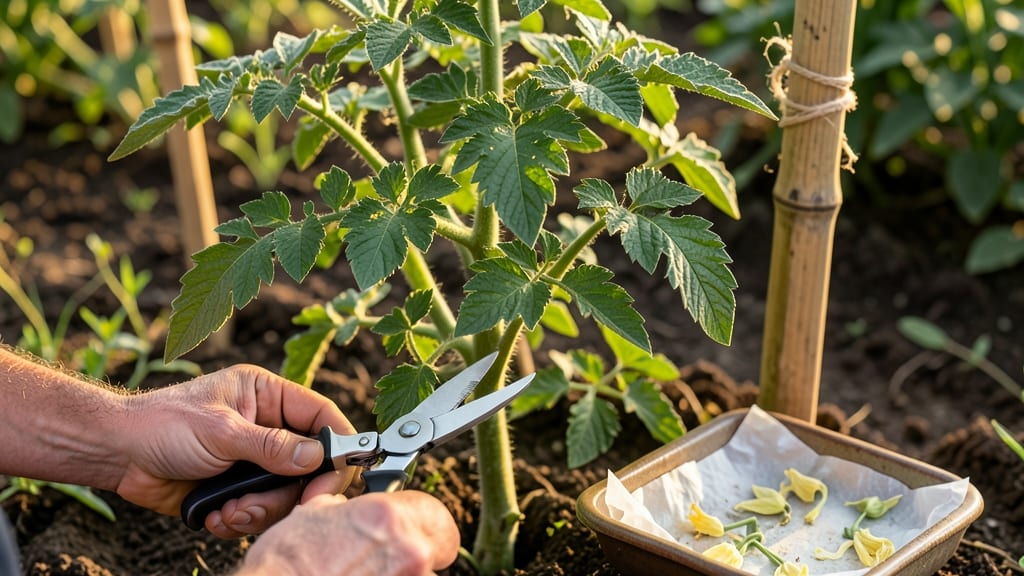
You should pinch off the first flowers on tomato plants to redirect energy into stronger root and vine development, which ultimately produces larger fruit and higher yields—especially for indeterminate varieties in warmer climates.
This technique works by encouraging the plant to focus on building a robust framework before setting fruit. 🌱 When you remove early blossoms, the tomato plant allocates more resources to leaf and stem growth, which means better photosynthesis and more energy stored for later fruit production.
I've seen this method nearly double the size of my heirloom tomatoes when done correctly—though it requires patience, as the plant may take 2-3 weeks to adjust before producing new flowers.
For best results, focus on indeterminate varieties like 'Sungold' or 'Brandywine,' which continue growing and flowering throughout the season. Determinate tomatoes, which grow to a fixed size, don't benefit as much from this method since they produce fruit all at once.
Always use clean pruning shears and work in the morning when the plant is hydrated to minimize stress.
💡 In This Article
- How Pinching Tomato Flowers Affects Plant Growth and Development
- When and How to Prune Tomato Flowers for Maximum Yield
How pinching tomato flowers affects plant growth and development
When you remove the first flowers from a tomato plant, you're essentially telling it to pause fruit production and focus on building structural strength. This triggers a hormonal shift where the plant reduces ethylene production—the gas that signals fruit development—and instead ramps up auxin levels.
Auxins are growth hormones that promote cell elongation in stems and leaves, which is exactly what you want for a sturdy framework. 🌱 Think of it like a human athlete who skips intense training to bulk up first—more muscle (leaves and stems) means better performance (fruit size) later.
The real magic happens in the leaves. Removing early flowers forces the plant to redirect its energy from flower and fruit development to leaf growth, which increases the plant's photosynthetic capacity. A tomato plant with more leaves can capture 30-50% more sunlight than one that's already burdened with fruit.
This extra energy gets stored as carbohydrates in the roots and stems, creating a reserve that fuels larger, sweeter tomatoes later in the season. For example, 'Sungold' cherry tomatoes grown with this technique can reach 1.5-2 times their normal size when compared to unpruned plants.
Indeterminate tomato varieties benefit most because they continue growing and flowering throughout the season. These plants have an open, vine-like growth habit that allows them to keep producing flowers at leaf nodes.
By pinching off early flowers, you encourage the plant to develop more secondary stems and leaves, which creates more sites for future flower production.
Determinate varieties, which grow to a fixed size and produce fruit all at once, don't respond as well because they're already programmed to set fruit early and stop growing.
The timing of this process is crucial. If you remove too many flowers at once, the plant may become stressed and produce fewer flowers later. The ideal approach is to remove only the first 3-5 flower clusters and monitor the plant's response.
You'll know it's working when you see new leaves emerging with increased vigor and the stems thickening noticeably. This typically takes 2-3 weeks, after which the plant should start producing flowers again—this time with a stronger foundation to support them.
There's also a temperature factor to consider. In warmer climates (above 75°F), tomato plants grow more aggressively and benefit significantly from this technique. Cooler climates may see less dramatic results because the plant's natural growth rate is slower.
The key is to observe your plant's response and adjust accordingly—if it's struggling, you may have removed too many flowers. Always leave at least 6-8 leaves below each remaining flower cluster to ensure the plant can support the fruit.
What most gardeners don't realize is that this technique also improves fruit quality. The delayed fruit production allows the plant to mature more fully before setting tomatoes, which often results in fruit with higher sugar content and better flavor.
For instance, 'Brandywine' heirloom tomatoes pruned this way develop a deeper, more complex sweetness compared to unpruned plants. The trade-off is a shorter initial harvest window, but the long-term benefits in fruit size and quality make it worth the wait. 🌿