
Watering
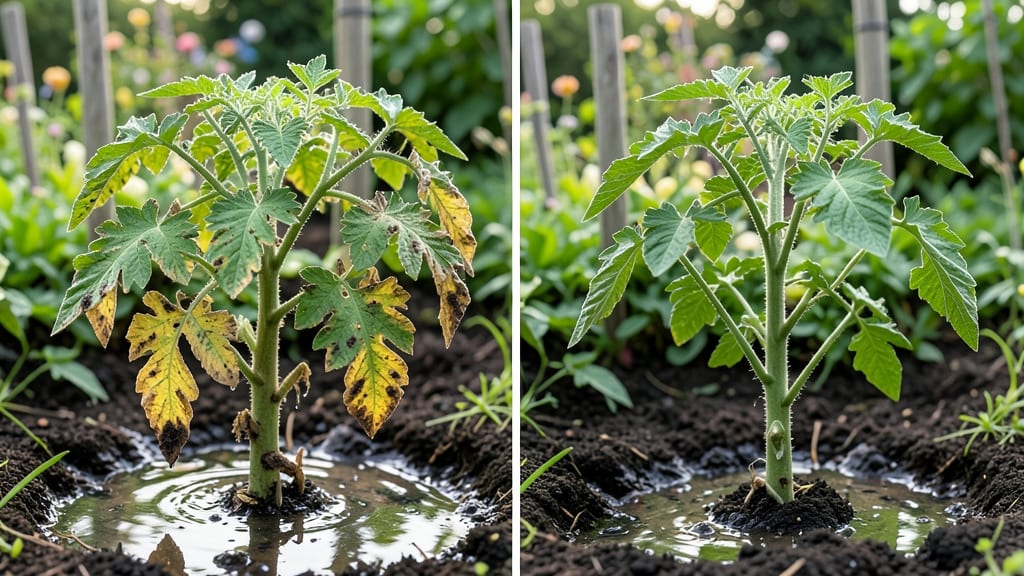
Your tomato plants might be drowning—the signs of overwatering tomato plants start with yellowing leaves that refuse to bounce back. 🌱 I’ve watched overwatered tomatoes go from lush vines to sad, limp messes in weeks, and the symptoms start subtly: leaves curl, soil stays soggy for days, and those telltale black spots appear on stems.
The real damage? Roots suffocating in waterlogged soil, starving your plants of oxygen while inviting fungal invaders like blight.
Here’s the kicker: overwatering doesn’t just wilt leaves—it cracks stems and rots roots from the inside out. That musty smell when you dig near the base? That’s your plants screaming for help.
Even worse, the fixes aren’t just about cutting back water; you’ll need to adjust drainage, prune diseased foliage, and sometimes dig in fresh soil to save the roots. The good news? Caught early, most plants recover with the right care.
What you’ll actually achieve is a tomato plant that thrives—not just survives. No more guessing when to water (we’ll talk about the finger test that saves harvests), no more mystery yellowing, and no more wasted effort on plants that refuse to fruit.
The key is balance: soil that’s damp but not drenched, air pockets in the roots, and a schedule that matches your climate’s heat and rain.
This works for container tomatoes, raised beds, or in-ground gardens—just adapt the fixes to your setup. Whether you’re dealing with a single sad plant or a whole patch of struggling vines, the same principles apply. Let’s turn those sad leaves into lush, productive vines again.
Root Causes Of Overwatering
Overwatering tomato plants isn’t just about pouring too much water—it’s a cascade of environmental and horticultural factors that disrupt the plant’s delicate balance. Understanding these root causes helps you adjust your approach before the damage becomes irreversible.
Let’s break down the science behind why your tomatoes might be drowning in their own care.
Tomatoes thrive in well-draining soil because their roots need oxygen to respire. When soil lacks proper drainage, excess water pools around the roots, suffocating them in a waterlogged environment. Here’s why this happens:
- Clay-heavy or compacted soil acts like a sponge, holding water instead of releasing it. Roots in clay struggle to absorb oxygen, leading to anaerobic conditions—a silent killer for tomato plants. - Containers without drainage holes trap water, turning the pot into a swamp.
Even "self-watering" pots can become death traps if not monitored. - Mulch applied too thickly can smother soil, preventing evaporation and trapping moisture at the surface.
Actionable fix: Test your soil’s drainage by digging a hole, filling it with water, and timing how long it takes to drain. If it sits for more than 30 minutes, amend with perlite, sand, or compost to improve aeration.
Tomatoes hate moisture fluctuations. While they need regular water, dumping large amounts infrequently forces roots to adapt to extreme wet-dry cycles. This leads to:
- Shallow root development when water evaporates quickly, encouraging roots to stay near the surface where they’re most vulnerable to overwatering.
- Fungal growth in the topsoil (like Phytophthora or Pythium), which thrives in saturated conditions and blocks root uptake.
- Osmotic stress, where roots struggle to absorb nutrients in waterlogged soil, causing nutrient deficiencies that mimic overwatering symptoms.
Actionable fix: Water deeply but infrequently—aim for 1–1.5 inches per week, adjusting for rain. Use a soaker hose or drip irrigation to deliver water slowly at the root zone, avoiding leaf wetness.
Tomatoes are tropical plants, but their water needs shift with weather. High humidity or cool temperatures slow evaporation, tricking growers into overwatering. Key triggers include:
- Humidity above 70% reduces water loss through transpiration, so plants may not "signal" thirst. Overwatering becomes a guess rather than a need. - Cool soil temperatures (below 60°F) slow root activity, making plants less efficient at absorbing water.
Roots suffocate faster in cold, wet conditions. - Rainfall without adjustment can double soil moisture overnight. If you water on a schedule without checking soil dampness, roots drown.
Actionable fix: Use a moisture meter to gauge soil conditions before watering. In humid climates, reduce frequency and water in the early morning to allow foliage to dry quickly. For cool weather, mulch with straw to insulate roots.
Fertilizer isn’t just food—it’s a moisture magnet. High salts from synthetic fertilizers or composted manure can:
- Increase soil osmotic pressure, making it harder for roots to absorb water.
Plants "think" they’re thirsty and drink more, leading to a vicious cycle. - Disrupt beneficial microbes that help break down organic matter, reducing soil aeration. - Burn roots if applied to dry soil, forcing the plant to overcompensate with excessive watering.
Actionable fix: Flush the soil with water after fertilizing to leach excess salts. Use slow-release organic fertilizers (like worm castings) and test soil pH (ideal: 6.0–6.8) to prevent nutrient lockout.
Potted tomatoes are at higher risk because containers dry out faster—but they’re also prone to hidden water traps:
- Root-bound plants in small pots have limited soil volume. A single watering can saturate the entire root zone, with no escape. - Self-watering pots rely on wicks or reservoirs.
If the wick clogs or the reservoir overflows, roots stay submerged. - Plastic pots retain moisture longer than fabric or terracotta, increasing the risk of anaerobic conditions.
Actionable fix: Upgrade pot size (minimum 5-gallon for bush tomatoes, 7+ gallons for indeterminates). Use terracotta pots for better breathability and check wicks monthly for blockages.
Mother Nature’s watering schedule often clashes with yours. Factors like:
- Heavy rain (1+ inch) can make soil soggy for days.
Watering on top of this drowns roots and washes away nutrients. - Foggy or cloudy days reduce evaporation, so plants need less water than on sunny days. - Wind increases transpiration, making plants drink more—but if you’re not adjusting, you might overcorrect.
Actionable fix: Pause watering 24–48 hours after rain and use a weather app to track humidity and rainfall. Adjust your schedule like a meteorologist, not a robot.
Sometimes, what looks like overwatering is actually underwatering in disguise. Confusing signs include:
- Wilting in the heat (normal!) vs. soft, mushy stems (overwatering).
- Yellow lower leaves (aging) vs. yellowing from root rot.
- Slow growth (could be nutrient-deficient or overwatered).
Actionable fix: Squeeze a leaf—if it’s limp but springs back, it’s thirsty. If it stays floppy or feels squishy, stop watering and let the soil dry. Use a knife to check roots: healthy roots are firm; rotten roots are brown and mushy.
Pro Tip: 💡 The "Finger Test" Trumps Guessing Stick your finger 2 inches into the soil. If it’s damp, wait. If it’s dry, water. This beats relying on a calendar—tomatoes will thank you with juicier fruit!
How to Fix Your Overwatered Tomatoes
If your tomato plants are showing signs of overwatering—like yellowing leaves, wilting stems, or a soggy base—don’t panic! With the right steps, you can nurse them back to health and prevent future issues. Below, we’ve mapped out practical fixes based on the most common causes, along with prevention tips to keep your plants thriving. Let’s turn things around! 🌱💦
If your soil is waterlogged, the first step is to stop the moisture buildup and let excess water escape. Overwatering creates anaerobic conditions (lack of oxygen in the roots), which suffocate your plants. Here’s how to act fast:
- 🍳 Check the Soil Moisture Stick your finger 1–2 inches deep into the soil. If it feels soggy or cool (like a damp sponge), it’s time to drain. If it’s dry at this depth, you may have overwatered in the past but aren’t currently drowning the roots.
- 👨🍳 Improve Drainage Immediately - Move potted tomatoes to a dry, shaded spot and let them sit for 24–48 hours without water.
Elevate pots on bricks or saucers to encourage airflow. - For in-ground plants, create drainage trenches around the base (6–12 inches away from the stem) to redirect excess water.
Fill them with gravel or sand. - Add organic matter: Mix in compost or coconut coir to improve soil structure and aeration.
- ⏰ Wait Before Watering Again Only resume watering when the top 1–2 inches of soil feel dry to the touch. Use the "finger test" daily until the plant recovers.
Once the soil is no longer waterlogged, focus on reviving the roots and restoring balance. Roots damaged by overwatering need oxygen, nutrients, and a chance to recover.
- 🔪 Prune Damaged Foliage
- Remove yellow or black leaves (they’re a sign of stress and can attract pests).
- Trim back any mushy or rotting stems at the base using sterilized scissors (dip in rubbing alcohol).
- Pro tip: 💡 Don’t over-prune! Focus on dead tissue—healthy green leaves will help the plant rebound.
- 🌡️ Boost Root Health with Aeration
- For pots: Gently loosen the soil around the roots with a fork or your hands to break up compaction.
- For garden beds: Use a hand trowel to create small air pockets near the root zone.
- Add perlite or vermiculite (10–20%) to potting mix to improve drainage in future plantings.
- 🎯 Feed with a Root Stimulator
- Dilute a seaweed extract or hydrogen peroxide solution (1 tsp per gallon of water) to oxygenate the roots and reduce rot.
- Apply a balanced fertilizer (like 10-10-10) lightly once the plant shows new growth (over-fertilizing now can worsen stress).
Prevention is key! Once your tomatoes recover, rewrite your watering routine to avoid repeating the same mistakes.
- 💡 Water Deeply, Less Often - Morning watering (before 10 AM) is ideal—it reduces evaporation and fungal risks. - Water at the base (not overhead) to keep leaves dry and prevent disease. - Use the "drip method": Slowly water until you see runoff, then stop.
This encourages deep root growth.
- 📊 Upgrade Your Containers (If Potted)
- Ensure pots have drainage holes (no exceptions!).
- Choose terracotta or fabric pots—they dry out faster than plastic.
- Pro tip: 🔥 Line pots with landscape fabric to prevent soil from clogging holes over time.
- 🌧️ Monitor Weather and Soil
- Mulch heavily (2–3 inches of straw or wood chips) to retain moisture and regulate temperature.
- Adjust for rain: If your area gets frequent downpours, cover pots with a tarp temporarily or move them to shelter.
Want to keep your tomatoes happy and hydrated without the drama? Follow this quick-reference guide before planting:
| Do This ✅ | Avoid This ❌ |
|---|---|
| Use well-draining soil (mix garden soil with compost + perlite). | Plant in clay-heavy or compacted soil without amending it. |
| Water only when the top 1–2 inches are dry. | Water on a strict schedule (e.g., every day at 5 PM). |
| Choose tomato varieties suited to your climate (e.g., drought-resistant types like 'Solar Fire'). | Ignore plant tags or local growing guides. |
| Elevate pots on stands or in raised beds for better airflow. | Let pots sit in saucers full of standing water. |
With these fixes, your tomato plants should bounce back in 1–2 weeks—just give them time and consistent care. 🍅✨ Remember, healthy roots = happy tomatoes, so stay patient and adjust as you go. Happy growing!
Frequently asked questions
Why do my tomato leaves turn yellow first when overwatered?
Yellowing leaves are your plant’s first distress signal because overwatering disrupts nutrient uptake in the roots. When soil stays too wet, roots suffocate and can’t absorb nitrogen—essential for leaf health. The oldest leaves yellow first since they’re the plant’s priority to "sacrifice" when resources are scarce.
Can I save a tomato plant with black spots on the stems?
You might! Those black spots often signal fungal rot from overwatering. Prune affected stems immediately with sterilized scissors, then improve drainage. For severe cases, repot in fresh, well-draining soil. The plant can recover if the roots aren’t completely rotted—check by gently pulling back the soil to inspect.
How often should I water tomatoes if I live in a humid climate?
In high humidity (above 70%), reduce frequency to every 3–4 days instead of daily. Water deeply in the morning so foliage dries quickly. Use a moisture meter—aim to keep soil damp but never soggy. Mulch with straw to regulate moisture and prevent fungal growth that thrives in wet conditions.
What’s the difference between overwatered and underwatered tomato plants?
Overwatered plants have soft, mushy stems and yellow leaves that stay limp even when dry. Underwatered plants wilt but perk up when watered, with crispy leaf edges. The key test: squeeze a leaf—overwatered leaves feel squishy, while thirsty ones snap back when released. Root check confirms it: healthy roots are firm; rotted roots are brown and mushy.
Will my tomatoes still produce fruit if overwatered?
They might, but quality suffers. Overwatering stresses plants, leading to smaller, bland-tasting fruit. If caught early, recovery is possible—focus on drainage and prune damaged foliage. For best results, prioritize consistent moisture (1–1.5 inches per week) and avoid waterlogging. Even with recovery, expect a reduced harvest until roots fully heal.