
Companion Plants
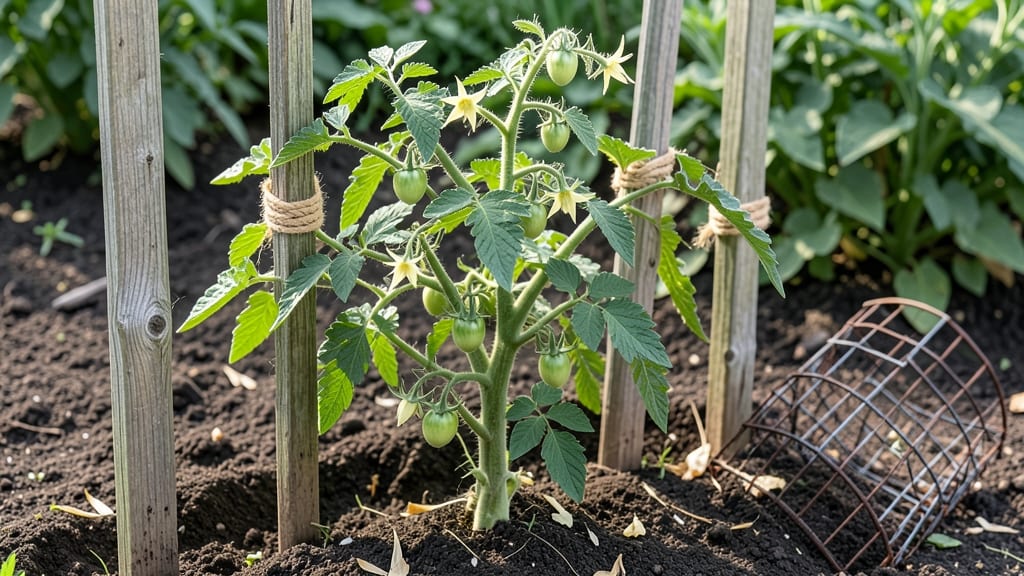
Staking indeterminate tomato plants saves your harvest from collapsing under its own weight. 🌱 I’ve seen 20-pound vines snap like twigs when left unsupported—and the heartbreak of wasted fruit is real. The right support turns a tangle of sprawling vines into a towering, productive plant that keeps producing until frost.
Start early, before vines reach 3 feet, using sturdy stakes (6+ feet tall) or cages that won’t buckle. Soft ties with cloth strips or Velcro keep stems from getting damaged, while pruning suckers weekly directs energy upward. The payoff?
Cleaner fruit, fewer diseases, and a plant that doubles its yield by staying upright. Common mistakes include stakes that lean or ties that strangle—always check for snugness without cutting circulation. A trellis works too, but indeterminates need vertical space to climb, not just horizontal sprawl.
Think of it as giving your plant a ladder instead of a hammock. For heavy harvests, combine stakes with a top wire at 5 feet to catch the weight of clusters.
Adjust supports as the plant grows, and you’ll end up with a neat, productive tower instead of a tangled mess. Trust me, your tomatoes will thank you.
📚 In This Guide
- What you need
- Instructions
- Tips and common mistakes
- Wrapping up and next steps
What you need
- ● Stakes or Cages: 6–8 ft tall bamboo stakes (4–6 per plant, spaced evenly)
- ● OR 5–6 ft heavy-duty tomato cages (1 per plant, reinforced with wire)
- ● Tying Supplies: Soft twist ties or jute twine (10–15 per plant)
- ● OR velcro plant ties (reusable, gentle on stems)
- ○ Support Structures (Optional but Helpful): Wooden trellis panels (for large gardens)
- ● Metal tomato rings (for windy areas)
- ● Plastic tree stakes (for extra stability)
- ● Pruning Tools: Sharp bypass pruners (for trimming suckers)
- ● Garden shears (for larger stems)
- ● Soil & Fertilizer: Balanced tomato fertilizer (5-10-10 or organic compost)
- ● Mulch (straw or shredded leaves to retain moisture)
- ● Healthy indeterminate tomato seedlings (transplanted after last frost)
- ● Well-draining soil (amended with compost if needed)
- ● Sunny spot with 6+ hours of direct sunlight
- ● Watering can or hose with a gentle spray nozzle
How to stake indeterminate tomato plants for maximum growth
Indeterminate tomatoes grow like jungle vines—here’s how to keep them sturdy and productive all season.
🪴 Step 1: Choose the Right Support System
Indeterminate tomatoes need strong, tall support because they keep growing until frost. I recommend 6-foot bamboo stakes or metal cages—both handle the weight of heavy fruit. For a DIY option, use 2x4 lumber cut to 7 feet and split into 4 stakes, then tie them together with twine at the top. Avoid single stakes—they can snap under the weight of a 1-pound tomato.
Drive or bury the support 6-8 inches deep into the soil next to each plant. The deeper the anchor, the less it’ll sway in wind. If using cages, place them right at planting time—digging them in later risks damaging roots. For stakes, wait until the plant reaches 12-18 inches tall before securing it to avoid stem damage.
🌱 Step 2: Secure the Plant as It Grows
When the tomato plant hits 12 inches tall, gently tie the main stem to the stake using soft plant ties or strips of old T-shirt fabric. Avoid wire or zip ties—they cut into stems as the plant thickens. Loop the tie around the stem once, then weave it around the stake in a figure-eight pattern to distribute pressure evenly.
Here’s the thing—don’t tie too tight. You want just enough support so the plant leans slightly against the stake, not a stranglehold. Every 6-8 inches of new growth, add another tie. Watch for suckers (side shoots in the leaf axils)—remove them to focus energy on the main stem. This keeps the plant strong and upright.
✂️ Step 3: Prune and Guide Growth Weekly
Indeterminate tomatoes grow fast, so check them weekly for pruning needs. Remove any suckers (those little shoots between the stem and branches) to prevent overcrowding. Use your thumb and forefinger to pinch them off cleanly—no snipping, or you’ll leave a wound that invites disease. Keep only 2-3 main branches per plant for best airflow and fruit production.
As the plant climbs, weave the main stem around the stake in a gentle spiral. This encourages upward growth and prevents the stem from snapping under fruit weight. If a branch gets too heavy, tie it to the stake with a soft loop—never let branches drag. You’ll know you’re doing it right when the plant looks like a controlled vine, not a tangled mess.
💧 Step 4: Adjust Support as Fruit Develops
When tomatoes start forming, check the stakes every 3-4 days. Heavy fruit clusters can bend stakes or break ties. Add extra ties to any branches with 3+ tomatoes—these need the most support. If a branch sags, gently reposition it and secure it again. The goal is to keep the fruit off the ground to prevent rot and improve air circulation.
Water deeply once a week (more in extreme heat) to avoid sudden weight gain in tomatoes that can snap stems. Mulch around the base with 2-3 inches of straw to retain moisture and keep soil stable. If your stakes lean, re-bury them 2-3 inches deeper—this prevents them from toppling when laden with fruit.
🌿 Step 5: Harvest and Maintain Through the Season
Pick tomatoes every 2-3 days once they start ripening. Overripe fruit weighs down branches faster than you’d think. After harvest, give the plant a gentle shake to check for hidden fruit—sometimes they hide in the foliage. If a branch breaks under the weight, prune it back to a healthy joint and tie the remaining growth securely.
By late summer, indeterminate tomatoes can reach 10+ feet tall. If your stakes aren’t tall enough, add an extension—use a 4-foot stake tied to the top of the original support. Keep pruning suckers and tying branches until frost. A well-supported plant will keep producing until the first hard freeze, giving you a harvest that lasts months.
Tips & tricks for perfect staking of indeterminate tomato plants
Here’s what nobody tells you about keeping those towering tomato vines from turning into a tangled disaster.
Support System Stability: The deeper you bury that 6-foot stake—aim for those 6-8 inches—the less it’ll wobble when your 1-pound tomatoes come in. I’ve seen stakes lean dramatically after just a few fruit clusters. For extra insurance, especially in windy areas, pound a second stake on the opposite side and connect them at the top with sturdy twine. This creates a "V" shape that resists swaying better than single stakes.
Tie Technique That Won’t Strangle: The figure-eight pattern around the stake isn’t just decorative—it’s how you distribute pressure evenly. I learned this the hard way when my first tomato plant developed a permanent "kink" from a tie that was too tight. Use soft plant ties or old T-shirt strips, and make sure you can still slide two fingers between the tie and the stem. This gives the plant room to grow while still providing support.
Pruning for Productivity: Those suckers—the little shoots in the leaf axils—might look harmless, but they’re energy vampires. Removing them weekly (yes, it’s tedious) directs all that plant power to your main branches where the fruit forms. I keep only 2-3 main branches per plant because more branches mean more fruit clusters that can overwhelm your support system. Think of it like training a vine—you want one strong, upward-growing leader, not a bushy mess.
Season-Long Adjustments: By late summer, your plants might reach 10 feet tall—way taller than your original stakes. When this happens, add a 4-foot extension stake tied to the top of your existing support. The key is to do this gradually as the plant grows rather than waiting until it’s already toppling over. Also, check those ties every 3-4 days once fruit starts forming—heavy clusters can break ties that seemed secure just days before.
Pro Tips for Staking Indeterminate Tomato Plants
- Here’s what nobody tells you about keeping those towering tomato vines from turning into a tangled disaster.
- Support System Stability: The deeper you bury that 6-foot stake—aim for those 6-8 inches—the less it’ll wobble when your 1-pound tomatoes come in.
- Tie Technique That Won’t Strangle: The figure-eight pattern around the stake isn’t just decorative—it’s how you distribute pressure evenly.
Frequently asked questions
Got questions about staking indeterminate tomato plants? You’re not alone!
Here are answers to the most common concerns—so you can grow like a pro.
When should I start staking indeterminate tomato plants?
Stake your plants before they need it—ideally when they’re 12–18 inches tall (about 4–6 weeks after transplanting). Indeterminate tomatoes grow continuously, so early support prevents flopping and damage. Use soft ties (like old T-shirts or plant tape) to avoid bruising stems.
What’s the best material for stakes or cages?
Choose based on your setup:
- Bamboo or wooden stakes: Sturdy and natural, but may degrade faster.
- Metal or PVC pipes: Long-lasting and reusable, but can heat up in sun.
- Tomato cages: Convenient but may not support heavy fruit loads as well as individual stakes.
How often should I tie up indeterminate tomatoes?
Check and adjust ties every 5–7 days (or after heavy rain/wind). As vines grow, loosen old ties to avoid girdling (restricting growth). Use a figure-eight method to secure stems gently—never wrap tightly around the stem itself.
What if my staked plant still flops over?
Flopping often means insufficient support or overloaded branches. Try these fixes:
- Add extra stakes or a trellis for wider plants.
- Prune lower leaves to reduce weight and improve airflow.
- Use soft fabric strips (not wire) to prevent stem damage.
Can I use companion plants to help support tomatoes?
Yes! Pair indeterminate tomatoes with strong climbers like:
- Pole beans or cucumbers (use shared stakes).
- Basil (repels pests and improves flavor).
- Marigolds (deter nematodes).
Wrapping up and next steps
Staking indeterminate tomato plants isn’t just about support—it’s about unlocking their full potential for bountiful, healthy harvests. With the right materials, timing, and care, you’ll transform floppy vines into towering, productive powerhouses. Whether you’re a seasoned gardener or a newbie, this method makes growing big tomatoes effortlessly rewarding.
Ready to elevate your garden game? Start by planting your staked tomatoes this season—your future salads (and bragging rights) will thank you! 🌱✨