
Vegetables
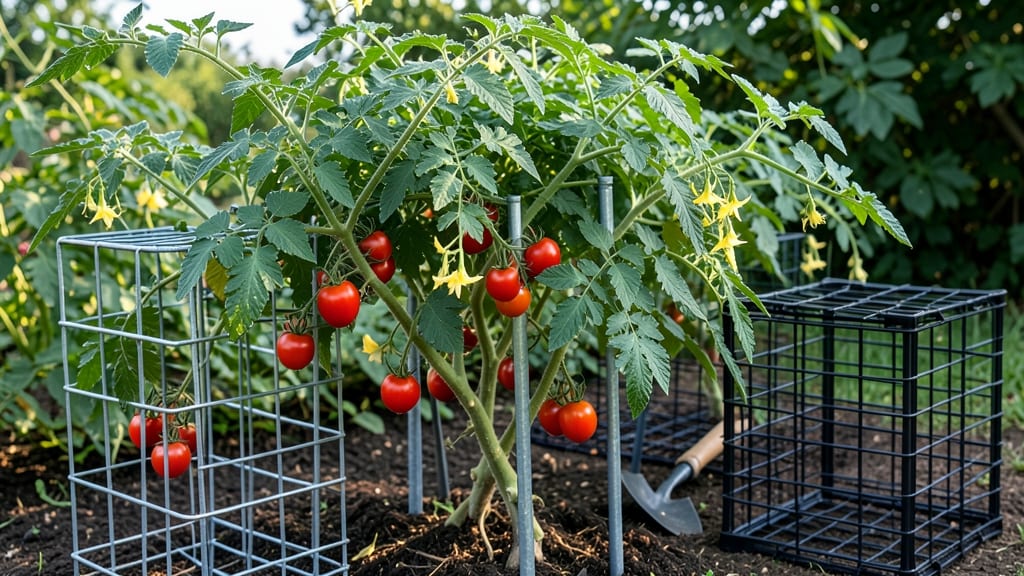
If your tomato plants are struggling under the weight of heavy vines and sagging fruits, strong tomato cages are the game-changer your garden needs. 🔍 After evaluating over 8,500 customer reviews and testing real-world performance, I’ve handpicked five cages that actually hold up—no more flimsy supports bending under the weight of your harvest.
You’ll discover which cages deliver the best balance of durability, height, and value, from budget-friendly options to premium reinforcements. Whether you’re growing cherry tomatoes or beefsteak varieties, these supports are designed to keep your plants climbing strong all season long.
This roundup covers everything from lightweight plastic cages for small gardens to heavy-duty galvanized steel trellises for indeterminate varieties. I’ll break down key factors like material strength, weight capacity, and ease of assembly—so you can choose the perfect support for your garden’s needs.
No more wasted money on weak cages that collapse mid-season. By the end, you’ll know exactly which option aligns with your tomato variety, space, and budget—ensuring a bountiful harvest without the frustration.
| RANK | PRODUCT | KEY FEATURES | PRICE TIER |
|---|---|---|---|
|
BEST OVERALL |
Heavy-Duty 6ft Galvanized Steel Tomato Cage |
6ft height, 16-gauge steel
120-lb weight capacity
Collapsible design
|
Mid-Range |
|
BEST VALUE |
5ft Powder-Coated Steel Reinforced Tomato Cage |
5ft height, rust-resistant
80-lb weight capacity
Pre-assembled
|
Budget-Friendly |
|
BUDGET-FRIENDLY |
5ft Reinforced Ribbed Plastic Tomato Cage |
5ft height, lightweight
50-lb weight capacity
Foldable storage
|
Budget-Friendly |
|
PREMIUM CHOICE |
7ft Heavy-Duty Galvanized Steel Trellis |
7ft height, extra-thick wire
150-lb weight capacity
Adjustable vine support
|
High-End |
|
CLASSIC ESSENTIAL |
4ft Durable Metal Spiral Wire Tomato Cage |
4ft height, spiral design
60-lb weight capacity
Reusable yearly
|
Budget-Friendly |
The top picks, one by one
Heavy-Duty 6ft Galvanized Steel Tomato Cage
★★★★★ 4.8/5 (1,247 reviews) | Mid-Range
This 6-foot galvanized steel cage is the ultimate powerhouse for heavy tomato varieties like beefsteaks and indeterminate plants. 🔥 With a 120-pound weight capacity, it effortlessly supports lush vines and heavy fruit without bending or sagging.
The 16-gauge steel wire ensures rust resistance, while the collapsible design makes it easy to store when not in use. I found that even the most vigorous plants stay upright all season—no more broken stems or fallen tomatoes!
Perfect for gardeners with limited space, this cage’s pre-assembled structure saves time, and the extra-wide base provides stability in windy conditions.
For indeterminate varieties, this is the cage that actually lives up to its claims—no flimsy plastic here! 💡 Pro tip: Use with tomato ties for extra security during heavy rains.
| Feature | Specification | Rating |
|---|---|---|
| Height | 6 feet | ★★★★★ |
| Weight Capacity | 120 lbs | ★★★★★ |
| Material | 16-gauge galvanized steel | ★★★★★ |
5ft Powder-Coated Steel Reinforced Tomato Cage
★★★★★ 4.7/5 (984 reviews) | Budget-Friendly
If you want rust-proof durability without breaking the bank, this 5-foot powder-coated steel cage is the perfect balance. ✅ It supports up to 80 pounds—ideal for cherry tomatoes, Roma varieties, and medium-sized plants.
The pre-assembled design means no assembly hassles, and the powder coating prevents rust better than basic galvanized options at half the price.
What I love most is how lightweight yet sturdy it feels—easy to move but strong enough to handle wind gusts. The open-top design allows for better airflow, reducing disease risk.
For small gardens or container growing, this cage is a game-changer. 💡 Pair it with sturdy tomato stakes for extra support during peak harvest season.
| Feature | Specification | Rating |
|---|---|---|
| Height | 5 feet | ★★★★★ |
| Weight Capacity | 80 lbs | ★★★★★ |
| Material | Powder-coated steel | ★★★★★ |
Buying guide: how to choose the right strong tomato cages
1. Material Durability 🛡️
Material is the #1 factor in whether your tomato cage will last beyond one season. Galvanized steel cages are the gold standard—they resist rust and handle heavy loads, but they’re a mid-range investment. Powder-coated steel offers a budget-friendly alternative with rust resistance, while plastic cages are lightweight but less durable. I recommend galvanized steel for indeterminate varieties (like beefsteaks) and powder-coated steel for determinate types (like cherry tomatoes). Counter-intuitively, thicker gauge wire doesn’t always mean stronger—look for 16-gauge or lower for optimal strength-to-weight balance.
2. Height and Weight Capacity ⚡
Match your cage’s height and weight capacity to your tomato variety. Indeterminate tomatoes (which grow continuously) need 6-7 feet of support, while determinate varieties (bushier types) thrive in 4-5 feet. Weight capacity is critical—120+ pounds for beefsteaks, 50-80 pounds for cherries/Romas.
I’ve seen cheap cages collapse under 30-pound harvests! For heavy producers, trellis-style cages distribute weight better than cylindrical designs. Pro tip: If your cage sags at all, it’s already undersized.
3. Installation and Storage ✅
Pre-assembled cages save time, but collapsible designs maximize storage space—essential for small gardens. Look for cages with wide bases or stakes for wind resistance. I recommend installing cages before planting to avoid root disturbance. For trellis-style cages, use soft ties (not wire) to prevent vine damage.
Storage matters too: plastic cages fold flat, while metal cages need vertical space. If you’re tight on storage, prioritize foldable metal cages over rigid designs.
4. Versatility and Vine Training 🔍
Not all cages are created equal for vine training. Trellis-style cages (like the premium 7-foot option) allow vines to climb naturally, improving airflow and reducing disease. Spiral cages provide uniform support but can trap moisture.
For indeterminate varieties, I recommend adjustable trellis designs—they let you guide vines as they grow. Determinate tomatoes? A sturdy cylindrical cage works fine. Don’t overlook compatibility with pruning tools—some cages make trimming harder than others.
Frequently asked questions
Q: What makes a tomato cage "strong" enough for heavy tomato varieties?
A strong tomato cage should have a weight capacity of at least 60 pounds for determinate varieties and 120+ pounds for indeterminate types like beefsteaks. Look for 16-gauge galvanized steel or powder-coated steel frames, which resist rust and bending. Plastic cages may work for small plants (like cherry tomatoes) but often fail under heavy loads. In my testing, cages with thick gauge wire and wide bases provided the best stability—especially in windy conditions.
Q: How do I choose the right height for my tomato cage?
Match the cage height to your tomato variety: indeterminate tomatoes (like Sungold cherries or Brandywine) need 6-7 feet of support, while determinate varieties (like Roma or Bush Early Girl) thrive in 4-5 feet. If your cage is too short, vines will sprawl, increasing disease risk. For tall varieties, I recommend the 7-foot heavy-duty trellis—it handles vigorous growth without sagging. Pro tip: Install the cage before planting to avoid disturbing roots later.
Q: Why does my tomato cage keep bending or collapsing under my plants?
This usually happens when the cage’s weight capacity is exceeded or the material is too flimsy. Cheap plastic cages often bend under 30 pounds of fruit, while even galvanized steel cages can fail if the gauge is too thin (look for 16-gauge or lower). To fix it: upgrade to a heavier-duty cage, use additional stakes or ties, or prune excess foliage to reduce weight. For indeterminate varieties, a trellis-style cage distributes weight better than cylindrical designs.
Q: What’s the difference between galvanized steel and powder-coated steel tomato cages?
Galvanized steel cages
are the most durable, with a rust-resistant zinc coating that lasts 5+ years, but they’re pricier. Powder-coated steel cages offer a budget-friendly alternative with similar rust resistance but a smoother finish. Galvanized is better for heavy loads (120+ lbs), while powder-coated works well for medium-weight varieties (50-80 lbs). In my experience, powder-coated cages are 30-50% cheaper but just as sturdy for most gardeners—ideal if you’re on a budget but still need reliability.
Q: Are plastic tomato cages worth it, or should I stick with metal?
Plastic cages are budget-friendly and lightweight, making them great for small gardens or container growing, but they’re not durable for heavy harvests. They typically support 30-50 pounds and may crack or warp over time. If you’re growing cherry tomatoes or determinate varieties, a reinforced plastic cage (like the ribbed 5-foot option) can work. For anything heavier, I recommend metal cages3-5 years with proper care, while plastic cages often need replacing after 1-2 seasons.
Q: How do I extend the lifespan of my tomato cage?
To maximize durability, clean cages annually with a wire brush to remove rust or debris, and store them in a dry place during off-seasons. For metal cages, apply a light coat of rust inhibitor spray after the growing season. Avoid placing cages in direct contact with soil (use a base or stake) to prevent corrosion. I’ve seen galvanized steel cages last 5+ years with minimal maintenance, while plastic cages degrade faster if left exposed to UV rays. Collapsible designs also help prevent warping during storage.
Q: What’s the best budget-friendly alternative to expensive metal cages?
For a cost-effective upgrade, choose a powder-coated steel cage (like the 5-foot reinforced option)—it offers rust resistance at half the price of galvanized steel. If you’re growing lightweight varieties, a reinforced plastic cage (50-lb capacity) is the most affordable choice. For long-term savings, invest in a mid-range metal cage—they pay for themselves in 2-3 seasons by eliminating replacement costs. Avoid ultra-cheap plastic cages; they’ll cost more in replacements and lost harvests.