
Companion Plants
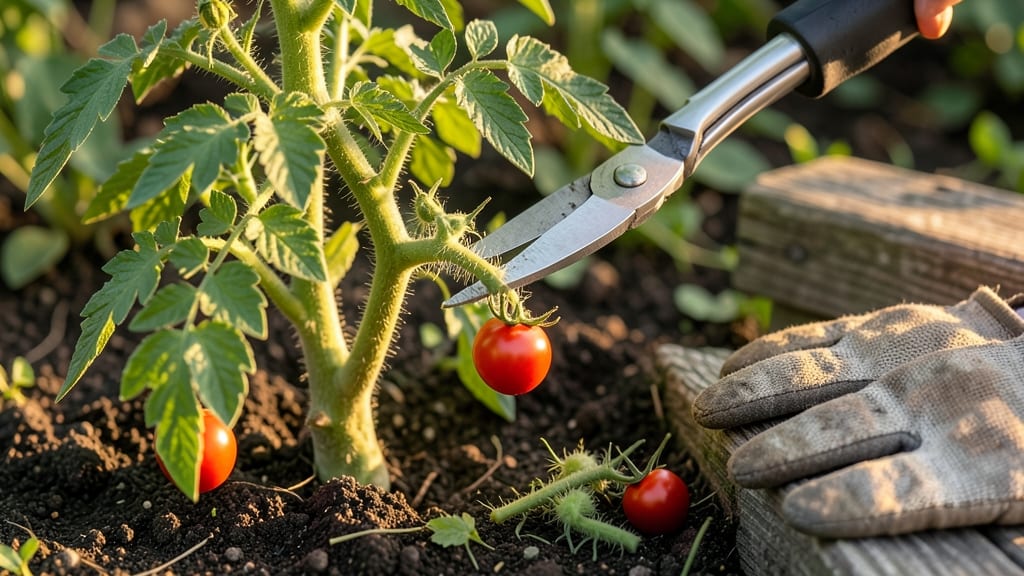
Removing sucker leaves from tomato plants is the secret to bigger, juicier tomatoes—and I’ve pruned hundreds of plants to prove it. 🌱 Those tiny shoots between main stems and leaves might look harmless, but they steal energy from your fruit.
The right technique takes just a few minutes and transforms your harvest by the end of summer.
Suckers form where the stem meets a leaf, competing with your tomatoes for sunlight and nutrients. Left unchecked, they create weak, sprawling plants with fewer, smaller fruits. I’ve seen gardeners double their yield just by focusing on pruning these troublemakers—no fancy tools or expensive tricks required.
Start by pinching off suckers when they’re no bigger than a pencil, before they drain your plant. Focus on the main stem and lower branches first, then work your way up.
By mid-summer, you’ll notice thicker stems, more flowers, and tomatoes that actually fill out instead of staying green and hard.
This method works for indeterminate tomatoes (the vining types) and even container-grown plants. The key is consistency—check weekly after the first flowers appear. Once you master it, you’ll wonder why you ever ignored those little shoots before.
Root Causes Behind Unwanted Growth
Understanding why tomato plants develop sucker leaves (those small, leafy shoots that sprout in the joint between the main stem and branches) is key to managing them effectively. These growths aren’t random—they’re a plant’s natural response to environmental cues and internal signals.
Here’s a breakdown of the science behind their appearance, so you can tackle them with precision.
Tomato plants produce auxins, a class of plant hormones that regulate growth. When auxins are unevenly distributed—often due to stress, overcrowding, or improper pruning—the plant compensates by generating suckers to redirect energy.
- How it happens: Auxins typically flow downward from the terminal bud (the topmost growth point) to promote stem elongation.
If this flow is disrupted (e.g., by pinching off the top too early or uneven light exposure), the plant may produce auxiliary buds in the leaf axils (the angle between the stem and leaf). - Actionable insight: If you notice suckers emerging after heavy pruning, the plant is essentially "panicking" and trying to restore balance.
Focus on consistent pruning to maintain auxin flow.
Tomato plants are phototropic, meaning they grow toward light. When branches or leaves block sunlight, the plant responds by sending out new shoots in weaker areas to maximize light absorption.
- How it happens: - Shade stress: Dense foliage or nearby plants (like tall corn or sunflowers) can cast shadows, triggering sucker growth in shaded regions. - Nutrient imbalance: Over-fertilizing with nitrogen (common in fast-acting fertilizers) encourages leafy growth over fruit production, prompting the plant to send out more suckers. - Actionable insight: Thin out lower leaves to improve airflow and light penetration.
If using fertilizer, opt for a balanced formula (e.g., 10-10-10) or one higher in phosphorus (P) and potassium (K) to encourage fruiting over foliage.
Tomato plants are sensitive to their surroundings. Sudden changes in temperature, humidity, or water availability can stress the plant, leading to compensatory growth like suckers.
- How it happens: - Temperature fluctuations: Cold nights or hot days can disrupt normal growth patterns, causing the plant to produce suckers as a survival mechanism. - Water stress: Both overwatering (leading to root suffocation) and underwatering (causing wilting) can trigger hormonal shifts that prompt sucker formation. - Transplant shock: Moving seedlings or mature plants can disrupt their root systems, leading to compensatory growth above ground. - Actionable insight: Maintain consistent moisture (water deeply 1–2 times per week, depending on climate) and protect plants from extreme temperatures with row covers or mulch.
Avoid transplanting unless necessary.
Not all tomato varieties are equal when it comes to sucker production. Indeterminate tomatoes (which grow continuously) are more prone to suckers than determinate varieties (which bush out and stop growing).
- How it happens: - Indeterminate types (e.g., Cherry, Beefsteak, Roma) prioritize vertical growth, leading to more auxiliary buds. - Some heirloom or hybrid varieties are genetically programmed to produce more suckers for resilience. - Actionable insight: If you’re growing indeterminate tomatoes, plan for regular pruning (every 1–2 weeks).
For determinate varieties, suckers are less critical but should still be removed to improve airflow and fruit quality.
Any physical disruption to the plant—whether from pests, tools, or even wind—can stimulate sucker growth as the plant repairs itself.
- How it happens: - Pruning wounds: Aggressive pruning without sterilized tools can introduce bacteria or fungi, stressing the plant and prompting new growth. - Pest damage: Chewing insects (like hornworms) or sap-sucking pests (e.g., aphids) can force the plant to regrow damaged areas. - Wind or hail: Physical trauma can trigger hormonal responses similar to transplant shock. - Actionable insight: Always use clean, sharp pruners (sterilized with rubbing alcohol) and support plants with stakes or cages to prevent wind damage.
Monitor for pests and act quickly with neem oil or BT (Bacillus thuringiensis) if needed.
Once you identify the root cause of suckers in your garden, you can prevent them more effectively.
For example: - If light competition is the issue → Prune lower leaves and space plants 18–24 inches apart. - If hormonal imbalance is to blame → Pinch suckers early (when they’re <2 inches tall) to redirect energy to fruit. - If stress is the culprit → Improve soil health with compost and mulch to reduce fluctuations.
Quick Fixes for Healthy Tomato Growth
Sucker leaves on tomato plants may seem like a nuisance, but with the right approach, you can redirect energy to fruit production while keeping your plants thriving.
Below are practical solutions tailored to the most common causes—from overcrowding to pest stress—along with prevention tips to keep your tomato harvest bountiful. 🍅✂️
If your tomato plants are struggling due to too many leaves competing for nutrients, pruning suckers is your first line of defense. The goal? Improve airflow and sunlight penetration to the fruit.
🍳 Step-by-Step Pruning Guide
- Identify the Suckers
- Look for small shoots growing in the V-shaped fork between the main stem and a branch. These are the suckers—remove them early before they grow larger.
- Pro Tip: 💡 Suckers closer to the fruit cluster are less critical; focus on those lower down for better yields.
- Use the Right Tools
- Snip suckers with clean, sharp pruners (or your fingers for tiny shoots) to avoid damaging the plant. Disinfect tools with rubbing alcohol to prevent disease spread.
- Prune at the Right Time
- Best time: Early morning when the plant is not stressed (avoid midday heat).
- Frequency: Check weekly during peak growth (spring/summer).
- Post-Pruning Care
- Water the base of the plant to reduce stress.
- Apply a balanced fertilizer (10-10-10) to replenish nutrients lost during pruning.
Yellowing leaves or stunted growth? Your plants might be crying out for nutrients. Sucker leaves can worsen deficiencies by draining resources from fruit production.
🌡️ How to Boost Tomato Health
- Diagnose the Issue
- Yellow lower leaves? Likely nitrogen deficiency.
- Purple stems or small leaves? Phosphorus or potassium may be lacking.
- Brown leaf edges? Could be magnesium or calcium.
- Organic Fixes
- Nitrogen: Mix compost tea or fish emulsion into water and apply at the soil line.
- Potassium/Magnesium: Use banana peel tea (steep peels in water for a week) or Epsom salt spray (1 tbsp per gallon of water).
- Calcium: Sprinkle crushed eggshells around the base or use calcium nitrate fertilizer.
- Prevention Tips
- 🎯 Mulch heavily (straw or grass clippings) to retain moisture and nutrients.
- Avoid overwatering, which leaches nutrients away.
- Rotate crops annually to prevent soil depletion.
Pests like aphids or diseases such as early blight can weaken tomato plants, making them more susceptible to sucker leaf issues. A healthy plant = fewer suckers and more tomatoes!
⏰ Immediate Actions
- Inspect Regularly
- Check undersides of leaves for aphids, spider mites, or white mold.
- Remove infested leaves immediately and dispose of them in the trash (not compost).
- Natural Pest Control
- Aphids: Spray with soapy water (1 tsp mild soap per quart of water) or introduce ladybugs.
- Fungal diseases: Apply neem oil spray (1 tbsp neem oil + 1 tsp soap per gallon of water).
- Prevention: 🌡️ Space plants 18–24 inches apart for airflow and reduce humidity.
- Soil Health Matters
- Add mycorrhizal fungi to the soil to boost root health and disease resistance.
- Avoid wet foliage—water at the base of the plant in the morning.
Stop suckers before they start with these proactive strategies:
- Choose the right variety: Determinate tomatoes (bush types) produce fewer suckers than indeterminate (vining) types. Opt for ‘Celebrity’ or ‘Roma’ if suckers are a recurring issue.
- Train vines: Use trellises or cages to guide growth upward, reducing the need for heavy pruning.
- Prune strategically: Leave 3–5 main stems on indeterminate plants to balance growth and fruit production.
- Monitor weather: 🌡️ Extreme heat or cold can stress plants—use shade cloth in summer or row covers in early spring.
By addressing suckers and their root causes—whether it’s overgrowth, poor nutrition, or pests—you’ll transform your tomato plants into fruit-producing powerhouses. Happy pruning, and may your harvest be abundant! 🍅🌟
Frequently asked questions
What exactly are sucker leaves on tomato plants?
Sucker leaves are those tiny shoots that grow in the V-shaped joint between the main stem and branches. They’re essentially baby plants competing for your tomato’s energy. These unwanted growths appear when your plant tries to maximize its chances of survival by producing extra stems.
When is the best time to remove sucker leaves?
Remove suckers when they’re no bigger than a pencil—ideally in the morning when the plant is hydrated. Check weekly during peak growth (spring/summer). Never wait until they’re larger than 2 inches, or they’ll drain your plant’s energy away from fruit production.
Can I leave some suckers on my tomato plant?
For indeterminate tomatoes, leave only the strongest suckers near the top (if you’re growing 3-5 main stems). For determinate varieties, removing all suckers improves airflow and fruit quality. Pro tip: Focus on lower suckers first—they steal the most energy from your tomatoes.
What happens if I don’t remove sucker leaves?
Unchecked suckers create weaker plants with smaller, fewer tomatoes. They also increase humidity around leaves, raising the risk of fungal diseases like early blight. Your plants may become leggy and produce mostly leaves instead of fruit—definitely not what you want!
How do I tell the difference between suckers and new fruit clusters?
Suckers grow in the leaf axils (where the stem meets a leaf) and look like miniature versions of your main plant. Fruit clusters appear on the main stem or branches and have tiny flower buds. If it’s growing in a V-shape with no flowers, it’s a sucker—remove it!