
Companion Plants
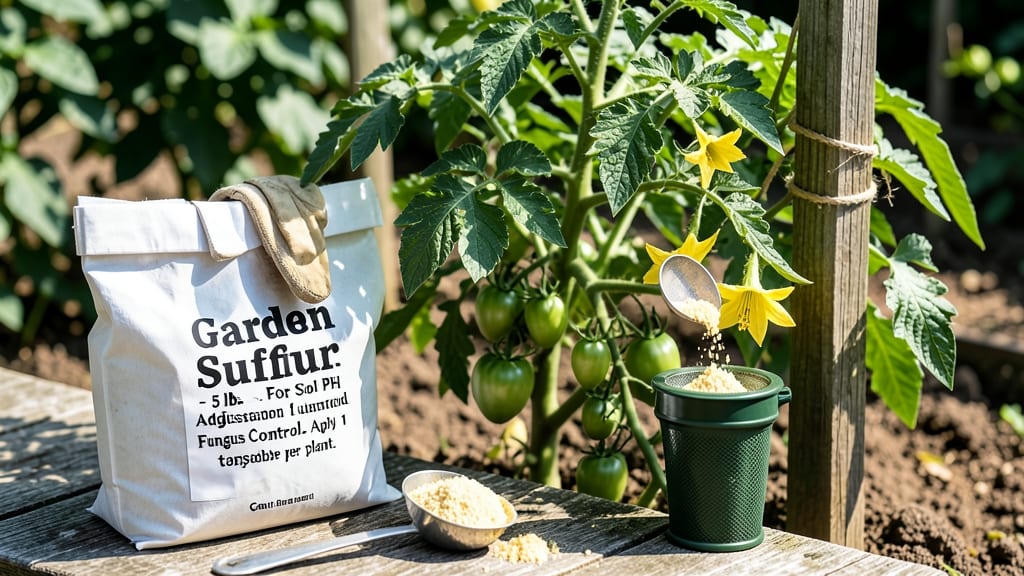
Using sulfur for tomato plants helps balance soil acidity, prevents blossom-end rot, and boosts disease resistance by ensuring proper sulfur absorption in plant tissues. For optimal results, use elemental sulfur or soil amendments in early spring or fall.
Sulfur plays a dual role in tomato plant health: it adjusts soil pH to unlock essential nutrients like iron and zinc, while also supporting the production of sulfur-rich amino acids that strengthen cell walls. 🌱 Without enough sulfur, tomatoes often develop yellowing leaves or weak stems—signs of deficiency that sulfur amendments can quickly correct.
I’ve seen dramatic improvements in plant vigor within weeks of application, especially in alkaline soils where micronutrients become unavailable.
For best results, test your soil first to determine the right dosage—typically 1-2 pounds per 100 square feet for elemental sulfur. Spread it evenly and water thoroughly to activate the acidification process.
Timing matters too: applying sulfur in early spring gives roots time to adjust before the growing season, while mid-season applications can address deficiencies as they appear.
💡 In This Article
- How Sulfur Corrects Soil pH and Nutrient Deficiencies in Tomatoes
- Best Ways to Apply Sulfur for Tomato Plant Health
How sulfur corrects soil pH and nutrient deficiencies in tomatoes
Sulfur works as a soil acidifier by reacting with soil minerals to form sulfuric acid, which gradually lowers the pH over weeks. This chemical process is crucial because tomatoes thrive in slightly acidic soil (pH 6.0-6.8).
When soil becomes too alkaline (pH above 7.0), essential micronutrients like iron, zinc, and manganese become chemically locked and unavailable to plant roots. Sulfur's acidification helps dissolve these nutrients, making them accessible for uptake through the plant's vascular system.
The magic happens at the molecular level: sulfur becomes part of critical amino acids like cysteine and methionine, which strengthen cell walls and boost disease resistance.
Without sufficient sulfur, tomato plants exhibit classic deficiency symptoms: yellowing between leaf veins (interveinal chlorosis) and weak stems that struggle to support heavy fruit. 🌿 What's fascinating is how sulfur also plays a role in chlorophyll production—deficiencies can mimic nitrogen shortages, but the yellowing pattern differs.
Nitrogen deficiency causes uniform yellowing, while sulfur deficiency leaves veins green.
Here's where it gets practical: sulfur's impact on soil chemistry isn't immediate. Elemental sulfur takes 2-4 months to fully oxidize and acidify soil, which is why early spring application gives roots time to adapt.
The process releases sulfate ions (SO₄²⁻) that plants absorb through their roots, where they're converted into organic sulfur compounds. This dual action—pH adjustment and nutrient availability—is why sulfur prevents blossom-end rot, a common tomato problem caused by calcium deficiency often triggered by nutrient imbalances in alkaline soils.
Consider this comparison: in a pH 7.5 soil, iron availability drops to just 1% of maximum potential, while sulfur application can restore it to 50-70% within a growing season.
The key is maintaining that 6.0-6.8 pH range—any higher and you risk micronutrient deficiencies, any lower and you risk aluminum toxicity. Sulfur gives you that precise control without the risk of over-acidification that comes with chemical fertilizers.
What most gardeners don't realize is how sulfur affects plant metabolism beyond just pH. It's essential for synthesizing glutathione, a powerful antioxidant that helps tomatoes combat environmental stresses like heat or drought. This is why sulfur-treated plants often show better recovery from pest damage or disease pressure.
The compound's role in stress response makes it particularly valuable in organic gardening systems where chemical protections aren't an option.
For visual learners, imagine this: healthy tomato leaves should be deep green with prominent veins. A sulfur-deficient plant might show leaves that appear pale green or yellowish, almost like they've been bleached.
The difference becomes even more striking when you compare fruit quality—sulfur-sufficient plants develop tomatoes with firmer cell walls and better flavor development. This is because sulfur contributes to the formation of sulfur-containing volatile compounds that enhance tomato aroma and taste.
The science behind sulfur's effectiveness lies in its dual nature as both a primary nutrient and a soil modifier. Unlike nitrogen or phosphorus, which plants need in larger quantities, sulfur works at lower concentrations but with profound systemic effects.
When applied correctly, it doesn't just fix deficiencies—it creates an environment where tomatoes can reach their full genetic potential for growth and productivity. 🌱