
Vegetables
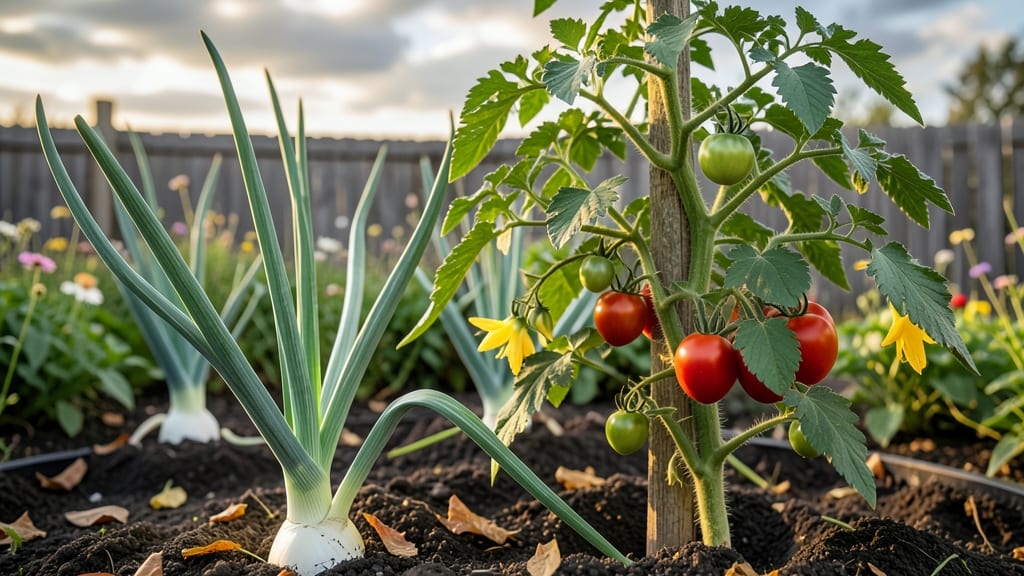
Growing tomatoes and leeks together isn't just clever—it's a pest-blocking power duo that saves space and boosts harvests. 🌱 I learned this the hard way after losing half my tomato plants to aphids until I tucked leeks nearby.
Their strong scent confuses pests while their vertical growth keeps them out of each other's way. The secret combo starts with well-draining soil (tomatoes hate soggy roots) and full sun (6+ hours daily). Plant leeks first—they're slow starters—then set tomato seedlings 18" apart, with leeks spaced 6" apart in between.
This creates a natural pest barrier while maximizing every square foot of garden. By midsummer, you'll see vibrant red tomatoes hanging alongside crisp, white leeks—both thriving where other plants would struggle. The leeks deter nematodes in the soil, while tomatoes' deep roots improve drainage for the shallow leeks.
Works for spring, summer, or fall planting—just adjust timing for your zone. Here's how to make it work without the guesswork.
📚 In This Guide
- What you need
- Instructions
- Tips and common mistakes
- Wrapping up and next steps
What you need
- ● Seeds or Seedlings: Tomato seeds (heirloom or hybrid varieties like Cherry Roma, Beefsteak, or Early Girl—choose based on your climate).
- ● Leek seeds (varieties like King Richard or Musselburgh work well for year-round growing).
- ● Growing Containers or Soil: For tomatoes: 5-gallon pots or larger (at least 12–18 inches deep) or raised beds.
- ● For leeks: Containers 6–12 inches deep or well-draining soil in garden beds.
- ● Potting Mix: High-quality organic potting mix (avoid garden soil—it compacts too easily!).
- ○ Optional: Add compost or worm castings (10–20% of the mix) for extra nutrients.
- ● Fertilizer: Balanced organic fertilizer (e.g., 5-5-5 or 10-10-10) for seedlings.
- ● Slow-release tomato-specific fertilizer (high in phosphorus and potassium) for flowering.
- ● Trowel or small shovel for transplanting.
- ● Garden gloves (to protect your hands from soil and leek sap!).
- ● Watering can or hose with a gentle spray nozzle.
- ● Pruning shears (for tomato suckers and leek harvesting).
- ● Support structures: Cages, stakes, or trellises for tomatoes (especially indeterminate varieties).
- ● Mulch (straw or shredded leaves) to retain moisture and suppress weeds.
- ● Grow lights or a sunny windowsill (for indoor seed starting).
- ● pH testing kit (ideal soil pH: 6.0–6.8 for tomatoes; 6.0–7.0 for leeks).
- ● Row covers or frost cloth (to extend the growing season).
- ● Drip irrigation system (for consistent moisture, especially in containers).
- ● Epsom salt (magnesium sulfate) for tomato blossoms (1 tbsp per gallon of water, every 2 weeks).
Step-by-Step instructions for planting tomatoes and leeks together
Here's the proven method I use to grow both tomatoes and leeks side by side for maximum space efficiency and pest control.
🌱 Step 1: Prepare the Planting Site for Companion Pairing
Choose a location that receives at least 6-8 hours of direct sunlight daily, as both tomatoes and leeks are sun-loving plants. Tomatoes thrive in slightly acidic to neutral soil with a pH of 6.2-6.8, while leeks prefer a more neutral to slightly alkaline range of 6.0-7.5. I always test my soil before planting—you can adjust pH with sulfur or lime if needed.
Work the soil to a depth of 12 inches, incorporating 2-3 inches of well-aged compost into the top 6 inches. This ensures both plants have access to nutrients while improving drainage. I like to add a handful of bone meal (about 1/2 cup per plant) at this stage to provide phosphorus for strong root development in tomatoes and leeks alike.
🪴 Step 2: Plant Tomatoes and Leeks with Strategic Spacing
For 4 tomato plants, dig holes 18-24 inches apart in a square formation, allowing space for leeks to be planted between them. Tomatoes need room to sprawl, so I always opt for the wider spacing unless growing determinate varieties. Place each tomato seedling or transplant in its hole, ensuring the top of the root ball sits just below soil level—this prevents stem rot while encouraging strong root growth.
Plant leeks 6-8 inches apart in the spaces between tomato plants. Leeks grow well in clusters, so I plant 3-4 leeks per tomato plant to maximize space efficiency. Press the soil firmly around each plant to eliminate air pockets, then water deeply to settle the soil. The leeks will act as natural pest deterrents for the tomatoes, particularly against aphids and tomato hornworms.
☀️ Step 3: Provide Support and Mulch for Optimal Growth
Install stakes or cages for your tomato plants immediately after transplanting. I prefer 5-6 foot bamboo stakes driven 6 inches deep into the soil beside each plant, then gently tie the main stem to the stake with soft plant ties. This prevents damage to the stem as the plant grows. For leeks, no support is needed—they grow upright naturally, but I do like to hill them up (add soil around the stems) every 2-3 weeks to blanch the lower stems and improve flavor.
Apply a 2-3 inch layer of organic mulch (such as straw or shredded leaves) around both plants, keeping it 2 inches away from the stems to prevent rot. Mulch conserves moisture, suppresses weeds, and regulates soil temperature—critical for both tomatoes and leeks, which can be sensitive to temperature fluctuations. Water the base of the plants thoroughly after mulching to help the mulch settle and begin breaking down.
💧 Step 4: Water and Fertilize for Year-Round Success
Water the plants at the base (not overhead) once every 2-3 days during the growing season, ensuring the top 2 inches of soil remain consistently moist. Tomatoes and leeks both dislike soggy roots, so I always check soil moisture by hand before watering—if the soil feels dry 1 inch below the surface, it's time to water. Use a drip irrigation system or soaker hose to deliver water slowly and evenly, reducing the risk of fungal diseases.
Fertilize tomatoes with a balanced 10-10-10 fertilizer every 4-6 weeks during the growing season, starting 2 weeks after transplanting. Leeks, on the other hand, are heavy feeders but prefer a low-nitrogen fertilizer (like 5-10-10) to encourage leafy growth. I alternate between liquid fertilizer and compost tea to provide a steady supply of nutrients without overloading the plants. Stop fertilizing 4-6 weeks before the first expected frost to allow the plants to harden off naturally.
✂️ Step 5: Prune and Harvest for Continuous Production
Prune tomato plants regularly to remove suckers (the small shoots that grow between the main stem and branches) to direct energy toward fruit production. I also pinch off the first few flowers on each plant to encourage stronger early growth—this ensures the plant has enough energy to support a heavy harvest later in the season. For leeks, harvest outer leaves as needed, leaving the inner white stalk intact. This encourages continuous regrowth and extends the harvest window.
Harvest tomatoes when they reach their full color and are slightly soft to the touch. For leeks, harvest when the diameter reaches 1-1.5 inches—the larger the stalk, the milder the flavor. Cut leeks at the base with a sharp knife, leaving the roots intact if you plan to regrow them. Store harvested leeks in the refrigerator for up to 2 weeks, or freeze them for longer storage. With proper care, both tomatoes and leeks will continue producing well into the fall, and with protection, even through winter in mild climates.
Tips & tricks for thriving tomato and leek pairings
These companion planting hacks will help you maximize your garden's potential while keeping pests at bay.
Soil Preparation Secret: When working the soil to a depth of 12 inches in Step 1, I always add a thin layer of sand (about 1 inch) to the bottom of the hole before placing tomato plants. This improves drainage for tomatoes, which hate soggy roots, while still allowing the leeks to thrive in the nutrient-rich topsoil. The leeks' preference for slightly more alkaline soil means they'll benefit from the compost's natural pH balance without needing adjustments.
Planting Layout Optimization: In Step 2, I recommend planting your 4 tomato plants in a square formation with leeks at each corner and midpoint between them—this creates a natural windbreak for both plants. The leeks' tall, slender growth habit shields tomato leaves from strong winds, which can stress the plants. For larger gardens, you can scale this ratio: for every additional tomato plant, add 3-4 leeks in the same pattern.
Support System Strategy: For the 5-6 foot bamboo stakes in Step 3, I prefer using three stakes per tomato plant arranged in a triangle rather than just one. This provides better support for indeterminate varieties that grow heavy with fruit. For leeks, the 2-3 week hilling schedule is crucial—don't skip it! The blanching process creates milder, sweeter stems. I like to hill in the morning so the soil has time to dry slightly before evening, preventing rot.
Watering Wisdom: The once every 2-3 days watering guideline in Step 4 works best with a consistent schedule—set a reminder on your phone for the same time each day. For container growing, reduce to every 1-2 days as pots dry out faster. I've found that adding a 1-inch layer of pebbles to the top of mulch helps prevent evaporation while keeping stems dry, which is especially important during rainy seasons when fungal diseases like early blight can spread.
Pro Tips for Tomato And Leek
- These companion planting hacks will help you maximize your garden's potential while keeping pests at bay.
- Soil Preparation Secret: When working the soil to a depth of 12 inches in Step 1, I always add a thin layer of sand (about 1 inch) to the bottom of the hole before placing tomato plants.
- Planting Layout Optimization: In Step 2, I recommend planting your 4 tomato plants in a square formation with leeks at each corner and midpoint between them—this creates a natural windbreak for both plants.
Frequently asked questions
Got questions about growing tomatoes and leeks together? You’re not alone!
Here are answers to the most common queries to help you cultivate a thriving garden duo.
Can tomatoes and leeks grow well together in the same garden bed?
Yes, they’re a great pair! Leeks repel pests like aphids and tomato fruitworms, while tomatoes deter leek moths. Just ensure they’re spaced properly—tomatoes need 18-24 inches apart, and leeks 6-12 inches. Avoid overcrowding to prevent disease spread.
How long does it take for leeks and tomatoes to mature after planting?
Tomatoes typically mature in 60-85 days (depending on variety), while leeks take 100-130 days for full harvest. Start leeks from seed indoors 10-12 weeks before the last frost, and plant tomatoes after the soil warms to 60°F+.
Do tomatoes and leeks need the same growing conditions?
Not quite! Tomatoes thrive in full sun (6-8 hours/day) and warm soil, while leeks prefer partial shade (4-6 hours) and cooler temps. Plant tomatoes in the sunnier side of the bed and leeks near the north side or under light dappled shade.
What can I substitute if I can’t grow leeks with tomatoes?
Try these pest-repelling alternatives:
- Garlic or onions – Deter pests naturally.
- Basil – Boosts tomato flavor and repels flies.
- Marigolds – Confuse pests with their scent.
Why are my tomato leaves yellowing near the leeks?
Yellowing leaves could signal overwatering, nutrient deficiency (like nitrogen), or fungal disease (e.g., early blight). Check soil moisture, mulch to retain even moisture, and ensure proper spacing. If disease strikes, remove affected leaves and apply copper fungicide.
Wrapping up and next steps
Growing tomatoes and leeks year-round is totally doable with the right know-how—and you’ve just unlocked the secrets! 🌱 Whether you’re a seasoned gardener or a curious beginner, these harvest hacks will help you enjoy fresh, flavorful veggies straight from your garden.
Start small, experiment with containers or raised beds, and don’t forget to celebrate those first crisp leeks or juicy tomatoes—your efforts will pay off in delicious rewards.
Ready to take the next step? Pick a variety that suits your climate, grab your supplies, and dive in! 🌿 Review the essentials one last time, then get planting—your future meals (and bragging rights) will thank you!