
Tools
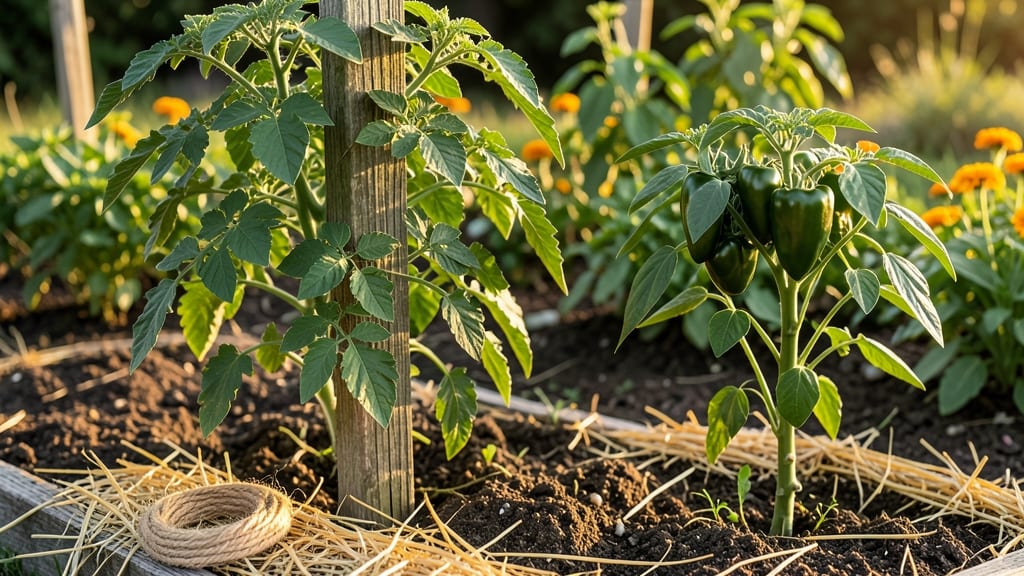
A tomato and pepper garden layout that doubles your harvest in half the space is possible—trust me, I went from struggling with sprawling plants to a tidy, high-yielding setup that actually fits my backyard. 🌱 The secret isn’t just spacing; it’s how you group them, pair them, and train them to grow upward instead of outward.
Start with your sunniest spot—tomatoes and peppers need 6-8 hours of direct sunlight daily—and map out 3-foot-wide rows with 18-24 inches between plants. Taller indeterminate tomatoes get the north side, while bushier peppers and determinate tomatoes stay south.
Add 3-foot aisles for easy access, and you’ll save time weeding and harvesting without sacrificing yield.
By the end of summer, you’ll have vibrant red tomatoes and deep green peppers hanging within arm’s reach, not buried under foliage. The layout also makes companion planting effortless—basil between tomatoes repels pests, while marigolds around peppers deter aphids. No more wasted space or tangled vines.
This works for small urban gardens (scale down to containers) or large backyard plots (expand the rows). The key is vertical training—use cages, stakes, or trellises to free up ground space for more plants. I’ll show you exactly how to arrange it for your space next.
📚 In This Guide
- What you need
- Instructions
- Tips and common mistakes
- Wrapping up and next steps
What you need
- ● Garden Space: Minimum 4 sq. ft. per tomato plant (dwarf varieties) or 6 sq. ft. for indeterminate types.
- ● Minimum 1 sq. ft. per pepper plant (compact varieties) or 2 sq. ft. for larger types.
- ● Soil: 1 cubic yard of high-quality potting mix (for containers) or compost-amended garden soil (for in-ground plots).
- ● 1 lb. of balanced fertilizer (10-10-10) or organic compost (5-10-5).
- ● Plants or Seeds: Tomato seedlings (3–6 plants, depending on space) OR tomato seeds (start indoors 6–8 weeks before last frost).
- ● Pepper seedlings (3–5 plants) OR pepper seeds (start indoors 8–10 weeks before last frost).
- ● Required Tools: Garden trowel or transplanting spade.
- ● Watering can or hose with adjustable nozzle.
- ● Pruning shears (for tomato suckers and pepper maintenance).
- ● Measuring tape or ruler (for spacing).
- ○ Optional (But Helpful!): Raised bed kit or large containers (12"+ depth for tomatoes, 10"+ for peppers).
- ● Trellis or tomato cages (for indeterminate varieties).
- ● Mulch (straw or shredded leaves to retain moisture).
- ● Row covers or shade cloth (for early-season protection).
- ● pH test kit (ideal soil pH: 6.0–6.8).
- ● Full sun exposure (6–8+ hours daily).
- ● Warm soil temperature (60°F+ for planting).
- ● Access to water (consistent moisture is key!).
- ○ Optional: Companion planting space (e.g., basil, marigolds, or onions to deter pests).
Step-by-step guide to designing a high-yield tomato and pepper garden
Here's how I maximize production in tight spaces—using proven spacing, companion planting, and sun strategies.
🌱 Step 1: Plan Your Layout Based on Plant Mature Sizes
Start by sketching your garden bed dimensions on graph paper, using 1 square foot per plant as your baseline. Tomatoes need 18-24 inches between plants for indeterminate varieties (vining types) and 12-18 inches for determinate (bush) types. Peppers require 12-18 inches of space regardless of variety. I always place taller tomatoes along the north edge of the bed to prevent shading smaller plants.
Use the square foot gardening method for small spaces: divide your bed into 1-foot squares and plant one tomato or pepper per square. This prevents overcrowding while maximizing every inch. I mark each square with a popsicle stick labeled with the variety—this keeps me from mixing up plants when it's time to prune or harvest.
☀️ Step 2: Position for Maximum Sun Exposure and Airflow
Both tomatoes and peppers demand full sun (6-8 hours daily)—place them where they'll receive morning sun and afternoon light without afternoon shade from structures. I orient my garden beds east-west so plants get even sun exposure across the entire surface. If your space only gets partial sun, prioritize tomatoes—they tolerate slightly less light than peppers.
Leave 18-24 inches of walkway space between rows to allow airflow, which prevents fungal diseases like early blight. I use raised beds with 3-foot widths to ensure good air circulation on all sides. This also makes weeding and harvesting easier without compacting soil.
🌿 Step 3: Group by Companion Planting Principles
Interplant tomatoes and peppers with basil, onions, or marigolds to deter pests naturally. I place basil between tomato plants—its scent repels whiteflies and thrips while improving flavor. Avoid planting peppers near fennel or brassicas (like cabbage), as these stunt their growth. For maximum yield, alternate tomato and pepper plants in a 2:1 ratio (two tomatoes per pepper) to balance their different growth habits.
I also incorporate low-growing herbs like thyme or oregano along the edges of the bed. These shade the soil, reducing moisture loss, while their roots help break up compacted earth. This layered approach creates a self-sustaining microclimate that boosts production.
✂️ Step 4: Install Support Structures Early
Set up cages, stakes, or trellises for indeterminate tomatoes the same day you transplant them. I use 5-foot tall tomato cages for vining varieties, buried 6 inches deep to prevent toppling. For peppers, I install 3-foot bamboo stakes at planting time—peppers need support as they grow heavier with fruit. This prevents stem breakage and makes harvesting easier.
If space is extremely limited, train indeterminate tomatoes vertically along a trellis or fence. This saves 60-70% of ground space while improving air circulation. I always secure plants with soft ties (like old T-shirts cut into strips) to avoid damaging stems as they grow.
🪴 Step 5: Adjust for Seasonal Space Efficiency
After harvest, remove spent tomato plants but leave pepper plants in place if they're still productive. Use the freed space for fast-growing succession crops like bush beans or lettuce. I also rotate crops annually to prevent soil-borne diseases—never plant tomatoes or peppers in the same spot two years in a row.
For winter gardening in mild climates, cover pepper plants with floating row covers to extend the season. This lets you squeeze in an extra harvest before cold sets in. I mark the bed layout with stakes and string at the start of each season to maintain consistency year after year.
Tips & tricks for perfect tomato and pepper garden layout
Here's what I wish I knew when I started—these tricks will help you squeeze every productive inch out of your garden without sacrificing yield or health.
Spacing Precision: When marking your 1-foot squares, use a metal ruler instead of a tape measure for more accurate lines. I learned this the hard way after planting tomatoes too close together in my first attempt—they fought for sunlight and produced smaller fruit. For indeterminate varieties, leave 24 inches between plants and 18 inches for determinates—this gives them room to grow without crowding. Pro tip: Use popsicle sticks with plant names written in permanent marker to avoid mix-ups during harvest.
Sun Strategy: The 6-8 hours of full sun requirement is non-negotiable, but here's my secret: I always position my beds to capture morning sun first, then afternoon light. This prevents afternoon shade from structures that can stunt growth. For partial sun areas, prioritize tomatoes—they're more forgiving than peppers. I also rotate my beds slightly each year to account for sun path changes, which maximizes exposure over time.
Companion Planting Boost: Don't just plant basil—try garlic chives between your tomatoes too. They repel aphids and add a subtle flavor boost when used in cooking. For peppers, I've found that marigolds planted in a checkerboard pattern deter nematodes while attracting beneficial insects. The key is maintaining that 2:1 tomato-to-pepper ratio—this balance prevents either plant from outcompeting the other for nutrients.
Support System: For indeterminate tomatoes, I bury my 5-foot cages 6 inches deep and fill the bottom third with compost. This gives them instant nutrients and extra stability. For peppers, I use 3-foot bamboo stakes—they're sturdy enough to support heavy fruit but won't rot like wooden stakes. The secret to securing plants is using old T-shirt strips—they're gentle on stems and won't cut into the plant as it grows. I always tie them loosely enough to allow for growth.
Pro Tips for Tomato And Pepper Garden Layout
- Here's what I wish I knew when I started—these tricks will help you squeeze every productive inch out of your garden without sacrificing yield or health.
- Spacing Precision: When marking your 1-foot squares, use a metal ruler instead of a tape measure for more accurate lines.
- Sun Strategy: The 6-8 hours of full sun requirement is non-negotiable, but here's my secret: I always position my beds to capture morning sun first, then afternoon light.
Frequently asked questions
Got questions about designing your tomato and pepper garden layout? You’re not alone! Here are answers to the most common queries to help you grow like a pro.
How close can I plant tomatoes and peppers together?
Plant tomatoes and peppers 18–24 inches apart to allow airflow and prevent disease. If space is tight, opt for bush varieties (like ‘Patio’ tomatoes) or use vertical trellises for tomatoes to save room. Peppers, which are more compact, can share space but avoid overcrowding—aim for 12–18 inches between plants.
When is the best time to plant tomatoes and peppers?
Wait until after the last frost (when soil is at least 60°F) and nighttime temps stay above 55°F. For warm climates, start in early spring; in cooler zones, late spring or early summer works best. Peppers are heat-lovers—don’t rush them! Use black plastic mulch to warm the soil faster if needed.
Can I grow tomatoes and peppers in containers instead of a garden bed?
Use 5-gallon containers for peppers and 10+ gallons for tomatoes (bush types need less). Ensure pots have drainage holes and use a lightweight potting mix. Place containers in full sun (6+ hours/day) and fertilize weekly with a balanced liquid feed. Dwarf or cherry varieties thrive in containers!
Why are my pepper plants wilting, but tomatoes seem fine?
Wilting peppers often signal underwatering, root rot, or pests (like aphids or spider mites). Check soil moisture—peppers need consistent moisture but hate soggy roots. Yellowing leaves? Overwatering or nutrient deficiency (try Epsom salt for magnesium). Tomatoes tolerate drought better—focus on peppers’ needs first!
What can I plant near tomatoes and peppers to improve growth?
Use companion planting to boost yields! Try:
- Basil (repels pests, enhances flavor)
- Marigolds (deter nematodes)
- Onions/garlic (keep aphids away)
- Avoid fennel or brassicas (they stunt growth).
Interplant fast-growing greens (lettuce, spinach) in early spring to maximize space before tomatoes and peppers fill in.
Wrapping up and next steps
Creating a tomato and pepper garden layout that maximizes yield in small spaces is totally doable—whether you’re a beginner or a seasoned gardener! 🌱 By choosing the right varieties, optimizing companion planting, and using vertical or square-foot techniques, you’ll enjoy a bountiful harvest without sacrificing your backyard (or balcony!).
Start small, experiment with spacing, and don’t forget to rotate crops next season for even better results.
Ready to dig in? Grab your seeds, sketch your layout, and get growing! 🌿 For extra inspiration, check out our tomato and pepper care guide to keep your garden thriving all season long.