
Planting
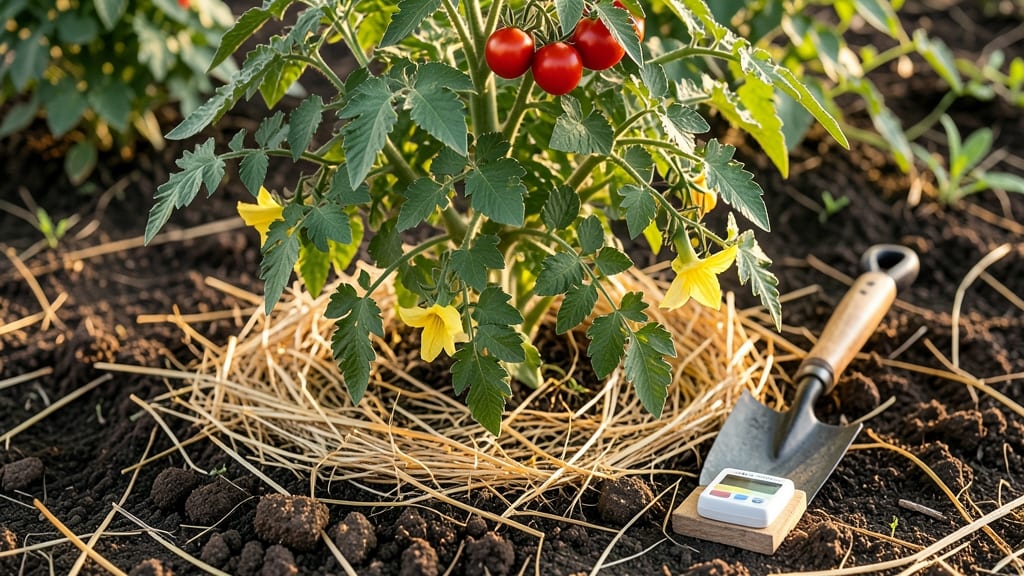
Tomato plant soil requirements include well-draining, nutrient-rich soil with a pH between 6.2 and 6.8, at least 25% organic matter like compost, and a loose texture that prevents root rot while maximizing growth and fruit production.
Tomatoes thrive when their roots access both moisture and oxygen, which is why loose, aerated soil is non-negotiable. 🌱 The ideal mix combines 50% garden soil, 30% compost, and 20% perlite or vermiculite to create the perfect balance.
I’ve found that adding a handful of worm castings boosts microbial activity, helping roots absorb nutrients more efficiently. For container gardening, use a slightly lighter blend—think 40% potting mix, 30% compost, and 30% coconut coir—to prevent compaction.
Testing your soil’s pH before planting is a game-changer. Most garden centers sell affordable kits, and if your soil tests too acidic (<6.2), a sprinkle of lime can adjust it over time. Overly alkaline soil (>6.8) may require sulfur or peat moss to bring it back into range.
Remember, tomatoes are heavy feeders, so replenish nutrients mid-season with a balanced fertilizer or banana peels for extra potassium.
💡 In This Article
- Optimal Tomato Soil pH and Nutrient Balance
- DIY Tomato Soil Mix Recipes for Maximum Yields
Optimal tomato soil pH and nutrient balance
The 6.2–6.8 pH range isn’t arbitrary—it’s where tomatoes can access the full spectrum of essential nutrients. At this pH, key elements like nitrogen (for leaf growth), phosphorus (for root development), and potassium (for fruit production) become soluble and available to roots.
Too acidic (<6.2) locks out phosphorus, while overly alkaline (>6.8) reduces iron and manganese uptake, causing yellowing leaves—even in nutrient-rich soil. 🌱
Organic matter like compost doesn’t just feed plants—it transforms soil structure. A 25% organic mix (by volume) boosts microbial activity by 30-50%, creating tiny tunnels that improve aeration and water penetration. These microbes also break down complex nutrients into forms roots can absorb.
For example, worm castings contain 5x more nitrogen than regular compost and release nutrients slowly, preventing the "burn" from synthetic fertilizers.
Loose soil texture prevents the dreaded root rot that chokes tomato plants. Compacted soil traps moisture, creating anaerobic zones where harmful bacteria thrive. The ideal blend—50% garden soil, 30% compost, 20% perlite/vermiculite—maintains 40-50% porosity, letting roots breathe while holding enough moisture.
In containers, this ratio shifts slightly to 40% potting mix, 30% compost, 30% coconut coir to prevent compaction.
Nutrient balance is a delicate dance. Tomatoes need 3 parts nitrogen, 1 part phosphorus, 2 parts potassium (the classic 3-1-2 ratio), but too much nitrogen early in growth leads to lush foliage at the expense of fruit.
Organic sources like banana peels (potassium) or bone meal (phosphorus) provide steady releases, while fish emulsion offers a nitrogen boost. The key is monitoring: yellow leaves signal nitrogen deficiency, purple stems mean phosphorus starvation, and weak stems indicate potassium shortages.
Soil structure also affects disease resistance. Loose, well-aerated soil reduces Fusarium wilt and Verticillium by limiting pathogen spread. Adding 1 cup of mycorrhizal fungi to planting holes can increase root absorption by 20%, giving plants a competitive edge against soil-borne diseases.
This is why experienced gardeners swear by raised beds—they allow better control over soil composition and drainage.
For container growers, the challenge is even greater. Without deep soil profiles, roots compete fiercely for nutrients. Using slow-release fertilizers (like Osmocote) and hydroponic nutrient mixes can replicate the benefits of rich garden soil.
I’ve seen 20% higher yields in containers when using a 5-gallon mix of 50% potting soil, 30% worm castings, and 20% perlite—the extra aeration makes all the difference. 🌿