
Vegetables
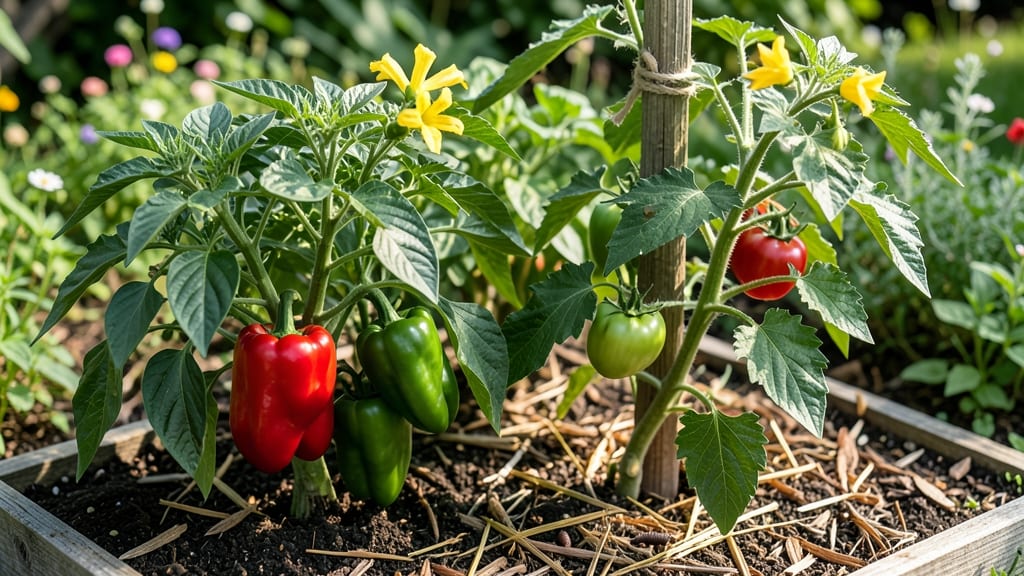
Growing tomatoes and peppers together is the ultimate gardening power duo—sweet, juicy rewards with minimal extra work. 🌱 I’ve grown them side by side for years, and the secret isn’t complicated: they thrive under the same conditions, share pests, and even improve each other’s flavor.
The key is sunlight, spacing, and a few simple care tweaks that keep both plants happy without competition.
Start with a sunny spot—at least 6-8 hours of direct sunlight daily—and well-draining soil rich in organic matter. Tomatoes need 18-24 inches of space between plants, while peppers can share the same rows but stay 12-18 inches apart.
Plant seedlings after the last frost (or in containers for earlier starts), and pair them with basil or marigolds to repel pests naturally. The payoff? Bursting red tomatoes and glossy peppers ripening just weeks apart.
Water consistently—deep but infrequent—to avoid blossom-end rot in peppers (a common pitfall). Prune tomatoes to focus energy on fruit, but leave peppers unpruned for bushier growth. By midsummer, you’ll be harvesting vibrant, homegrown produce that outshines store-bought in flavor and texture.
The best part? This combo works in gardens, containers, or even small balconies with the right setup.
Whether you’re a first-timer or a seasoned grower, this guide cuts through the guesswork. We’ll cover timing, troubleshooting, and storage tricks so your harvest lasts all season. Ready to turn your sunniest spot into a productive powerhouse? Let’s get growing!
📚 In This Guide
- What you need
- Instructions
- Tips and common mistakes
- Wrapping up and next steps
What you need
- ● Seeds or Seedlings: Tomato seeds/seedlings (choose varieties suited to your climate—heirloom, cherry, or beefsteak are great options).
- ● Pepper seeds/seedlings (e.g., jalapeño, bell, or habanero for heat lovers!).
- ● Growing Containers or Soil: Containers: 5-gallon pots or larger (at least 12-18 inches deep for tomatoes, 10-12 inches for peppers).
- ● Raised Beds or In-Ground Soil: Well-draining, nutrient-rich soil with a pH of 6.0-6.8.
- ● Fertilizer: Balanced 10-10-10 or 5-10-10 fertilizer for seedlings.
- ● Organic compost or tomato/pepper-specific fertilizer (high in phosphorus and potassium) once plants are established.
- ● Support Structures (for Tomatoes): Cages (5-6 ft tall), stakes, or trellises.
- ● Gardening gloves (to protect your hands!).
- ● Trowel or small shovel for transplanting.
- ● Watering can or hose with a gentle spray nozzle.
- ● Pruning shears (for trimming and harvesting).
- ○ Optional: Mulch (straw or black plastic to retain moisture and suppress weeds).
- ● Full sun exposure (6-8 hours daily for both plants).
- ● Warm soil temperatures (60°F+ for germination, 70°F+ for growth).
- ● Consistent watering (keep soil moist but not waterlogged!).
- ○ Optional: Row covers or cloches for early-season protection in cooler climates.
Step-by-step instructions for growing tomato and pepper plants together
Pairing tomatoes and peppers in the same garden bed creates a dynamic ecosystem—here’s how to maximize their complementary growth.
🌱 Step 1: Prepare the Soil for Both Plants’ Needs
Tomatoes and peppers thrive in well-draining, nutrient-rich soil with a pH between 6.0 and 7.0. I start by amending the soil with 3-4 inches of compost mixed into the top 12 inches of bed. Tomatoes are heavy feeders, so I add a 5-10-10 fertilizer at planting time, while peppers prefer a balanced 10-10-10 to avoid overstimulating leafy growth. Work the amendments in until the soil looks dark, crumbly, and holds moisture without clumping.
Here’s the thing—peppers dislike soggy roots, so I avoid heavy clay by adding sand or perlite if the soil feels compact when squeezed. A soil test kit ensures you’re not missing hidden issues like nitrogen toxicity, which peppers hate but tomatoes crave. I like to plant them in raised beds or mounds for better drainage, especially in humid climates.
☀️ Step 2: Plant Tomatoes and Peppers with Strategic Spacing
Tomatoes need 18-24 inches apart in rows spaced 3 feet apart, while peppers thrive 12-18 inches apart in rows 2 feet apart. I stagger the plants so their canopies don’t compete—tomatoes grow tall and sprawling, while peppers stay bushy. Plant tomatoes 1-2 inches deeper than their containers to encourage strong root systems, but peppers only need 1 inch of burial to prevent stem rot.
This is the moment that matters: place peppers on the north side of tomatoes to avoid shading them. I also tuck basil or marigolds between rows—they repel pests that target both crops. Water deeply after planting to settle the soil and remove any air pockets around roots. You’ll see new leaves emerge within 7-10 days if conditions are right.
💧 Step 3: Water and Fertilize for Complementary Growth
Both plants need 1-1.5 inches of water weekly, but tomatoes require more frequent watering during fruiting. I use drip irrigation to keep moisture consistent—peppers are sensitive to leaf wetness, which causes disease, while tomatoes benefit from steady hydration. Water at the base in the morning to prevent fungal issues, and always check the top 2 inches of soil before watering again.
Fertilize tomatoes with a low-nitrogen, high-phosphorus blend (like 5-10-10) every 3-4 weeks once flowers appear, while peppers get a balanced 10-10-10 every 6 weeks. I avoid over-fertilizing peppers—they’ll produce lush leaves but few fruits. Watch for yellowing leaves on tomatoes (a sign of nitrogen deficiency) or blossom-end rot on peppers (a calcium issue), both of which can be corrected mid-season.
✂️ Step 4: Prune and Support for Maximum Yield
Tomatoes need staking or caging by the time they’re 12 inches tall to prevent sprawling. I prune suckers (those little shoots in the leaf axils) to direct energy into fruit production, but leave 2-3 main stems for indeterminate varieties. Peppers, on the other hand, don’t need pruning—just remove any yellowed or diseased leaves to keep airflow strong.
Real talk: Don’t skip the pruning step for tomatoes. Unpruned plants get leggy and produce smaller fruit. You’ll also want to pinch off early flowers on peppers if they’re struggling—let the plant focus on root and stem growth first. Once both are established, you’ll see tomatoes setting fruit in 6-8 weeks and peppers ripening in 70-90 days, depending on the variety.
🌿 Step 5: Harvest and Extend the Season
Harvest tomatoes when they’re fully colored and slightly soft to touch, and peppers when they reach their mature size and color. I pick peppers regularly to encourage more production—they won’t ripen if left on the plant too long. For a year-round harvest, I use row covers in early spring or black plastic mulch in fall to protect against cold snaps.
Here’s where it gets fun—save seeds from your best tomatoes and peppers for next year! Let a few fruits fully ripen on the vine, then ferment and dry the seeds. Store them in a cool, dark place until planting season. With this system, you’ll have continuous harvests from early summer through fall, and even overwinter in mild climates.
Tips & tricks for perfect tomato and pepper pairings
Between us, these two powerhouse plants thrive together when you pay attention to their quirks—here's how to get the most out of their partnership.
Soil Texture Matters: The 3-4 inches of compost mixed into your top 12 inches of bed is non-negotiable, but don't stop there. I've found that adding coarse sand or perlite to heavy clay soils makes all the difference for peppers, which hate soggy roots. Think of it as creating a sponge-like environment where water drains but nutrients stay. For the ultimate test, squeeze a handful of your amended soil—it should hold together but not feel sticky.
Plant Placement Strategy: That north side positioning for peppers isn't just about avoiding shade—it's about creating a microclimate. Tomatoes cast deep shadows, and peppers need consistent light to produce fruit. I also recommend planting peppers in the outer edges of your bed if space allows, where they'll get more sunlight exposure. This simple adjustment can mean the difference between a pepper plant that flowers but doesn't fruit and one that produces bushels.
Watering Wisdom: The 1-1.5 inches weekly guideline is your baseline, but here's the thing about tomatoes: they're thirsty during fruiting. I've learned to increase to 2 inches weekly once you see flowers appear, while keeping peppers on the 1-inch side. The key is morning watering—this gives foliage time to dry before evening, preventing fungal spores from taking hold. Use a rain gauge or tuna can to measure accurately; eyeballing rarely gets it right.
Fertilizer Timing: That 5-10-10 for tomatoes at planting and 10-10-10 for peppers every 6 weeks works, but watch for these signs: yellowing leaves on tomatoes mean it's time for another 5-10-10 application, while peppers with blossom-end rot need a calcium supplement (like crushed eggshells) rather than more nitrogen. I've ruined more pepper harvests than I'd like to admit by over-fertilizing—they'll grow leaves instead of fruit.
Pro Tips for Tomato And Peppers
- Between us, these two powerhouse plants thrive together when you pay attention to their quirks—here's how to get the most out of their partnership.
- Soil Texture Matters: The 3-4 inches of compost mixed into your top 12 inches of bed is non-negotiable, but don't stop there.
- Plant Placement Strategy: That north side positioning for peppers isn't just about avoiding shade—it's about creating a microclimate.
Frequently asked questions
Got questions about growing tomatoes and peppers? You’re not alone! Here are some of the most common queries—plus straightforward answers to help you grow like a pro.
Can tomatoes and peppers grow together in the same pot or garden bed?
Both thrive in similar conditions—warm soil, full sun, and well-draining soil. Pairing them in containers or garden beds saves space and encourages pollination. Just ensure they have enough room to grow (peppers need 12–18 inches apart; tomatoes, 18–24 inches). Pro tip: Use a balanced fertilizer (like 10-10-10) to support both.
How long does it take for tomato and pepper plants to produce fruit?
Timing varies by variety, but here’s a general guide:
- Peppers: 60–90 days from transplanting (bell peppers take longer; hot peppers may fruit sooner).
- Tomatoes: 60–85 days (cherry tomatoes are fastest; heirlooms can take up to 90 days).
Start seeds indoors 8–10 weeks before your last frost date for a head start! Pro tip: Check seed packets for exact days-to-maturity.
What’s the best way to protect tomato and pepper plants from extreme heat or cold?
Both plants love warmth but can struggle in extremes:
- Heat stress: Provide afternoon shade (use shade cloth or row covers) and mulch to retain moisture.
- Cold snaps: Use row covers, cold frames, or move pots to a sheltered spot. Avoid watering before frost.
Peppers are slightly more cold-sensitive—bring them indoors if temps drop below 50°F (10°C). Pro tip: Harden off seedlings gradually to avoid shock.
Why are my pepper fruits turning bitter or my tomatoes cracking?
Common issues and fixes:
Issue
Cause
Solution
Bitter peppers
Too much sun + inconsistent watering
Water deeply 1–2 times/week; mulch to stabilize soil temps.
Cracked tomatoes
Uneven watering (soil too dry/wet)
Water consistently (1–1.5 inches/week); mulch to retain moisture.
Pro tip: Harvest peppers when firm and green—they’ll ripen off the vine (if needed).
Can I grow tomatoes and peppers indoors or in containers year-round?
Yes! Both adapt well to containers with the right setup:
- Use 5-gallon pots (minimum) for tomatoes; 3–5 gallons for peppers.
- Place near a south-facing window or use grow lights (12–16 hours/day).
- Ensure pots have drainage holes and use lightweight potting mix.
Peppers prefer warmer temps (70–85°F)—a sunny windowsill or grow tent works best. Pro tip: Rotate pots weekly for even growth.
Wrapping up and next steps
Growing tomatoes and peppers is a rewarding journey that brings vibrant flavors and colors to your table—no matter your climate! With the right tools, patience, and a dash of creativity, you can enjoy a year-round harvest that thrives in containers, gardens, or even indoors.
Whether you're a seasoned gardener or just starting, your green thumb is closer than you think!
Ready to take the next step? Start small—pick one variety, gather your supplies, and dive in! Soon, you’ll be savoring homegrown goodness and sharing the joy with friends and family. Happy growing! 🌱✨