
Vegetables
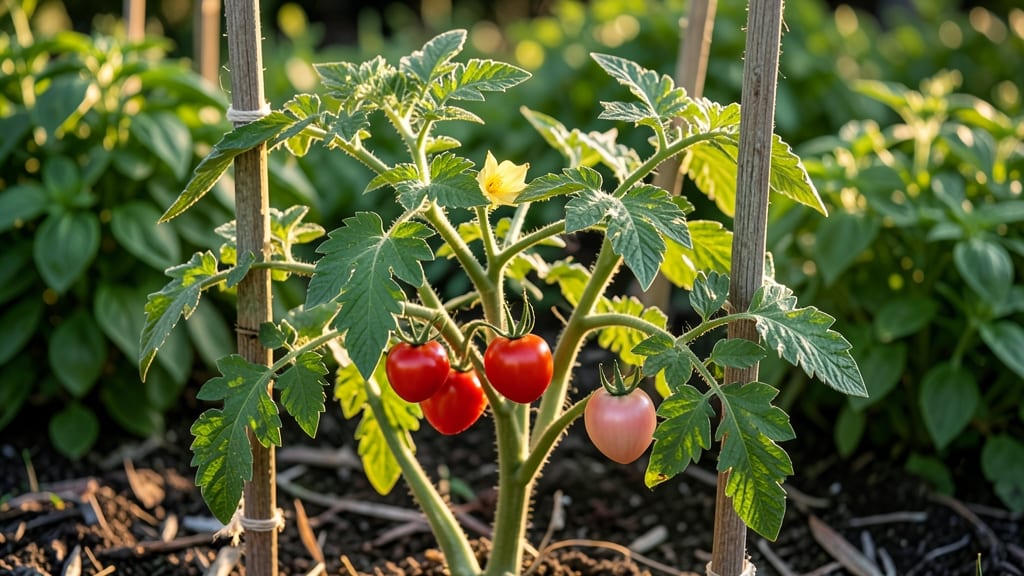
Tomato branches twisting under heavy fruit is a heartbreaking sight—but it’s fixable. 🌱 I’ve seen entire plants collapse under their own weight, and the right trellis setup can turn that disaster into a sturdy, productive vine.
The key isn’t just tying them up; it’s building support that grows with your tomatoes.
Twisting usually happens when vines can’t handle the weight of ripe fruit, but pests like tomato hornworms or diseases like bacterial wilt can weaken stems too. First, check for wilting, chewed leaves, or oozing sap—those clues point to the real problem.
A sturdy trellis (think bamboo stakes or heavy-duty mesh) redistributes weight and prevents that heartbreaking spiral.
With the right setup, your tomatoes will climb straight up instead of twisting into knots. You’ll end up with fewer broken stems, easier harvesting, and plants that stay upright even when loaded with pound-after-pound of fruit.
The fix is simple: stronger support, smarter pruning, and a little extra attention to pests.
Works for heirlooms, cherry tomatoes, or beefsteaks—just adjust the trellis height as the plants grow. Here’s how to diagnose and fix it before your next harvest.
Causes Behind Twisted Tomato Vines
If your tomato plants are sending out gnarled, twisting branches instead of sturdy stems, don’t panic—it’s usually a sign of environmental or structural stress. Understanding the root causes (literally and figuratively) helps you correct the issue before it affects fruit production.
Below, we break down the most common reasons why tomato branches twist and how to identify them.
🌱 Hormonal Imbalance from Overcrowding
Tomatoes are competitive growers, and when plants are too close together, they fight for sunlight, water, and nutrients. This competition triggers an overproduction of ethylene and auxin hormones, which cause abnormal growth patterns—including twisted stems and branches.
Overcrowding also weakens structural support, making vines more prone to bending or spiraling under their own weight.
How to spot it: Look for plants with multiple stems growing in tight clusters, leaves touching neighboring foliage, and branches that spiral outward like a corkscrew.
Fix it:
- Thin seedlings early to leave 18–24 inches between plants.
- Prune suckers (side shoots) regularly to reduce competition.
- Use a cage or trellis to elevate branches and improve air circulation.
☀️ Extreme Heat or Sunlight Stress
Tomatoes thrive in warmth but can develop twisted growth when exposed to intense, direct sunlight for prolonged periods, especially during heatwaves. High temperatures cause cell wall abnormalities, leading to weak, warped stems.
Additionally, uneven sunlight (e.g., one side of the plant getting more light) can trigger uneven growth patterns, causing branches to twist toward the light source.
How to spot it: Check for:
- Leaves curling or scorching on one side.
- Branches growing in a zigzag or spiral pattern toward the sun.
- Stems that feel soft or rubbery to the touch.
Fix it:
- Provide afternoon shade with shade cloth (30–50% coverage) during peak heat.
- Mulch heavily to keep roots cool and retain moisture.
- Water deeply in the early morning to reduce stress.
💧 Watering Woes: Too Much or Too Little
Watering inconsistencies are a top culprit for twisted tomato branches. Drought stress causes stems to grow erratically as the plant scrambles for moisture, while overwatering leads to root suffocation and poor nutrient uptake, weakening structural integrity. Both scenarios can result in branches that twist, fork, or grow in odd angles.
How to spot it:
- Wilting leaves that don’t recover after watering (underwatering).
- Yellowing lower leaves or mushy stems (overwatering).
- Branches that appear thin and brittle or swollen at the base.
Fix it:
- Water at the base of the plant (not the leaves) to avoid fungal issues.
- Use drip irrigation or soaker hoses for consistent moisture.
- Let the top 1–2 inches of soil dry between waterings (stick your finger in to test).
🌿 Nutrient Deficiencies or Imbalances
A lack of key nutrients—especially calcium, potassium, or nitrogen—can disrupt cell development, leading to twisted or malformed branches. For example:
- Calcium deficiency (often from uneven watering) causes blossom-end rot in fruit and weak stem growth.
- Potassium deficiency weakens structural tissues, making stems more prone to twisting.
- Nitrogen excess can lead to soft, floppy growth with poor support.
How to spot it:
- Yellowing leaves with green veins (nitrogen deficiency).
- Brown or black spots on young leaves (potassium deficiency).
- Stems that break easily or have hollow sections.
Fix it:
- Test your soil and amend with compost or balanced fertilizer (e.g., 10-10-10).
- Add crushed eggshells or lime for calcium if soil is acidic.
- Avoid over-fertilizing—more isn’t always better!
🌀 Physical Damage or Wind Stress
Tomato plants are delicate when young, and physical trauma—like harsh winds, rough handling, or even curious pets—can cause stems to grow in twisted patterns as they repair. Wind, in particular, can whip branches back and forth, leading to a spiral or zigzag growth habit as the plant compensates for instability.
How to spot it:
- Scar tissue or uneven growth at the base of branches.
- Leaves with torn edges or stems that bend at odd angles.
- Plants growing leaning heavily in one direction.
Fix it:
- Use windbreaks (like burlap or straw bales) in exposed areas.
- Stake or tie branches gently to a trellis to prevent flopping.
- Avoid rough pruning—use clean, sharp shears to minimize damage.
Most twisted tomato branches can be corrected with targeted care, but prevention is key. By addressing the root cause—whether it’s hormonal stress, environmental factors, or physical damage—you’ll help your plants grow straighter and produce healthier fruit. 🍅✨
Fixing twisted tomato vines naturally
Twisted tomato branches can feel like a garden puzzle, but with the right approach, you can restore strength and productivity to your plants. Below, we’ve mapped out practical fixes for the most common causes—plus prevention tips to keep your tomatoes thriving. Let’s get those vines back on track!
Cause: Heavy fruit or excessive suckers strain weak stems. Fix:
- Step 1: Snip Strategically 🔪 Use clean pruning shears to trim overloaded branches—focus on those bearing too many tomatoes. Aim to leave 2–3 tomatoes per cluster to reduce weight stress.
- Step 2: Install a Sturdy Trellis 🏗️ If your tomatoes are sprawling, bamboo stakes or a tomato cage (8+ feet tall) work best. Secure vines with soft plant ties (avoid wire—it cuts stems!).
- Step 3: Thin Suckers 🌿 Remove aggressive suckers (the shoots in the leaf axils) to redirect energy to existing branches. Pro tip: Suckers below the first flower cluster can stay if your variety is indeterminate!
Prevent Future Twists:
- Harvest regularly to avoid fruit overload.
- Choose dwarf or bush varieties (like ‘Tiny Tim’) if space is limited.
Cause: Extreme heat, cold snaps, or wind twist vines. Fix:
- Step 1: Protect from Wind 🌬️ Plant tomatoes near a windbreak (e.g., a fence or tall grass) or stake them early before storms hit. For container growers, weight pots with rocks to prevent tipping.
- Step 2: Adjust Watering 💦 Morning watering (1–1.5 inches weekly) keeps stems hydrated. Avoid wetting leaves to prevent fungal issues that weaken structure.
- Step 3: Use Row Covers ❄️ For late frosts, drape frost cloth over plants until temps rise. In scorching heat, provide shade cloth (30–50%) to prevent sunscald.
Prevent Future Twists:
- Mulch heavily (straw or wood chips) to stabilize soil and retain moisture.
- Avoid planting in exposed areas—opt for sheltered spots or raised beds.
Cause: Aphids, whiteflies, or fungal infections (like blight) weaken stems. Fix:
- Step 1: Inspect & Treat Pests 🐜 Spray with neem oil (mix 1 tbsp per quart of water) or insecticidal soap for soft-bodied pests. For hornworms, handpick them (they’re sneaky!).
- Step 2: Boost Stem Strength 💪 Fertilize with calcium (crushed eggshells or lime) to prevent blossom-end rot, which weakens plants. A balanced 10-10-10 fertilizer (lightly applied) encourages sturdy growth.
- Step 3: Disinfect Tools 🧼 Clean pruners with rubbing alcohol between cuts to prevent spreading disease.
Prevent Future Twists:
- Rotate crops—don’t plant tomatoes in the same spot yearly.
- Space plants 18–24 inches apart for airflow and sunlight.
Cause: Compacted soil, lack of nitrogen, or potassium deficiency. Fix:
- Step 1: Test Your Soil 📊 A DIY test kit (or local extension service) checks pH and nutrients. Tomatoes thrive in slightly acidic soil (6.0–6.8).
- Step 2: Loosen & Fertilize 🌱 Aerate soil with a garden fork or compost mix. Add:
- Nitrogen (for leaves): Coffee grounds or blood meal.
- Potassium (for stems): Banana peels or wood ash.
- Step 3: Use Mulch 🍂 Straw or grass clippings retain moisture and suppress weeds, reducing stress on roots.
Prevent Future Twists:
- Add compost annually (2–3 inches) before planting.
- Avoid over-fertilizing—too much nitrogen = weak stems!
💡 Bonus Tip: For severely twisted vines, try bending them gently (not breaking!) and securing with ties to encourage upright growth. Patience is key—tomatoes are resilient!
Frequently asked questions
Why do tomato branches twist toward the sun?
This is called heliotropism, where tomato plants grow toward sunlight to maximize energy absorption. While normal for young plants, excessive twisting often signals uneven light exposure or heat stress. If branches spiral wildly, provide afternoon shade or rotate containers daily to prevent permanent warping.
Can I save a tomato plant with severely twisted stems?
Yes! Prune back twisted branches to healthy growth points and stake the remaining stems immediately. Use soft plant ties to guide new growth upward. For extreme cases, focus on one main stem—remove all suckers below the first flower cluster to redirect energy. Most plants recover with proper support.
Will tomato hornworms cause twisting branches?
Indirectly, yes. Hornworms strip leaves, reducing the plant’s ability to photosynthesize and produce structural sugars. Weakened stems become prone to twisting under fruit weight. Handpick caterpillars daily and treat with neem oil to prevent further damage. Healthy foliage = stronger stems!
How often should I check tomato plants for twisting?
Inspect your plants twice weekly during active growth (spring/summer). Focus on new growth—twisting often starts at the tips before spreading. Early intervention (pruning, staking, or pest control) prevents permanent deformities. Container growers should check daily since roots can’t anchor as well.
Are some tomato varieties more prone to twisting?
Indeterminate varieties (like Sungold or Brandywine) are more likely to twist due to their vigorous, sprawling growth. Dwarf varieties (e.g., Patio or Tiny Tim) have naturally sturdier stems. Choose bush types for small spaces or add extra support to indeterminate plants from day one.