
Pests and Diseases
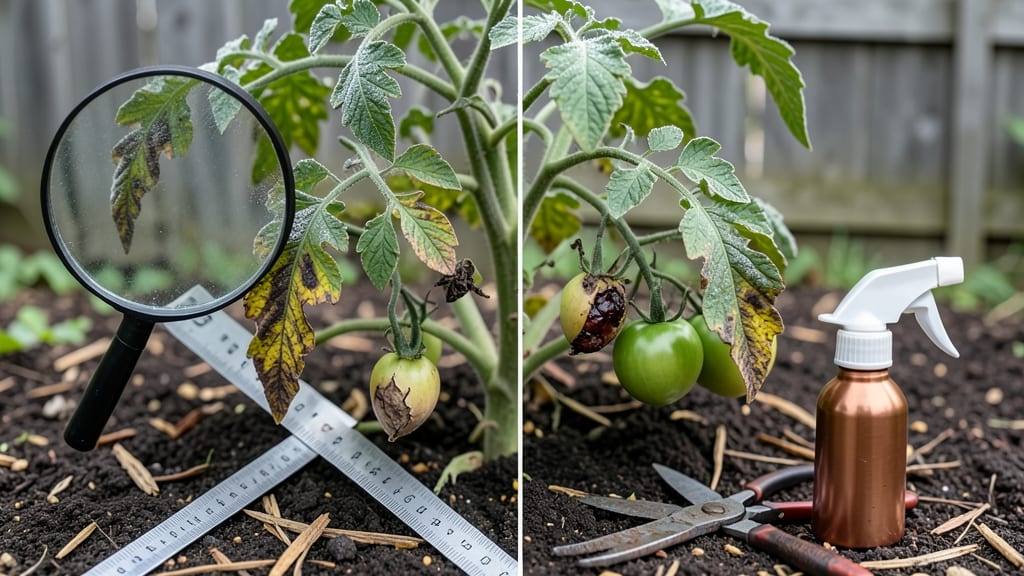
Seeing those mysterious brown spots on your tomatoes is the gardener’s worst nightmare—until you know exactly what’s wrong. 🌱 I’ve spent years diagnosing every speckled leaf and mushy fruit, and these 15 fungal diseases (with pictures) will help you spot, stop, and prevent them before your harvest disappears.
Most of these diseases start with a single spot, then spread like wildfire if you ignore them. Early identification means the difference between saving your plants and losing them to rot, wilt, or blight.
Think of this as your field guide: each disease has a unique fingerprint, from yellowing leaves to blackened stems.
By the end, you’ll recognize the warning signs fast—like the target-like rings of early blight or the velvety mold of powdery mildew—and know exactly how to treat them. No more guessing, no more wasted seasons. Just healthy, thriving plants that produce fruit until the first frost.
Whether you’re dealing with a greenhouse full of tomatoes or just a few plants in containers, these solutions work. Let’s get those plants back to their best—and keep them that way all season.
Root Causes Of Tomato Fungal Spots
Fungal diseases wreak havoc on tomato plants, turning vibrant foliage into a patchwork of unsightly spots. But why do these infections strike with such precision? The answer lies in a mix of environmental factors, plant stress, and microbial opportunism.
Understanding the root causes helps you take proactive steps to protect your crop. Here’s a breakdown of the most common triggers:
Fungi thrive in damp conditions, and tomatoes are particularly vulnerable when their leaves stay wet for too long. Here’s how it happens:
- Overhead Watering: Splashing water onto leaves creates a perfect breeding ground for spores. Unlike drip irrigation, which delivers water to the soil, overhead systems (like sprinklers) can spread fungal spores from infected plants to healthy ones.
- Poor Air Circulation: Dense foliage or crowded plants trap humidity, slowing evaporation and prolonging moisture on surfaces. Fungi like Alternaria and Septoria exploit this to germinate and infect.
- Waterlogged Soil: Compacted or poorly draining soil prevents roots from absorbing oxygen, weakening the plant’s defenses. Phytophthora (a water mold) exploits stressed roots, spreading upward to leaves.
Actionable Fix: Water at the base of the plant in the early morning, use drip irrigation, and ensure soil has a sandy loam texture for better drainage. Space plants 18–24 inches apart for airflow.
Fungi are temperature-sensitive, and sudden shifts create ideal conditions for outbreaks. Here’s the science:
- Cool Nights + Warm Days: Temperatures between 60–80°F (15–27°C) are prime for fungal spores to germinate. If nights drop below 50°F (10°C) while days stay warm, dew lingers, and fungal growth accelerates.
- High Humidity (Above 75%): Relative humidity above this threshold keeps leaf surfaces damp for hours, allowing spores to attach and infect. Early blight and late blight (the infamous Phytophthora infestans) both peak in these conditions.
- Rainfall Patterns: Prolonged rain (especially >1 inch per week) washes spores from soil or infected debris onto leaves. Fusarium wilt spreads via water-saturated soil, clogging plant vascular systems.
Actionable Fix: Monitor weather forecasts and use row covers during rainy periods. Prune lower leaves to improve airflow, and avoid planting tomatoes in low-lying areas where cold air pools.
A weakened tomato plant is an open invitation for fungi. Stress signals—like those from poor nutrition or physical damage—trigger chemical changes that make plants more susceptible. Key stressors include:
- Nitrogen Deficiency: Yellowing leaves (chlorosis) indicate nitrogen starvation, reducing the plant’s ability to produce cutin, a waxy layer that repels fungi. Early blight exploits these gaps.
- Potassium Shortage: Brown leaf edges or weak stems signal low potassium, which regulates cell membrane integrity. Without it, fungal hyphae (thread-like structures) can penetrate tissues more easily.
- Physical Damage: Pruning wounds, hail, or insect bites create entry points for spores. Anthracnose often invades through these openings.
Actionable Fix: Conduct a soil test and amend with compost or balanced fertilizer (e.g., 10-10-10). Space plants properly and avoid rough handling. For organic growers, neem oil can help strengthen plant defenses.
Fungal spores are persistent—they can survive in soil for years or hitchhike on gardening tools. Here’s how contamination spreads:
- Old Crop Debris: Leaving infected plant material (like stems or leaves) in the soil overwinters spores. Verticillium wilt can persist for up to 10 years in contaminated soil.
- Reused Containers/Tools: Pruners, trellises, or pots harboring spores can transfer diseases between plants. Powdery mildew spores, for example, can survive on tools for months.
- Compost Made from Infected Plants: Improperly heated compost piles don’t kill fungal spores, risking reinfection when used as soil amendment.
Actionable Fix: Practice crop rotation (avoid planting tomatoes in the same spot for 3 years). Sterilize tools with 70% isopropyl alcohol or a 10% bleach solution. Remove all plant debris after harvest and compost only disease-free material.
By addressing these root causes—moisture, temperature, stress, and contamination—you disrupt the fungal lifecycle before it starts. Prevention is easier than cure, and healthy plants are your best defense against unsightly spots! 🌱🛡️
Quick Fixes for Tomato Troubles
Got spotted, wilting, or discolored tomatoes? Don’t toss them just yet—most common tomato diseases can be reversed or prevented with the right care. Below, we’ve mapped out practical solutions for each issue, from quick fixes to long-term strategies.
Think of this as your tomato disease first-aid kit—no fancy tools required!
🔥 Cause: Fungal spores thriving in damp, warm conditions. 🛠️ Fix It:
- Prune aggressively 🔪 – Remove all infected leaves (even if just a few spots appear). Use clean shears and disinfect with 70% rubbing alcohol between cuts.
- Improve airflow 🌬️ – Space plants 18–24 inches apart. If growing in containers, thin out foliage to let sunlight hit lower leaves.
- Fungicide spray 💦 – Apply copper fungicide (like Bordeaux mixture) or neem oil every 7–10 days until new growth appears. For organic gardens, baking soda spray (1 tsp baking soda + 1 quart water + a drop of dish soap) works in a pinch.
- Water wisely 💧 – Morning irrigation only, aiming for the soil base (not leaves). Use a soaker hose or drip system to avoid wetting foliage.
💡 Prevention Pro Tips: ✅ Crop rotation – Don’t plant tomatoes (or nightshades like peppers) in the same spot for 3+ years. ✅ Resistant varieties – Try ‘Mountain Merit’ or ‘Defiant PhR’ (hybrids bred to fight blight). ✅ Solarize soil – In late summer, cover soil with clear plastic for 4–6 weeks to kill fungal spores.
🔥 Cause: Fungal spores spreading like flour on leaves. 🛠️ Fix It:
- Wipe leaves 🧹 – Use a soft cloth dampened with water and a few drops of dish soap to gently rub mildew off leaves. Do this every 3–4 days until gone.
- Horticultural oil spray 🌿 – Mix 1 tbsp neem oil + 1 tsp baking soda + 1 quart water. Spray undersides of leaves (where mildew loves to hide) at dusk to avoid burning plants.
- Reflective mulch 🪞 – Lay white plastic mulch or aluminum foil around plants to reflect sunlight, making leaves less hospitable to fungi.
💡 Prevention Pro Tips: ✅ Space plants – Ensure 3–4 feet between rows for airflow. ✅ Avoid overhead watering – Use drip irrigation or hand-water at the base. ✅ Companion plants – Interplant with marigolds (natural fungicide) or oregano (repels spores).
🔥 Cause: Bacteria (Xanthomonas or Pseudomonas) spreading via water or tools. 🛠️ Fix It:
- Remove infected leaves/fruit 🗑️ – Burn or trash (don’t compost!) any leaves with oily spots or yellow halos.
- Copper-based bactericide 🛡️ – Spray copper hydroxide (like Kocide) every 7–10 days for 2–3 weeks. Follow label rates—copper can harm plants if overused.
- Disinfect tools 🧼 – Bleach solution (1 part bleach to 9 parts water) or rubbing alcohol on pruners after each use.
💡 Prevention Pro Tips: ✅ Water early – Irrigate before 10 AM so leaves dry quickly. ✅ Use clean containers – Sterilize pots with 10% bleach solution if reusing them. ✅ Choose resistant seeds – Varieties like ‘Celebrity’ or ‘Bush Early Girl’ tolerate bacterial spot better.
🔥 Cause: Botrytis cinerea thriving in high humidity and poor airflow. 🛠️ Fix It:
- Trim infected areas ✂️ – Cut off moldy stems or blossoms (don’t let it spread to healthy tissue).
- Reduce humidity 🌡️ – Use a fan on low speed near plants or open greenhouse vents during the day.
- Hydrogen peroxide spray 🧴 – Mix 1 tbsp 3% hydrogen peroxide + 1 quart water. Spray every 5–7 days to inhibit spores.
💡 Prevention Pro Tips: ✅ Space plants widely – Aim for 24+ inches between plants. ✅ Remove spent blossoms 🌸 – Deadhead flowers to prevent moldy petals from infecting fruit. ✅ Avoid night watering – Wet leaves overnight = gray mold party.
🔥 Cause: Soil-borne fungi clogging vascular tissue (no cure—only management). 🛠️ Fix It:
- Replace infected plants 🌱 – Pull up and destroy wilted tomatoes (don’t compost!). Plant resistant varieties like ‘Beefsteak’ or ‘Roma’.
- Solarize soil ☀️ – Cover beds with clear plastic for 6+ weeks in summer to kill spores.
- Use raised beds 🏗️ – If soil is heavily infected, grow tomatoes in sterilized potting mix in containers.
💡 Prevention Pro Tips: ✅ Test soil 📊 – Check for fungal levels before planting. ✅ Rotate crops 🔄 – Avoid tomatoes in the same spot for 5+ years. ✅ Grafting 🌿 – Use disease-resistant rootstock (like ‘Beaufort’) for high-risk areas.
Keep these go-to tools handy:
- Pruning shears (disinfected)
- Neem oil or copper fungicide
- Soaker hose (no overhead watering!)
- Reflective mulch (for mildew)
- Gloves & trash bags (for infected debris)
💡 Final Tip: Act fast! The sooner you spot and treat issues, the better your tomatoes’ chances. And if all else fails? Save the best fruit for sauces or salsa—diseased spots don’t ruin flavor! 🍅🔥
Frequently asked questions
How can I tell if my tomato plant has a fungal disease just by looking at the leaves?
Look for these key visual clues: dark concentric rings (early blight), powdery white coating (mildew), or yellowing with brown edges (leaf spot). Check both leaf tops and undersides—many diseases start on the undersides where humidity lingers. Compare your symptoms to the labeled pictures in our guide to match patterns.
Can I still eat tomatoes with fungal spots on them?
It depends on the disease! Remove and discard any fruit with soft rot, mold, or blackened areas—these can harbor harmful spores. For superficial spots (like early blight), cut out the affected area and use the rest. Always wash tomatoes thoroughly before eating, even if they look healthy.
Why do some tomato diseases spread faster than others?
Disease spread depends on three factors: spore production (powdery mildew spreads via airborne spores), moisture (blight thrives in wet conditions), and plant stress (weak plants invite infections). Late blight, for example, spreads 10x faster in humid weather because its spores germinate within hours of landing on leaves.
Will homemade sprays (like baking soda) really prevent tomato diseases?
Yes, but with limitations! A 1 tsp baking soda + 1 quart water + drop of dish soap spray can reduce mildew by 50% by altering leaf pH. For severe infections, use it as a supplement to copper fungicides. Reapply every 7–10 days during humid periods, and always spray in the early morning to avoid burning leaves.
How long does it take to see results after treating a tomato disease?
Timing varies by disease: powdery mildew may show improvement in 3–5 days with neem oil, while early blight can take 2–3 weeks to fully clear. For systemic issues (like wilt), treatments may slow progression but won’t reverse damage. Monitor plants daily and reapply sprays if symptoms reappear.