
Plants
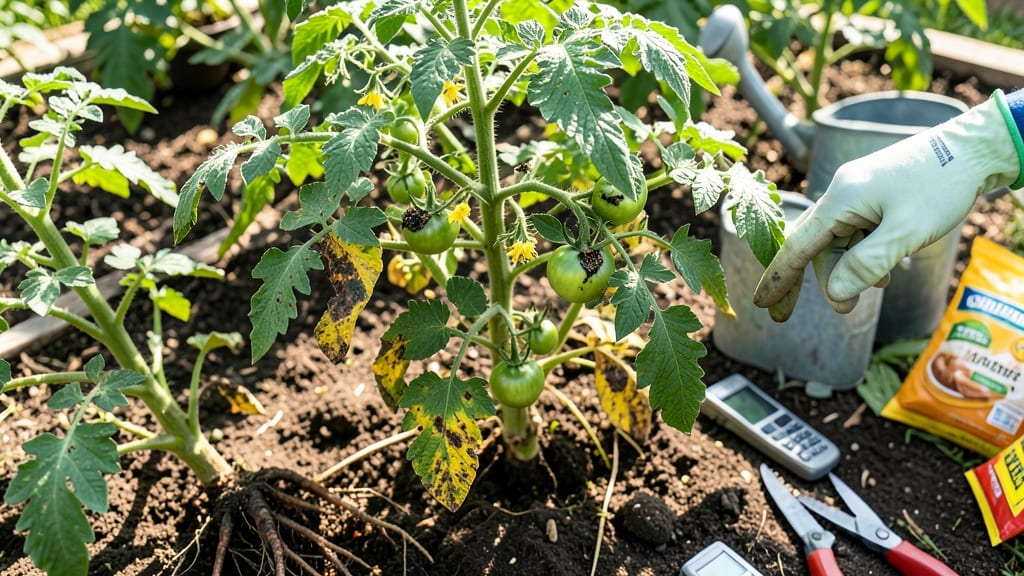
What’s wrong with my tomato plant? 🌱 Yellow leaves, wilted stems, or mysterious spots don’t mean it’s doomed—just that something needs a quick fix. I’ve diagnosed every one of these issues in my own garden, and most have simple solutions once you know what to look for.
Overwatering or underwatering? Yellow leaves with crisp edges? Brown spots that spread like ink? Each problem has a telltale pattern—like wilting in the heat or curling from pests.
The key is acting fast: prune diseased leaves, adjust watering, or introduce beneficial insects before the damage spreads. You’ll save your plant and your sanity.
No need for guesswork: we’ll match symptoms to causes and walk through fast fixes—whether it’s reviving roots, treating blight, or banishing aphids. By the end, you’ll spot trouble early and keep your tomatoes thriving until that first juicy harvest. Let’s get those plants back on track.
Works for both container and in-ground tomatoes, and covers issues at every growth stage. Once you master these fixes, your plants will bounce back stronger than ever. Here’s how to spot the problem and stop it in its tracks.
Root Causes Behind Plant Problems
Tomato plants are resilient, but they’re not invincible. When your lush green leaves start yellowing, your fruits turn blotchy, or your plant wilts despite regular watering, the issue usually boils down to a few key culprits.
Understanding the why behind these problems is the first step to saving your harvest. Let’s break down the most common causes—backed by science—and why they mess with your tomato plant’s health.
Why it happens: Tomato plants thrive on consistency, but too much water is a silent killer. When soil stays soggy for days, roots suffocate because they can’t access oxygen. This leads to:
- Root rot (caused by Phytophthora or Pythium fungi), which blocks nutrient uptake.
- Blossom end rot (even though it’s technically a calcium deficiency, excess moisture prevents roots from absorbing calcium properly).
- Weak stems that can’t support the plant, causing wilting or collapse.
The science: Roots need a balance of water and air. When soil is waterlogged, beneficial microbes that help break down nutrients die off, and harmful pathogens take over.
Why it happens: Skipping watering sessions—or relying on inconsistent rainfall—stresses tomato plants. Signs include:
- Wilting leaves (even if the soil looks moist at the surface).
- Leaf curling or scorch marks (from dehydration).
- Stunted growth (the plant diverts energy to survival, not fruiting).
The science: Tomatoes are 90% water. When deprived, cells lose turgor pressure (the "plumpness" that keeps leaves upright), and the plant triggers stress hormones like ethylene, which can cause premature fruit drop.
Why it happens: Tomatoes are heavy feeders, and soil isn’t always packed with the right nutrients. Common deficiencies include:
- Nitrogen (N): Yellowing lower leaves (oldest first) or stunted growth. Why? Nitrogen fuels leaf production—without it, the plant can’t support its structure.
- Potassium (K): Weak stems, yellow edges on leaves, or poor fruit development. Why? Potassium regulates water and disease resistance.
- Calcium (Ca): Blossom end rot or distorted new leaves. Why? Calcium strengthens cell walls—without it, cells collapse.
The science: Nutrients are absorbed as ions, and imbalances (like too much salt or phosphorus) can block uptake. For example, excess phosphorus ties up calcium, leading to blossom end rot.
Why it happens: Tomato plants are a buffet for pests and pathogens.
Here’s how they strike: - Aphids, spider mites, or whiteflies: Sap-sucking insects weaken plants by blocking photosynthesis (you’ll see curled leaves or sticky residue). - Fungal diseases (early blight, late blight): Dark spots on leaves or stems spread when humidity is high and airflow is poor. Why? Fungi thrive in moist, shaded conditions. - Bacterial spots or wilt: Water-soaked lesions or sudden wilting (often from Ralstonia or Pseudomonas bacteria). Why? Bacteria enter through wounds or splashing water.
The science: Pests and diseases exploit stress. A plant already struggling from poor soil or water is an easy target.
Why it happens: Tomatoes are tropical plants at heart—they hate extremes.
Common triggers: - Temperature swings: Below 50°F (10°C) or above 90°F (32°C) stunts growth or causes fruit to split. - Wind or sunburn: Leaves bleach or crisp in intense afternoon sun (especially on young plants). - Poor airflow: Humid, stagnant air encourages fungal growth (like powdery mildew).
The science: Tomatoes have optimal temperature ranges for each growth stage. Stress hormones like abscisic acid kick in when conditions are off, leading to leaf drop or poor fruiting.
Why it happens: Even well-cared-for plants can crash after moving.
Why? - Root damage: Disturbing roots during transplanting severs nutrient pathways, causing wilting for days. - Sudden environment changes: Moving from shade to full sun (or vice versa) confuses the plant’s physiology. - Over-fertilizing post-transplant: Fresh soil + new fertilizer = a nutrient overload, burning roots.
The science: Roots take 2–4 weeks to regrow after transplanting. During this time, the plant relies on stored energy—stress accelerates depletion.
Why it happens: Tomatoes prefer slightly acidic soil (pH 6.0–6.8). Outside this range:
- Too acidic (pH <5.5): Aluminum and manganese become toxic, causing brown leaf tips.
- Too alkaline (pH >7.0): Iron and phosphorus become locked in the soil, leading to yellowing leaves (chlorosis).
The science: pH affects nutrient availability. For example, iron is only soluble in acidic conditions—if your soil is alkaline, the plant starves even if iron is present.
Why it happens: Residual herbicides (even from neighboring lawns) or overuse of pesticides can poison tomato plants. Signs:
- Yellowing veins (from herbicide drift).
- Brown, crispy edges (from salt buildup in soil).
- Stunted growth (chemicals disrupt cell division).
The science: Many herbicides contain glyphosate or 2,4-D, which mimic plant hormones and disrupt growth patterns. Even "organic" sprays can harm if overused.
Why it happens: Not all tomato problems are fixable—some are baked into the plant’s DNA.
Examples: - Determinate varieties: Naturally stop growing after a set time, leading to sudden leaf drop. - Sensitive hybrids: Some modern varieties are bred for disease resistance but lack hardiness in extreme climates. - Fruit cracking: Thick-skinned heirlooms are prone to splitting in erratic rain patterns.
The science: Genetics control everything from disease resistance to water retention. If your plant’s traits are mismatched with your climate, struggles are inevitable.
Pro Tip: 💡 Keep a plant journal! Track watering, fertilizing, and weather patterns. Patterns in symptoms (e.g., "yellowing always happens after rain") pinpoint the cause faster than guesswork.
Quick Fixes for Common Tomato Troubles
Diagnosing the problem is half the battle—now it’s time to roll up your sleeves and revive your tomato plant! Below are practical, step-by-step solutions for each issue, plus prevention tips to keep your garden thriving.
Whether your leaves are yellowing, your fruits are cracking, or pests are wreaking havoc, we’ve got you covered.
Fix it fast:
- Check the soil moisture 💧—stick your finger 1–2 inches deep. If it’s soggy, your plant is drowning. Let it dry out slightly between waterings.
- Fertilize properly 🌿—use a balanced fertilizer (10-10-10) or one high in nitrogen (like fish emulsion) for leafy growth. For blossom-end rot (calcium deficiency), switch to a calcium-rich amendment (crushed eggshells, lime, or calcium nitrate).
- Prune damaged leaves ✂️—remove yellow or blackened leaves to redirect energy to healthy growth.
Prevent it:
- Water deeply but infrequently—aim for 1–1.5 inches per week (adjust for rain).
- Mulch to retain moisture and regulate soil temp.
- Rotate crops every 3 years to avoid nutrient depletion.
Fix it fast:
| Problem | Solution | Prevention Tip |
|---|---|---|
| Aphids 🐜 | Spray with soapy water (1 tsp dish soap + 1 quart water) or neem oil. | Attract ladybugs with marigolds nearby. |
| Whiteflies 🦋 | Use yellow sticky traps or insecticidal soap. | Keep plants healthy—stress attracts pests. |
| Fungal Spots 🍄 | Remove infected leaves, space plants for airflow, and spray copper fungicide. | Water early in the day to let foliage dry. |
| Blossom Rot 🍅💔 | Prune affected fruits, add calcium, and avoid overwatering. | Test soil pH—ideal range: 6.0–6.8. |
Pro Tip: 💡 DIY neem oil spray—mix 1 tbsp neem oil + 1 tsp mild soap + 1 quart water. Spray every 7–10 days for pests and fungal prevention.
Fix it fast:
- Pollinate by hand 🐝—if bees aren’t visiting, gently shake plants or use a small paintbrush to transfer pollen.
- Adjust sunlight ☀️—tomatoes need 6–8 hours of direct sun daily. Move pots or thin shade structures.
- Balance fertilizer 🌱—too much nitrogen = lush leaves, no fruit. Switch to a low-nitrogen, high-phosphorus (5-10-10) fertilizer when flowers appear.
Prevent it:
- Prune suckers (side shoots) to direct energy to fruit.
- Harvest regularly—overripe tomatoes stress the plant.
Fix it fast:
- For heat stress 🔥:
- Provide afternoon shade (use shade cloth if temps exceed 90°F/32°C).
- Mulch heavily to keep roots cool.
- Water deeply in the morning to reduce evaporation.
- For cold damage ❄️:
- Cover plants with frost cloth at night.
- Move potted tomatoes to a sheltered spot (like near a south-facing wall).
Prevent it:
- Choose heat-tolerant varieties (e.g., ‘Heatmaster’, ‘Solar Fire’).
- Hardening off seedlings gradually before transplanting.
Fix it fast:
- For cracked tomatoes 🍅💥:
- Water consistently—avoid fluctuating moisture.
- Mulch to stabilize soil moisture.
- For blossom-end rot 🍅💔:
- Add calcium (crushed eggshells, gypsum, or calcium chloride).
- Reduce watering slightly—soil should be evenly moist, not soggy.
Prevent it:
- Test soil every 2–3 years for calcium levels.
- Avoid heavy fertilizers before flowering.
- Trim back 🔪—cut 1/3 of the plant if it’s severely stressed (focus on new growth).
- Repot if needed 🏺—if roots are circling or soil is depleted, move to a larger container with fresh potting mix.
- Boost with compost tea 🌱—add homemade compost tea for a nutrient boost.
Remember: 🎯 Patience is key—some issues (like fungal diseases) take 2–3 weeks to clear up. Monitor daily and adjust care as needed!
Need a quick cheat sheet? Bookmark this: ✅ Yellow leaves? → Check water + fertilize. ✅ Pests? → Soap spray or neem oil. ✅ No fruit? → Pollinate + balance sun/fertilizer. ✅ Cracked tomatoes? → Mulch + steady water.
Frequently asked questions
Why are my tomato leaves turning yellow but the veins stay green?
This classic symptom usually signals iron deficiency (chlorosis), often caused by alkaline soil (pH >7.0) that locks out iron. Try adding chelated iron or compost to acidify the soil slightly. Check your soil pH—tomatoes thrive in 6.0–6.8 range.
My tomato plant is wilting even though the soil feels moist. What's happening?
This could mean root rot from overwatering or blossom end rot (calcium deficiency). Dig gently to check roots—if they're brown/mushy, reduce watering. For blossom end rot, add crushed eggshells or calcium nitrate and keep soil evenly moist (not soggy).
How do I tell if my tomato plant has pests or a disease?
Pests leave visible bugs (aphids, whiteflies) or sticky residue (honeydew). Diseases show as spots (early blight), powdery coatings (mildew), or water-soaked lesions (bacterial wilt). Check undersides of leaves first—pests hide there!
Can I still save my tomato plant if it's completely wilted?
Maybe! First, check if wilting is temporary (heat stress) or permanent (root damage). For temporary wilting, move to shade and water deeply. If roots are rotten (black/mushy), prune healthy stems and repot in fresh soil. Give it 1–2 weeks to recover—don't fertilize yet!
Why are my tomato fruits cracking open?
Inconsistent watering causes this—soil that's too dry then suddenly soaked triggers rapid swelling. Mulch heavily to stabilize moisture, and water deeply but regularly (aim for 1–1.5 inches per week). For heirloom varieties, harvest slightly underripe to prevent cracking.