
Planting
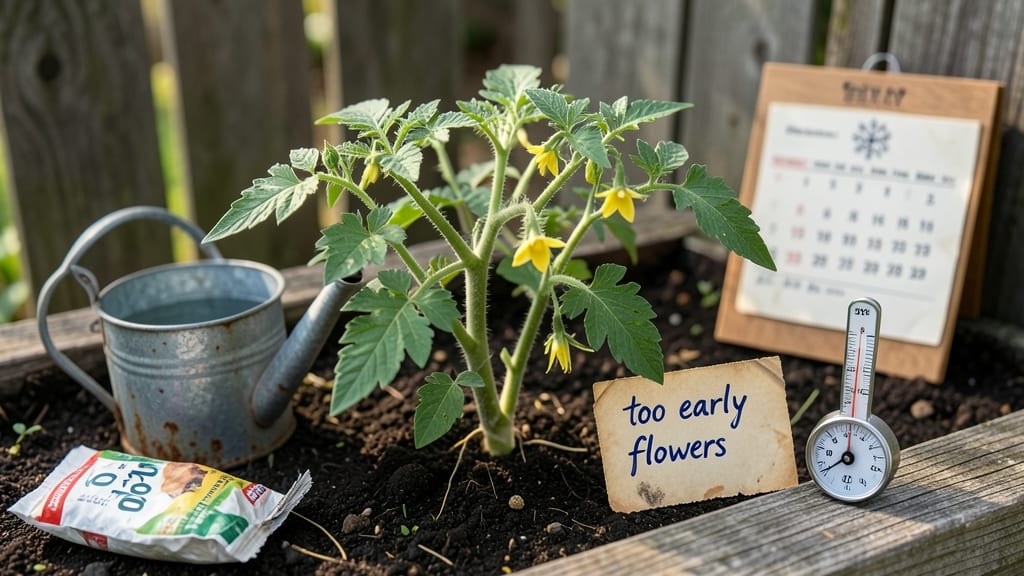
Your tomato plant flowers too early, and now you're staring at tiny blossoms instead of juicy red fruit. 🌱 This isn't a lost cause—it's a fixable problem that comes down to light, heat, and a few simple adjustments most gardeners miss.
The real culprit is usually too much warmth or light too soon. Tomatoes need consistent temperatures between 60-75°F to focus on growth before flowering. If your plant bolts (sends up flowers) before it's sturdy, it'll struggle to support fruit.
The good news? You can reset it with pruning, shade, and a little patience.
Start by removing the early flowers—yes, even the cute little buds. Then move your plant to a cooler spot with 6-8 hours of indirect light daily. Water deeply but less frequently to encourage stronger roots, and avoid fertilizing until new growth appears.
Within 2-3 weeks, you'll see fresh, healthy leaves and a plant ready to produce fruit.
This works for both container tomatoes and in-ground plants. The key is consistency—once your plant catches up, it'll reward you with a bigger, later harvest than if you'd let it flower early. Let's get those tomatoes back on track!
Triggers Behind Premature Blooms
When your tomato plant starts flowering before it’s ready, it’s usually a sign that something in its environment or care routine is out of balance. Understanding these triggers helps you adjust your approach before the plant wastes energy on fruit that won’t ripen properly.
Here’s why it happens—and how to spot the culprits:
Tomatoes are tropical plants, and they thrive in warm but stable temperatures—typically between 70–85°F (21–29°C). When days get too hot (above 90°F/32°C) or nights dip below 55°F (13°C), the plant interprets this as a signal to reproduce quickly, triggering early flowering. This is especially common in:
- Greenhouse growers who crank up heat without proper ventilation.
- Outdoor plants in regions with sudden heatwaves or cold snaps.
- Container gardens where soil heats up faster in direct sunlight.
Why it matters: Premature flowers often drop off or produce small, underdeveloped fruit because the plant hasn’t built enough energy reserves (stored as starch in leaves and stems).
Water stress—whether from drought or overwatering—can shock a tomato plant into flowering early. Here’s how:
- Underwatering: When roots struggle to absorb moisture, the plant perceives it as a survival threat and shifts resources to reproduction. This is common in:
- Plants with shallow root systems (like those in small pots).
- Soil that dries out quickly (sandy or rocky soil).
- Overwatering: Poor drainage or soggy soil cuts off oxygen to roots, triggering stress hormones (like ethylene) that accelerate flowering. This often happens in:
- Heavy clay soil that stays waterlogged.
- Plants without proper mulch to regulate moisture.
Pro tip: Aim for 1–1.5 inches (2.5–4 cm) of water per week, delivered consistently at the soil level (not the leaves). Use a moisture meter if you’re unsure!
Tomatoes are heavy feeders, and their nutrient needs shift as they grow. If the balance is off—especially with nitrogen (N) or phosphorus (P)—the plant may flower prematurely:
| Cause | Effect on Plant | How to Fix |
|---|---|---|
| Excess phosphorus (from bone meal or over-fertilized soil) | Encourages rapid flowering at the expense of leafy growth. | Flush soil with water and switch to a balanced 10-10-10 fertilizer or compost tea. |
| Nitrogen deficiency (pale yellow leaves, stunted growth) | Plant prioritizes reproduction over foliage to “survive.” | Apply a low-phosphorus fertilizer (like fish emulsion) and monitor for signs of recovery in 1–2 weeks. |
| Potassium or magnesium deficiency (yellow edges on leaves) | Weakens the plant’s ability to delay flowering until it’s mature. | Use Epsom salt (magnesium sulfate) or a banana peel tea for potassium. |
Key insight: A soil test is your best tool—it reveals exact nutrient levels so you can adjust without guessing.
Tomatoes need 6–8 hours of direct sunlight daily, but extremes in light can disrupt their growth cycle:
- Excessive sunlight: In hot climates (like desert regions), intense light + heat can cause flower drop or stunted fruit. The plant may flower early to “beat the heat” but lacks energy to support fruit.
- Insufficient light: Shady spots (under trees or in north-facing containers) trick the plant into thinking it’s time to reproduce, as it can’t photosynthesize efficiently.
Solution:
- Use shade cloth (30–50%) in peak afternoon sun for outdoor plants.
- Move container tomatoes to a south-facing window or use grow lights if indoors.
Watch for: Leaves curling or bleaching? That’s a sign of light stress.
Tomatoes are sensitive to root disruption, whether from:
- Transplanting too early (when soil temps are below 60°F/15°C).
- Disturbing roots during pruning or staking.
- Moving potted plants frequently.
The plant’s survival instinct kicks in, prompting early flowering as a way to “reproduce before it’s too late.” Root-bound plants (circling roots in pots) also trigger this response.
Fix it: Wait until soil is warm, use root stimulator when transplanting, and avoid repotting unless roots are visibly constrained.
Now that you know the root causes (literally!), you can take targeted action to delay flowering until your tomato plant is ready to support a bountiful harvest. Stay tuned for the next section on how to adjust care to keep those flowers in check!
Quick Fixes for Early Blooming Tomatoes
When your tomato plant starts flowering too soon, don’t panic—there are practical ways to adjust its growth cycle and protect your harvest. Below are targeted solutions based on the most common causes, along with prevention tips to keep your plants on track for a bountiful season.
Early flowering often signals stress from extreme temperatures. Adjust the environment to encourage healthier vegetative growth before fruit sets.
How to Adjust Temperature
- 🌞 Shield from Heat: If daytime temps exceed 85°F (29°C), provide afternoon shade with a lightweight row cover or shade cloth (30-50%).
This slows flowering and allows the plant to focus on leaf and stem development. - ❄️ Protect from Cold Snaps: If nights dip below 50°F (10°C), use frost blankets or move potted plants to a sheltered spot (like a greenhouse or under a porch).
Cold stress can trigger premature blooming. - 💡 Pro Tip: Monitor your local heat units accumulation (like growing degree days). Tomatoes need 1,000–1,500 heat units before flowering—delaying exposure can reset their cycle.
Prevention for Next Season
- Choose heat-tolerant varieties like ‘Solar Fire’ or ‘Heatmaster’ if you live in a hot climate.
- Start seeds indoors 6–8 weeks before the last frost to ensure sturdy transplants that can handle outdoor conditions.
Excess moisture or soggy roots can confuse your tomato plant, causing it to flower early as a survival response.
How to Fix Watering Issues
- 🔥 Check Soil Moisture: Stick your finger 1–2 inches deep into the soil. Water only when the top layer feels dry.
Overwatering (especially in cool weather) signals the plant to flower prematurely. - 🍳 Improve Drainage: Amend heavy clay soil with compost or perlite to prevent waterlogging.
If using containers, ensure pots have drainage holes and elevate them slightly. - ⏰ Adjust Watering Schedule: Water deeply but infrequently (e.g., 1–2 times per week) rather than daily shallow watering. This encourages stronger root growth.
Prevention for Next Season
- Test your soil’s drainage rate: Dig a hole, fill it with water, and time how long it takes to drain. Ideal drainage should take 4–6 hours.
- Use mulch (straw or grass clippings) to retain moisture evenly and reduce evaporation.
Early flowering can be a sign of nutrient overload, especially if your plant is getting too much phosphorus (P) or not enough potassium (K).
How to Balance Fertilizer
- 👨🍳 Reduce High-Phosphorus Fertilizers: Avoid starter fertilizers with high first-number ratios (e.g., 5-10-5).
Instead, use a balanced fertilizer (e.g., 10-10-10) or one low in phosphorus (e.g., 5-5-10). - 🥗 Boost Potassium: Side-dress with banana peels (composted) or use a potassium-rich fertilizer (like kelp meal) to encourage leafy growth over flowers. - 🌡️ Soil Test First: Use a DIY soil test kit or send a sample to your local extension office to check nutrient levels before amending.
Prevention for Next Season
- Follow a slow-release fertilizer schedule: Apply half the recommended dose at planting, then again 4–6 weeks later.
- Avoid over-fertilizing—more isn’t better! Tomato plants prefer moderate nutrition over excess.
Moving tomato plants (even gently) can stress them, causing early flowering as a response to perceived "danger."
How to Minimize Stress
- 🔪 Prune Damaged Roots: If transplanting, trim any circling or broken roots with clean scissors before replanting.
This encourages new, healthy root growth. - 🌱 Harden Off Gradually: If starting indoors, acclimate seedlings to outdoor conditions over 7–10 days by moving them to a shaded spot for increasing durations. - 💡 Pro Tip: Use root stimulator (like mycorrhizal fungi) when transplanting to help roots establish faster.
Prevention for Next Season
- Direct sow seeds if possible to avoid transplant shock entirely.
- If transplanting is necessary, do it on a cloudy day to reduce stress from direct sunlight.
Some tomato varieties (like determinate types) are genetically programmed to flower early, while others (like indeterminate varieties) need more time.
How to Work With Your Plant’s Traits
- 🌿 Choose the Right Variety: If early flowering is a recurring issue, switch to indeterminate tomatoes (e.g., ‘Better Boy’, ‘Brandywine’) that continue growing and producing all season.
- 🎯 Prune Early Flowers: For determinate varieties, gently snip off the first few flower clusters to delay fruiting until the plant is more established.
This redirects energy to leaf and stem growth.
Prevention for Next Season
- Research days to maturity for your chosen variety and adjust planting times accordingly.
- If growing from seed, select hybrids bred for your climate (e.g., ‘Early Girl’ for cooler regions).
Final Note: Patience is key! With these adjustments, your tomato plant should rebound and produce a healthier, later harvest—just in time for your favorite summer dishes. 🍅🌿
Frequently asked questions
Should I remove the early flowers from my tomato plant?
Yes! Removing the first few flower clusters (called succession pruning) helps your plant redirect energy to leaf and stem growth instead of fruit production. Use clean scissors to snip off clusters just above a leaf or stem. This gives your tomato 2-3 weeks to build a stronger structure before flowering again. Focus on the bottom clusters first.
How do I know if my tomato plant is getting too much heat?
Watch for these signs: leaves curling upward, yellowing edges, or flowers dropping off quickly. If daytime temps exceed 85°F (29°C) consistently, provide afternoon shade with 30-50% shade cloth. Move potted plants to a cooler spot or use a fan for airflow. Mulch with straw to keep roots cooler—this makes a big difference in hot climates!
Can I still get tomatoes if my plant flowers early?
While you’ll lose the first few flowers, your plant will rebound and produce a better late harvest if you adjust care. Focus on consistent watering (1-1.5 inches per week), balanced fertilizer (like 10-10-10), and protecting it from temperature swings. Indeterminate varieties will keep producing all season once established.
What’s the best fertilizer to prevent early flowering?
Avoid high-phosphorus fertilizers (like bone meal) that trigger flowering. Instead, use a balanced 10-10-10 or low-phosphorus 5-5-10 formula. For extra potassium (which encourages leaf growth), try composted banana peels or kelp meal. Always water thoroughly after fertilizing to prevent root burn.
Will pruning my tomato plant delay flowering?
Yes! Pruning removes flower clusters and encourages more leafy growth, which stores energy for later fruit production. For indeterminate tomatoes, remove suckers (side shoots) regularly and pinch off the first few flower clusters. For determinate varieties, prune lightly to maintain shape. Just avoid over-pruning—leave enough leaves to support photosynthesis!