
Companion Plants
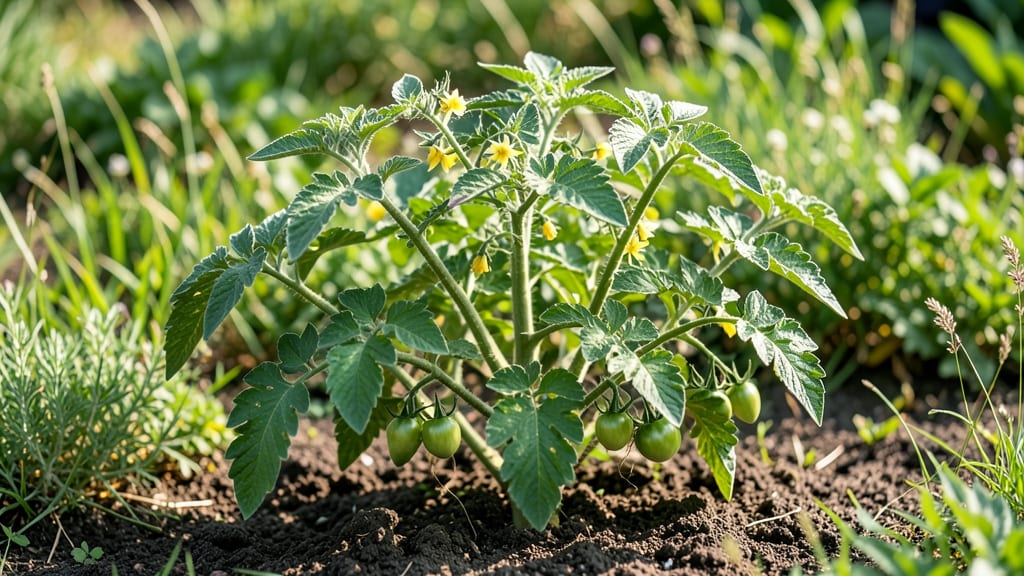
When tomato plants first flowers appear, remove them to redirect energy toward stronger root and stem growth, ensuring healthier future fruit production. This pruning step prevents early fruiting, which can stress young plants and reduce yield quality.
This practice isn't about eliminating all flowers—it's about timing. 🌱 Young tomato plants need to focus their energy on developing a robust framework before they start producing fruit.
Removing those first blossoms allows the plant to build stronger stems and roots, which directly translates to bigger, healthier tomatoes later in the season. I've seen firsthand how plants that skip this step often produce smaller fruit and struggle with disease resistance.
Think of it like a marathon runner training for a big race—they don't start sprinting on day one. That initial energy goes into building endurance. The same principle applies to tomato plants: their first priority should be establishing a strong foundation before they start carrying the weight of fruit production.
The key is patience—those early flowers might look promising, but they'll only drain resources the plant could otherwise use to develop more productive branches. This technique works particularly well for indeterminate varieties, which continue growing throughout the season and benefit most from delayed fruiting.
💡 In This Article
- Why Removing Early Tomato Flowers Boosts Fruit Set
- Step-by-Step Guide to Pruning Tomato Flowers for Maximum Yield
Why removing early tomato flowers boosts fruit set
When those first delicate tomato flowers appear, they might look like a promising sign of an abundant harvest—but they're actually a distraction from your plant's true priorities.
Here's what's happening biologically: those early blooms trigger the plant to shift its energy from vegetative growth (roots, stems, leaves) to reproductive growth (fruit development). This shift is driven by plant hormones like gibberellins, which promote flowering, and auxins, which normally encourage stem elongation and root development.
When the plant focuses on fruit production too early, it creates an imbalance that weakens the overall structure.
The science gets even more interesting when you consider how energy allocation works in plants. Studies show that tomato plants allocate about 60-70% of their photosynthetic energy to vegetative growth when young. When you remove early flowers, you're essentially telling the plant, "Hold off on the fruit—build your foundation first."
This allows the plant to develop a stronger vascular system, which is crucial for transporting water and nutrients to future fruit. Without this foundation, later tomatoes often end up smaller, less flavorful, and more susceptible to cracking under their own weight.
What most gardeners don't realize is how quickly early fruiting stresses the plant. Each tomato fruit requires significant resources—water, nutrients, and energy—that could otherwise go toward developing more productive branches.
I've seen plants that skipped this pruning step produce their first tomatoes at half the expected size (often just 1-2 ounces instead of the 6-8 ounces you'd expect from a well-developed plant).
The stress also makes them more vulnerable to diseases like blight, which can spread more easily through weakened tissue.
This technique works particularly well with indeterminate varieties like 'Sungold' or 'Better Boy,' which continue growing throughout the season. These plants can produce 10-15 pounds of tomatoes per plant when properly managed, compared to just 2-3 pounds from plants that were allowed to fruit early.
The key is understanding that those early flowers are like a false start—they might look promising, but they're actually holding your plant back from reaching its full potential.
There's also a fascinating connection between leaf development and fruit quality. When you remove early flowers, the plant maintains a larger leaf canopy, which means more surface area for photosynthesis.
Each square inch of leaf can produce about 0.05-0.1 grams of sugar per hour—that extra photosynthetic capacity translates directly to bigger, sweeter tomatoes later in the season. The leaves also play a crucial role in transpiration, which helps the plant regulate its temperature and maintain proper nutrient uptake.
The timing of this energy redirection is critical. If you allow the plant to fruit too early, it can actually trigger a process called "source-sink competition," where different parts of the plant compete for limited resources.
This competition often results in smaller leaves, weaker stems, and fruit that's less flavorful because it hasn't had time to develop proper sugar content. By removing those first flowers, you're essentially giving your plant a head start on developing the resources it needs to produce a bountiful harvest.
One visual clue that helps me determine when to prune is the plant's overall vigor. Healthy young tomato plants should have stems that are at least pencil-thick and roots that have spread 12-18 inches below the soil surface.
If you see flowers appearing before the plant reaches this stage, it's definitely time to intervene. The goal is to create a balanced plant that can support both its structural needs and its reproductive demands without becoming overburdened.