
Companion Plants
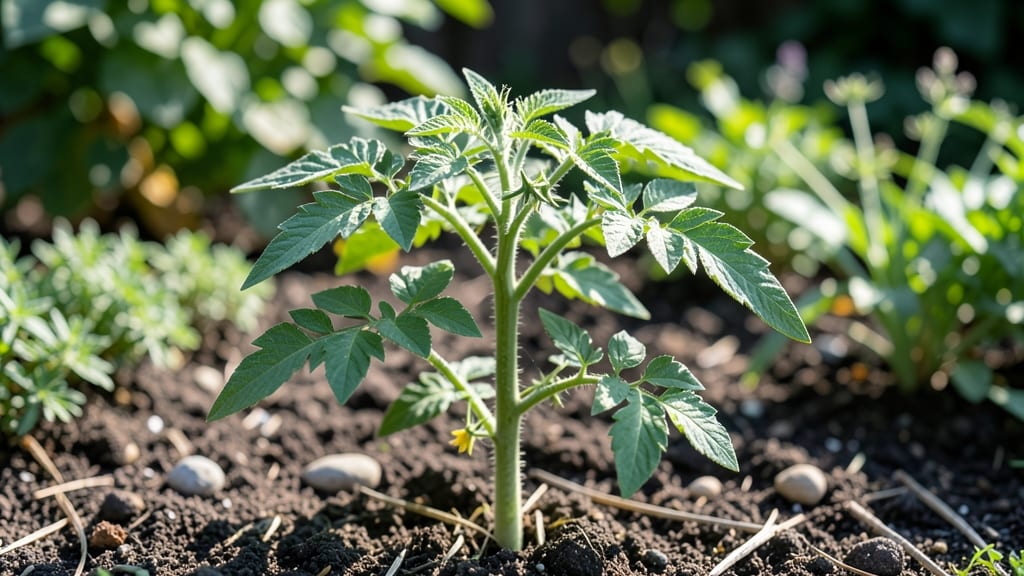
What do young tomato plants look like? They start as tiny, hairy stems with oval-shaped leaves no bigger than your pinky nail—nothing like the bushy adults you imagine. 🌱 I’ve seen beginners mistake them for weeds or even dandelions, but those first true leaves (not the tiny seed leaves) are your key: they’re smooth-edged, bright green, and grow in a spiral pattern up the stem. If you’re growing from seed, these little guys pop up in 7-14 days, and their first real leaves are your confirmation they’re not just stubborn weeds.
Healthy seedlings stand 2-4 inches tall with sturdy stems and leaves that grow outward, not curled or yellowing. Unhealthy ones look leggy (too tall, thin stems) or have dark spots—signs of overwatering or disease.
I once thought my first batch was failing until I realized they just needed more light and a smaller pot to encourage stronger roots. The trick is to watch for new growth at the top: that’s your plant telling you it’s happy and ready for the next stage.
By the time they’re ready for transplanting (about 4-6 weeks old), your seedlings should have 4-6 true leaves and look like miniature versions of mature plants—just half the size. Pinch off the lower leaves if they’re touching the soil to prevent rot, and you’ll see side shoots starting to form.
That’s when you know they’re strong enough to handle outdoor life, whether you’re moving them to a garden bed or larger containers.
Common mix-ups happen with volunteer tomatoes (unplanted seeds from last year) or weeds like purslane—both can look similar at first glance. The giveaway? Tomato leaves are smooth and slightly fuzzy, while weeds often have rough or jagged edges.
If you’re still unsure, dig up a suspect plant: a tomato’s roots will be white and fibrous, not tangled like weeds. Trust your eyes, and soon you’ll spot them before they’re big enough to confuse.
What Stops Them From Looking Right
Understanding why young tomato plants might not match your expectations—whether they’re leggy, pale, or stunted—starts with identifying the root causes. Here’s a breakdown of the most common reasons, explained in simple terms with actionable science behind them.
---
Tomatoes are sun-worshippers, and without enough light, they’ll stretch and weaken in a desperate bid for sunlight. This phenomenon, called etiolation, turns young plants into tall, spindly sticks with sparse leaves.
Why it happens: - Tomatoes need 6–8 hours of direct sunlight daily to grow strong. - Shade from nearby plants, structures, or even cloudy skies triggers auxin hormone overproduction, which elongates stems at the expense of leaf growth. - Weak stems = more prone to snapping in wind or rain.
Actionable fix: - Place seedlings in the sunniest spot in your garden (south-facing is ideal in the Northern Hemisphere). - Use reflective surfaces (like white walls or aluminum foil) to bounce extra light onto plants. - If growing indoors, supplement with grow lights (LED or fluorescent) 12–16 hours/day.
---
Water is life, but too much or too little throws tomato plants into survival mode. Both extremes stunt growth and distort leaf shape.
Why it happens: - Overwatering: Soggy soil cuts off oxygen, suffocating roots and preventing nutrient uptake. Leaves may turn yellow or develop mushy, translucent edges (a sign of blossom-end rot in the making). - Underwatering: Roots can’t absorb enough water, causing leaves to curl inward or develop a dull, grayish hue. The plant prioritizes keeping existing leaves alive over growing new ones.
Actionable fix: - Check soil moisture by sticking your finger 1–2 inches deep—if it’s dry, water deeply. If it’s soggy, hold off. - Use well-draining soil (mix in perlite or compost) to prevent waterlogging. - Water at the base, not overhead, to avoid fungal diseases like early blight (which also distorts leaves).
---
Young tomato plants need a balanced diet, but too much (or too little) of certain nutrients can warp their appearance.
Why it happens: - Nitrogen-heavy soil (from over-fertilizing with lawn fertilizer) produces lush, dark green leaves but weak stems. Plants grow fast but flop over easily. - Phosphorus deficiency (common in acidic soils) stunts root and leaf growth, making plants look small and purple-tinged. - Potassium or magnesium deficiencies cause yellowing between leaf veins (a classic sign of chlorosis), making plants look unhealthy before they even start.
Actionable fix: - Test your soil with a DIY kit or send a sample to a local extension office. - Use a balanced fertilizer (like 5-10-10) for young plants, then switch to a tomato-specific blend (higher in phosphorus/potassium) when flowering. - Epsom salt (magnesium sulfate) can fix yellowing leaves—dissolve 1 tablespoon per gallon of water and spray foliage every 2 weeks.
---
Tiny invaders and pathogens can chew, suck, or infect young tomato plants, altering their growth patterns before you even notice.
Why it happens: - Aphids or spider mites cluster on undersides of leaves, sucking sap and causing stunted, curled leaves with sticky residue (honeydew). - Fungal diseases like powdery mildew or early blight create white spots, brown lesions, or distorted growth on leaves. - Viral infections (spread by insects) may cause mosaic patterns or stunted, malformed leaves.
Actionable fix: - Inspect leaves daily—look for holes, webbing, or unusual spots. - Blast plants with water (early morning) to dislodge pests like aphids. - Use neem oil or insecticidal soap for pests; copper fungicide for fungal issues. - Remove infected leaves immediately and sterilize pruners with rubbing alcohol.
--- Tomatoes thrive in warm but not scorching conditions. Extreme heat or cold shocks their development.
Why it happens: - Cold snaps (below 50°F/10°C) slow metabolism, causing delayed germination or purple-tinged leaves (a sign of phosphorus stress). - Heatwaves (above 90°F/32°C) can bleach leaves (sunburn) or cause flower drop, stunting plant vigor. - Fluctuating temps (common in spring/fall) confuse plants, leading to irregular growth spurts.
Actionable fix: - Use row covers for early spring planting to protect from cold. - Mulch heavily (straw or black plastic) to keep roots cool in summer. - Provide afternoon shade (with shade cloth) if temps exceed 90°F/32°C. - Hardening off seedlings gradually (exposing them to outdoor temps over 7–10 days) prevents shock.
Quick Fixes for Common Tomato Plant Struggles
Got a young tomato plant that’s not thriving? Don’t panic—most issues have simple, effective solutions. Below, we’ll match common problems with practical fixes, plus tips to keep your plants healthy from the start.
Whether your seedlings look leggy, wilted, or just not growing, these steps will get them back on track.
---
Cause: Young tomato plants stretch toward light sources (a condition called etiolation), often due to insufficient sunlight or being placed too far from a grow light. Fix: - 🔥 Move to a Sunniest Spot: Place seedlings near a south-facing window or under a grow light (LED or fluorescent) for 12–16 hours daily. Keep lights 2–4 inches above the plants to prevent burning. - 🍳 Thin Crowded Seedlings: If seedlings are packed too closely, transplant the strongest ones into individual pots (3–4 inches deep) with well-draining soil. This gives roots room to grow. - 👨🍳 Bury Stems Deeper: When transplanting, bury 1/3 of the stem below soil level. This encourages new root growth and stabilizes the plant.
Prevention Tips: ✨ Use a seedling heat mat (70–75°F) to speed up germination and early growth. ✨ Rotate trays daily if using artificial light to prevent uneven growth. ✨ Start seeds indoors 6–8 weeks before the last frost for a head start.
---
Cause: Tomato plants are sensitive to moisture extremes. Wilting can mean too much water (root rot) or too little (drought stress). Fix: - 🌡️ Check Soil Moisture: Stick your finger 1 inch into the soil. If it’s dry, water deeply until it drains from the bottom. If soggy, stop watering and let it dry out. - 💡 Adjust Watering Habits: - Morning watering is best—avoid wetting leaves to prevent fungal diseases. - Use drip irrigation or a soaker hose to deliver water at the base. - 🎯 Improve Drainage: Ensure pots have drainage holes and use a light, airy potting mix (add perlite or vermiculite if needed).
Prevention Tips: 💡 Water consistently—tomatoes hate moisture swings. Aim for 1–1.5 inches per week, adjusting for rain. 💡 Mulch around plants (with straw or shredded leaves) to retain moisture and regulate soil temperature.
---
Cause: Yellowing leaves often signal nitrogen deficiency (common in fast-growing seedlings), while crinkled or curled leaves may indicate aphids, spider mites, or environmental stress. Fix: - 📊 Boost Nitrogen for Leggy Plants: - Use a balanced fertilizer (10-10-10 or 5-5-5) diluted to half strength when seedlings have 2–3 true leaves. - Fish emulsion or compost tea are organic options for a gentle nutrient boost. - 🔪 Treat Pests Immediately: - Aphids/Spider Mites: Spray with neem oil (1 tsp per quart of water) or soapy water (1 tbsp mild soap per gallon). Repeat every 3–5 days. - Handpick larger pests (like tomato hornworms) in the early morning when they’re sluggish. - 🌡️ Adjust Environment: - Too hot? Move plants away from heat sources (like radiators) or provide shade cloth if temps exceed 90°F. - Too cold? Use row covers or a cloche to protect seedlings from chilly nights.
Prevention Tips: ✨ Rotate crops annually to prevent soil-borne diseases and pests. ✨ Inspect plants weekly—catch pests early before they spread. ✨ Use reflective mulch (like aluminum foil) to deter pests and improve growth.
---
Cause: Seedlings may stop growing if the soil lacks nutrients, is too compacted, or if they’re struggling to adapt after transplanting. Fix: - 🍳 Repot into Richer Soil: - Mix compost or worm castings into the soil before transplanting. - Choose a tomato-specific potting mix (or blend garden soil with coconut coir and perlite). - 👨🍳 Harden Off Gradually: - Week 1: Place seedlings outside for 1–2 hours daily, then bring them back in. - Week 2: Increase time to 4–6 hours, shielding from direct sun. - Week 3: Leave them out overnight before full transplanting. - 🌡️ Fertilize Lightly After Transplanting: - Wait 1–2 weeks before applying fertilizer to avoid burning new roots. - Use a low-phosphorus fertilizer (like 5-10-10) to encourage leafy growth.
Prevention Tips: 💡 Test soil pH—tomatoes thrive in 6.0–6.8 range. Amend with lime (to raise pH) or sulfur (to lower it) if needed. 💡 Avoid over-fertilizing—young plants need more water than nutrients in early stages.
--- Pro Tip: 🌟 Prune Wisely! Pinch off the first flowers that appear on young plants (before transplanting) to redirect energy into root and stem growth—this leads to stronger, more productive plants later!
Frequently asked questions
How can I tell if my tiny seedlings are actually tomato plants?
Look for the first true leaves—these are the second set of leaves that appear after the initial seed leaves. Tomato seedlings have oval, smooth-edged leaves that grow in a spiral pattern up the hairy stem. The leaves should be bright green and about the size of your pinky nail when they first appear. If you see jagged edges or rough textures, it’s likely a weed!
Why do my tomato seedlings look so different from the pictures online?
Early tomato seedlings often appear small, delicate, and hairy—not like the bushy plants you see later. The key differences are the leaf shape (smooth, oval, and slightly fuzzy) and stem structure (hairy and upright). Varieties like cherry tomatoes may have slightly smaller leaves, while heirlooms might show subtle color variations even at this stage. Don’t judge a plant by its first few leaves!
How tall should my young tomato plants be before transplanting?
Healthy seedlings should be 4–6 inches tall with 4–6 true leaves before transplanting. They’ll also have sturdy stems and side shoots forming near the base. If they’re leggy (too tall and thin) or have yellowing leaves, they need more light or nutrients before moving outdoors. Wait until nighttime temps stay above 50°F (10°C) for best results.
Can I transplant my tomato seedlings too early?
Yes! Transplanting too early—when seedlings are under 4 inches tall or have fewer than 4 true leaves—can stunt their growth. Young plants lack the root strength to handle temperature swings or pests. Wait until they’ve developed a strong root system (tap roots 1–2 inches long) and harden off properly. Cold soil (below 55°F/13°C) can also shock them, so use row covers if needed.