
Companion Plants
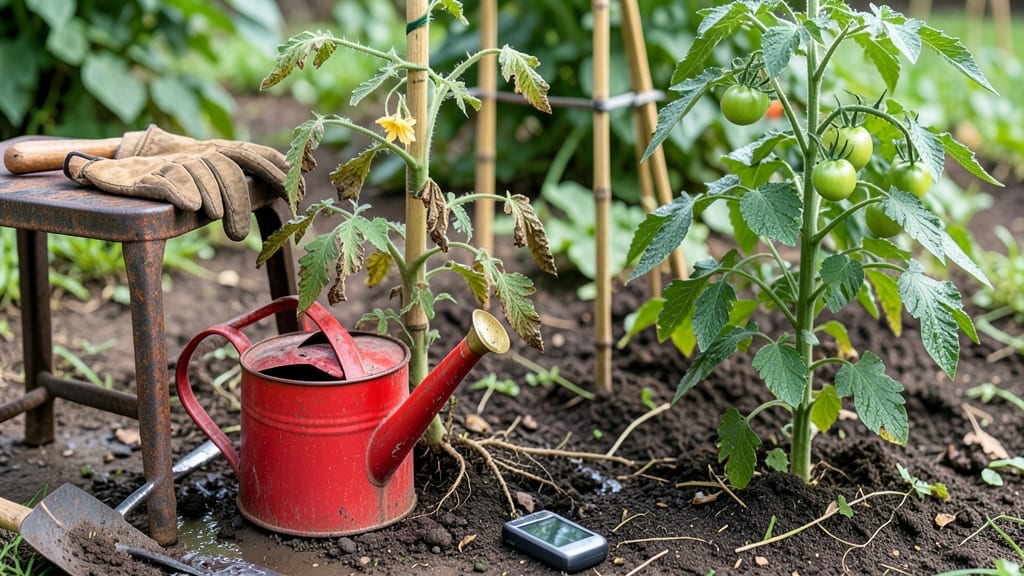
When your tomato plants look droopy, it’s not always a death sentence—just a signal they need help. 🌱 I’ve revived more than my fair share of limp tomatoes by identifying the real cause (and it’s rarely what you first think).
The key is acting fast: check the soil, leaves, and roots to pinpoint whether it’s thirst, heat, or something sneaky like pests.
Most drooping starts with water—either too much or too little. Overwatered plants turn mushy at the roots, while underwatered ones wilt by midday but perk up at night. Then there’s heat stress: leaves curl and sag when temps hit 90°F+, especially in plastic pots that trap heat.
Pests like aphids or spider mites also suck the life out of plants, leaving them weak and wilted.
Here’s the good news: 90% of droopy tomatoes bounce back with the right fix. Adjust your watering, provide shade cloth on scorching days, or blast plants with water to knock off pests.
Within 24-48 hours, you’ll see those leaves firming up again—proof your plants just needed a hand, not a replacement.
Prevention is easier than rescue: mulch to keep roots cool, water deeply but infrequently, and inspect leaves weekly for early signs of trouble. Once you spot the pattern, you’ll catch issues before they turn your garden into a sad, sagging mess.
Root Causes Behind Wilting Tomatoes
When your tomato plants start looking droopy, it’s often a cry for help from the roots—or something else critical going wrong. Understanding the science behind wilting can help you diagnose the issue faster and take precise action.
Below, we break down the most common culprits, from water woes to hidden pests, with clear explanations of what’s really happening to your plants.
Tomatoes thrive on consistency, but too much water—or waterlogged soil—can suffocate their roots. When soil stays soggy for days, roots struggle to absorb oxygen, leading to anaerobic conditions.
This triggers ethylene gas production, a plant stress hormone that causes leaves to wilt and drop. Overwatering also flushes out nutrients, weakening the plant’s structure.
Why it happens:
- Compacted or clay soil holds excess water, preventing oxygen from reaching roots.
- Lack of drainage holes in containers traps water, mimicking a swampy environment.
- Frequent light rains or overzealous watering can drown roots overnight.
Pro tip: 🌡️ Stick your finger 2 inches into the soil—if it’s damp, wait before watering. Use raised beds or amend clay soil with perlite or compost to improve aeration.
Tomatoes are heavy drinkers, especially in hot weather. When soil dries out too quickly, roots can’t keep up with the plant’s demand for water, leading to temporary wilting.
In extreme heat (above 90°F), tomato leaves may also roll or droop as a protective measure to reduce water loss through transpiration.
Why it happens:
- Shallow root systems in young plants can’t reach deep moisture reserves.
- Evaporative stress from intense sun or wind increases water loss faster than roots can replenish it.
- Plastic containers dry out soil quicker than fabric pots or in-ground beds.
Pro tip: 💡 Water deeply in the early morning (6–9 AM) to give roots time to absorb moisture before the heat peaks. Mulch with straw or wood chips to retain soil moisture.
A droopy tomato plant might be starving—not for water, but for essential nutrients. Nitrogen fuels leafy growth, while potassium and calcium help regulate water uptake and cell structure. Deficiencies weaken the plant’s vascular system, causing wilting even when soil is moist.
Why it happens:
| Nutrient Deficiency | Visual Clues | Root Cause |
|---|---|---|
| Nitrogen (N) | Yellowing lower leaves (oldest first) | Poor soil fertility or leaching from overwatering |
| Potassium (K) | Brown, crispy leaf edges; weak stems | Excessive nitrogen or sandy soil (low nutrient retention) |
| Calcium (Ca) | New leaves curl or cupping; blossom-end rot | Acidic soil or uneven watering (prevents calcium uptake) |
Pro tip: ✨ Test your soil with a DIY kit or send a sample to a local extension office. Amend with composted manure (for N) or greensand (for K) based on results.
Hidden underground, pests like root-knot nematodes, cutworms, or fungal pathogens (e.g., Phytophthora) can gnaw away at roots, disrupting water and nutrient flow. Even aphids or spider mites on leaves can sap energy, causing systemic wilting.
Why it happens:
- Nematodes create galls on roots, reducing surface area for water absorption.
- Fungal infections (e.g., Fusarium wilt) clog xylem vessels, preventing water transport.
- Cutworms sever roots at the base, leading to sudden collapse.
Pro tip: 🔥 Inspect roots when transplanting—look for swollen galls (nematodes) or black, mushy tissue (fungus). Treat with neem oil (for pests) or copper fungicide (for disease).
Tomatoes are sensitive to sudden changes in their environment. Windburn, temperature swings, or even poor air circulation can cause wilting by increasing transpiration rates or damaging leaf tissue.
Why it happens:
- High winds dry out leaves faster than roots can replace moisture.
- Cold nights or heatwaves shock the plant’s metabolism.
- Crowded plants compete for air and light, leading to stress.
Pro tip: 🎯 Use windbreaks (like cornstalks or burlap screens) and prune lower leaves to improve airflow. Avoid planting tomatoes in low-lying areas where cold air pools.
Revive Your Wilting Tomatoes Quickly
Now that you know what’s causing your tomato plants to droop, it’s time to take action! The good news is that most wilting issues are fixable with the right care. Below, we’ll break down practical solutions for each common cause—plus prevention tips to keep your plants thriving.
If your tomato plants look droopy after watering, they might be suffering from root rot or waterlogged soil. Here’s how to turn things around:
🔥 Step 1: Stop Watering Immediately
- Let the soil dry out completely before watering again. Overwatering is a silent killer—your plants need breathable roots, not soggy soil.
- Pro Tip: Stick your finger 2 inches deep into the soil. If it’s damp, wait another day.
🍳 Step 2: Improve Drainage
- If your pots or garden bed holds too much water, add perlite, sand, or compost to loosen the soil.
- For container plants, check drainage holes—no holes?
Drill them! (A ¼-inch bit works.) - 💡 Prevention: Use well-draining potting mix (like 60% soil, 30% compost, 10% perlite).
👨🍳 Step 3: Repot if Needed
- If root rot has set in, gently remove the plant, trim any mushy roots with sterilized scissors, and repot in fresh, dry soil.
- ⚠️ Warning: If more than half the roots are black/mushy, the plant may not recover—consider starting over.
⏰ Step 4: Water Deeply but Less Often
- Morning watering (6–8 AM) is best—it gives leaves time to dry before evening.
- Water at the base, not overhead, to prevent fungal diseases like early blight.
Droopy tomatoes in hot, dry weather often need more water and relief from the sun. Here’s how to help:
💦 Step 1: Water Deeply (Not Just a Sprinkle)
- 1–2 gallons per plant (for mature tomatoes) once or twice a week, depending on heat.
- 🌡️ Test the soil: If the top 1–2 inches are bone-dry, it’s time to water.
🌿 Step 2: Mulch to Retain Moisture
- Spread 2–3 inches of straw, grass clippings, or wood chips around the base (but not touching the stem).
- ✨ Bonus: Mulch keeps roots 5–10°F cooler and reduces evaporation.
🏖️ Step 3: Provide Afternoon Shade
- If temps hit 90°F+, use shade cloth (30–50%) or a lightweight row cover from 12–4 PM.
- 💡 Prevention: Plant tomatoes where they get morning sun and afternoon shade (e.g., near a fence or trellis).
🍅 Step 4: Prune for Better Airflow
- Remove lower leaves (up to 12 inches from the ground) to improve airflow and reduce stress.
- ⚠️ Avoid over-pruning—keep 3–5 main stems for best yield.
Yellowing leaves, weak stems, or slow growth? Your tomatoes might be hungry! Here’s how to fix it:
📊 Step 1: Test Your Soil
- A simple soil test kit (from a garden center) checks pH and nutrient levels.
- Ideal pH for tomatoes: 6.0–6.8 (too acidic? Add lime; too alkaline? Use sulfur).
💪 Step 2: Fertilize Correctly
- For new plants: Use a balanced fertilizer (10-10-10) when transplanting.
- For flowering/fruiting: Switch to low-nitrogen, high-phosphorus (5-10-10) to boost blooms.
- 🥗 Organic options: Compost tea, fish emulsion, or banana peels (for potassium).
🍎 Step 3: Side-Dress with Compost
- Mix 1–2 cups of compost into the top 2 inches of soil around the base.
- 🔥 Do this every 4–6 weeks for a steady nutrient boost.
🎯 Step 4: Avoid Over-Fertilizing
- Too much nitrogen = lush leaves, few tomatoes!
- 💡 Prevention: Follow package instructions—more isn’t better.
If aphids, whiteflies, or fungal spots are causing droop, isolate and treat immediately.
🔪 Step 1: Remove Infested Leaves
- Snip off yellow/brown leaves with sterilized scissors and dispose of them (don’t compost!).
- 💡 Prevention: Rotate crops yearly to prevent soil-borne diseases.
🚿 Step 2: Spray Neem Oil or Soap Solution
- Neem oil (1 tsp + 1 tsp dish soap per quart of water) – Spray early morning or evening to avoid burning leaves.
- 🌿 Alternative: Garlic spray (blend 5 garlic cloves + 1 tsp cayenne + 1 quart water) repels pests naturally.
🛡️ Step 3: Prevent Future Outbreaks
- Copper fungicide (for early blight) – Apply every 7–10 days in wet climates.
- 🎯 Pro Tip: Plant basil or marigolds nearby—they repel pests naturally!
No matter the issue, these quick fixes can help perk up your plants:
- Trim Damaged Leaves – Removes stress and redirects energy to healthy growth.
- Support with Cages/Trellises – Prevents stems from snapping under fruit weight.
- Check for Root Bound Plants – If roots circle the pot, repot into a larger container.
- Avoid Late Watering – Never water after sunset—wet leaves overnight invite disease.
🌱 Final Thought: Most droopy tomato plants bounce back in 24–48 hours with the right care. Stay consistent, and your plants will reward you with juicy, vine-ripened tomatoes in no time! 🍅🔥
Frequently asked questions
Why do my tomato leaves look droopy in the afternoon but perk up at night?
This classic pattern usually means your plants are underwatered. During the day, roots can’t keep up with water loss from heat and wind, causing temporary wilting. If leaves recover overnight, it’s a sign the roots are still functional—they just need more frequent, deeper watering. Aim for 1–2 gallons per plant in the morning to prevent this cycle.
Can I save a tomato plant with mushy, black roots?
It depends on how severe the damage is. If only a few roots are affected, trim the mushy sections with clean scissors, repot in fresh, dry soil with perlite for drainage, and reduce watering immediately. However, if over 50% of roots are rotted, the plant likely won’t recover—start fresh with a new transplant.
What’s the fastest way to revive heat-stressed tomato plants?
Give them immediate shade (use a sheet or shade cloth) and water deeply at the base—not overhead. For extreme heat (95°F+), mist leaves lightly in the morning to cool them down. Prune lower leaves to improve airflow, and avoid fertilizing until the plant recovers (it’s already stressed!). Most plants bounce back within 24–48 hours.
Are droopy tomato plants always a sign of water issues?
Not always! While water problems are the most common cause, check for pests (aphids, spider mites) or nutrient deficiencies too. Look for sticky residue (aphids), tiny webs (mites), or yellowing leaves (nitrogen deficiency). If the plant feels weak but soil is moist, pests or disease might be the culprit—treat with neem oil or inspect roots for damage.
How do I know if my tomato plant is droopy from overwatering vs. underwatering?
Overwatered plants often have yellow, limp leaves and mushy stems, while the soil stays soggy. Underwatered plants have crispy leaf edges, dry soil, and may wilt by midday but recover at night. Stick your finger 2 inches deep—if it’s damp, you’re overwatering; if dry, it’s time to hydrate deeply.