
Companion Plants
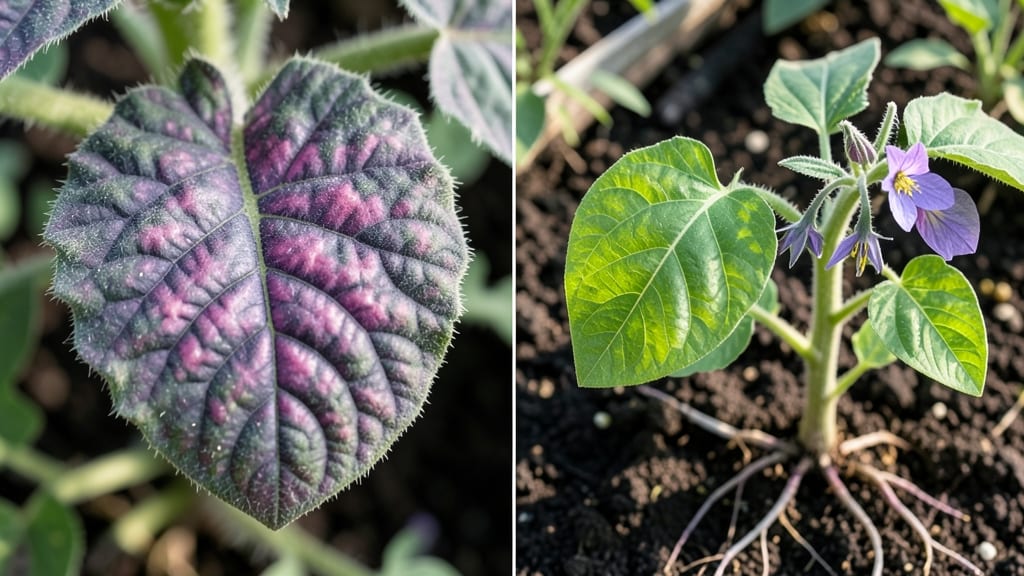
When your tomato plants look purple, it’s not a sign of doom—it’s your plant’s way of signaling something’s off. 🌱 I’ve seen this happen after a hot spell or when soil nutrients get out of balance, and once I figured out the triggers, my plants bounced back stronger than ever.
The purple usually appears on stems, leaves, or even the fruit itself, often caused by phosphorus deficiency, stress from extreme heat, or even natural anthocyanin buildup (a protective pigment). Don’t panic—this is fixable, and I’ll walk you through the exact steps to bring back that healthy green.
First, check your soil’s phosphorus levels with a simple test kit. If it’s low, a balanced fertilizer or bone meal can work wonders. For heat stress, provide afternoon shade and keep the soil consistently moist but not soggy.
Within a few weeks, you’ll see those purple hues fade and your plants thriving again. This isn’t just about saving your plants—it’s about understanding what they need to produce the juiciest tomatoes of the season. Let’s get those leaves back to their vibrant best!
Why it happens
When your tomato plants start showing off that mysterious purple hue, they’re not just dressing up for Halloween—they’re sending you a clear SOS. 🚨 Purple leaves or stems on tomato plants are almost never a sign of a healthy plant.
Instead, they’re a red flag (pun intended) that something’s off in their environment or care routine. Let’s break down the science behind why your tomatoes are turning purple, so you can diagnose and fix the issue before it’s too late.
🌡️ Cold Stress: The Silent Temperature Thief
Tomatoes are warm-weather lovers, and when temperatures dip below 55°F (13°C), they start to panic. Purple leaves or stems are a classic symptom of cold stress, where the plant’s chlorophyll production slows down, and anthocyanins (the pigments responsible for purple hues) kick in as a protective measure.
This is especially common in early spring or late fall when nights are chilly.
🔍 How to spot it: Purple appears on newer leaves or along the veins of older ones, often paired with stunted growth or wilting.
💡 Fix it fast:
- Move potted plants to a warmer, sheltered spot or cover them with frost blankets if frost is a risk.
- For garden tomatoes, use row covers or plant in a location with afternoon sun (which warms the soil faster).
- If possible, wait until soil temperatures consistently stay above 60°F (15°C) before transplanting seedlings.
💧 Water Woes: Too Much or Too Little
Watering issues—whether overdoing it or neglecting your plants—can trigger that unwanted purple tint. Tomatoes need consistent moisture, and when their roots struggle, they produce anthocyanins as a stress response.
🔍 Two scenarios to watch for:
- Underwatering: Purple leaves paired with dry, crispy soil or wilting. The plant is screaming for hydration!
- Overwatering: Purple stems or leaves combined with yellowing (chlorosis) or root rot symptoms (mushy stems, foul smell). Too much water starves roots of oxygen.
💡 Action steps:
- Check soil moisture by sticking your finger 1-2 inches deep. If dry, water deeply until it drains from the bottom of pots or 6 inches into the soil.
- For overwatered plants, let the soil dry out slightly between waterings and improve drainage with perlite or raised beds.
- Mulch around plants to retain moisture and regulate soil temperature.
🌱 Nutrient Deficiencies: What’s Missing?
Purple isn’t always about water or temperature—sometimes, your tomatoes are hungry. Two key deficiencies often cause this color shift:
1. Phosphorus Shortage 🧪
- Phosphorus helps with energy transfer in plants, and without it, tomatoes produce more anthocyanins as a survival tactic.
- Purple appears on the undersides of leaves or along the leaf veins.
- Other signs: Dark green or purplish stems, delayed flowering, or weak root growth.
2. Potassium Deficiency ⚡
- Potassium regulates water and nutrient movement. A deficiency leads to purple edges on older leaves (not just stems).
- Weak stems, yellowing leaf edges, and poor fruit development may also appear.
💡 Boost their diet:
- Feed with a balanced fertilizer (10-10-10 or 5-10-10) if phosphorus is low, or a potassium-rich option (like 0-10-10) for potassium issues.
- Add compost or bone meal (for phosphorus) to the soil before planting.
- For container gardens, use a time-release fertilizer to avoid overfeeding.
🌿 Poor Soil Conditions: The Root of the Problem
If your soil is too acidic (pH below 5.5) or compacted, tomato roots can’t absorb nutrients efficiently, leading to purple discoloration. Anthocyanins act as a sunscreen for stressed leaves, protecting them from damage.
🔍 Clues to look for:
- Purple stems or leaves paired with slow growth or small, weak plants.
- Soil that’s clay-heavy or waterlogged after rain.
💡 Improve soil health:
- Test your soil’s pH with a home test kit and amend with lime (to raise pH) or sulfur (to lower pH) as needed. Tomatoes thrive in pH 6.0–6.8.
- Add organic matter like compost or aged manure to loosen compacted soil.
- For containers, repot with a well-draining potting mix blended with coco coir or peat moss.
🐛 Pest or Disease Pressure: Silent Saboteurs
While less common, severe pest infestations (like aphids or spider mites) or fungal diseases (such as early blight) can stress tomato plants enough to trigger purple pigmentation. The plant diverts energy to defense mechanisms, sidelining chlorophyll production.
🔍 Watch for these red flags:
- Purple leaves paired with sticky residue (honeydew) or tiny webs (pests).
- Dark spots on leaves with purple halos (early blight).
💡 Take control:
- Spray plants with neem oil or insecticidal soap for pests. Repeat every 5–7 days.
- Remove and destroy infected leaves (don’t compost them!) and apply copper fungicide if disease is suspected.
- Improve air circulation around plants by pruning or spacing them properly.
Quick Fixes for Purple Tomato Plants
If your tomato plants are showing unexpected purple hues—whether on stems, leaves, or even fruits—don’t panic! The good news is that most causes have simple, effective solutions. Below, we’ve mapped out practical fixes for each likely culprit, along with prevention tips to keep your plants healthy and productive.
Purple tinges often signal a lack of key nutrients. Here’s how to address them:
💡 Fixing Phosphorus Deficiency (Purple Stems & Leaves)
Phosphorus helps roots grow and flowers/fruit develop. If your plants look purple, especially on stems or undersides of leaves, they’re hungry for this nutrient.
- ✅ Quick Fix: Apply a phosphate-rich fertilizer (look for a "P" number higher than "N" on the label, like 5-10-5). Mix it into the soil or use a liquid fertilizer. - 🌱 Prevention Tip: Before planting, amend the soil with bone meal (organic phosphorus source) or compost.
Avoid over-fertilizing with nitrogen-heavy feeds, which can mask phosphorus shortages.
💡 Fixing Nitrogen Deficiency (Purple Leaf Edges)
If only the edges of older leaves turn purple, your plants may need nitrogen (N). While less common than phosphorus issues, nitrogen is still critical for lush green growth.
- ✅ Quick Fix: Use a balanced fertilizer (like 10-10-10) or a quick-release nitrogen source such as blood meal. Water it in well. - 🌱 Prevention Tip: Rotate crops—don’t plant tomatoes in the same spot year after year.
Heavy feeders like corn or potatoes deplete nitrogen, so replenish it with compost or a green manure cover crop.
Extreme temperatures or water issues can also trigger purple discoloration.
🔥 Fixing Heat Stress (Purple Blotches on Leaves)
If your tomato plants are wilting or developing purple splotches in hot weather, they might be struggling with heat stress.
- ✅ Quick Fix: - Provide shade with a lightweight row cover or drip irrigation to keep leaves cool. - Mulch heavily (2–3 inches of straw or wood chips) to retain moisture and regulate soil temperature. - Avoid overhead watering—water deeply at the base in the early morning to reduce evaporation. - 🌱 Prevention Tip: Choose heat-tolerant tomato varieties like ‘Solar Fire’ or ‘Heatmaster.’
Plant in late spring or early summer (after the last frost) for optimal timing.
❄️ Fixing Cold Stress (Purple Leaves After Frost)
A sudden cold snap can cause purple-blackened leaves, especially in young plants.
- ✅ Quick Fix: - Prune damaged leaves (sterilize scissors with rubbing alcohol first) to redirect energy to healthy growth. - Cover plants with frost cloth or row covers if another cold snap is forecast. - Avoid fertilizing until temperatures stabilize—plants focus on survival, not growth, in cold stress. - 🌱 Prevention Tip: Hardening off seedlings gradually before transplanting helps them tolerate temperature fluctuations.
Also, plant in sheltered spots (near fences or walls) where cold air drains away.
While rare, pests or diseases can sometimes cause purple-like symptoms.
🐜 Fixing Spider Mite Damage (Purple Speckling on Leaves)
Spider mites suck plant sap, causing purple or brown speckles and webbing.
- ✅ Quick Fix: - Spray plants with a strong jet of water to dislodge mites. - Use neem oil (mix 1 tbsp per quart of water + a drop of dish soap) or insecticidal soap every 5–7 days. - Introduce beneficial predators like ladybugs or lacewings. - 🌱 Prevention Tip: Dust mulch (like diatomaceous earth) around the base of plants to deter mites.
Keep the garden diverse—mites thrive in monocultures.
🍄 Fixing Early Blight (Purple Rings on Leaves)
Early blight (a fungal disease) can cause purple-brown concentric rings on lower leaves.
- ✅ Quick Fix:
- Remove and destroy infected leaves immediately (don’t compost them!).
- Apply copper fungicide or a baking soda spray (1 tbsp baking soda + 1 quart water + a drop of soap) every 7–10 days.
- Improve airflow by pruning crowded foliage and spacing plants 18–24 inches apart.
- 🌱 Prevention Tip: Rotate crops—don’t plant tomatoes, peppers, or eggplants in the same spot for 3 years. Solarize soil in late summer by covering it with clear plastic for 4–6 weeks to kill fungal spores.
No matter the cause, these universal tips will keep your tomato plants thriving: - 🌿 Test your soil (pH 6.0–6.8 is ideal for tomatoes). Adjust with lime (to raise pH) or sulfur (to lower it). - 💧 Water consistently—tomatoes hate soggy or dry soil.
Aim for 1–2 inches of water per week. - 🍅 Feed regularly—use a balanced fertilizer every 2–3 weeks during the growing season, then switch to a low-nitrogen, high-phosphorus feed when flowers appear. - 🌱 Companion plant wisely—basil, marigolds, and onions repel pests and improve growth.
Remember: Purple tomato plants aren’t always a disaster—they’re often just a cry for help! Act fast, and your plants will bounce back with juicy, red tomatoes in no time. 🍅✨
Frequently asked questions
Is it normal for tomato plants to turn purple?
Not exactly—purple hues usually signal stress, not health. While some varieties naturally develop purple stems or leaves (like 'Black Krim'), unexpected purple on leaves or fruit often means your plants need attention. This color change typically indicates nutrient deficiencies (like phosphorus), temperature stress, or watering issues.
Can purple tomato plants still produce fruit?
Yes, but the quality may suffer if the issue isn't addressed. The plant will still fruit, but you might see smaller tomatoes or delayed ripening. Purple leaves or stems often mean the plant is diverting energy to survival rather than fruit production. Fixing the underlying cause (like adding phosphorus or adjusting water) can restore normal growth within 2-3 weeks.
What's the fastest way to fix phosphorus deficiency?
Use a phosphate-rich fertilizer (like 5-10-5) or mix bone meal into the soil. For immediate results, dissolve 1 tablespoon of Epsom salt in a gallon of water and apply it directly to the soil. Purple stems should start fading within 7-10 days of proper treatment, but monitor for other deficiencies too.
Will purple leaves spread to the fruit?
Not necessarily, but the plant's overall health affects fruit quality. If purple appears on leaves first, it may indicate stress that could later impact fruit development. However, the fruit itself rarely turns purple unless the plant is severely deficient in phosphorus. Focus on fixing the leaves first—they're your early warning system!
Can I use coffee grounds to fix purple tomato plants?
Coffee grounds can help, but they're not a complete solution. They add nitrogen and slightly acidify soil, but purple plants usually need phosphorus more urgently. Mix 1 cup of coffee grounds per plant with compost or bone meal for better results. For fastest recovery, combine with a phosphorus fertilizer.