
Vegetables
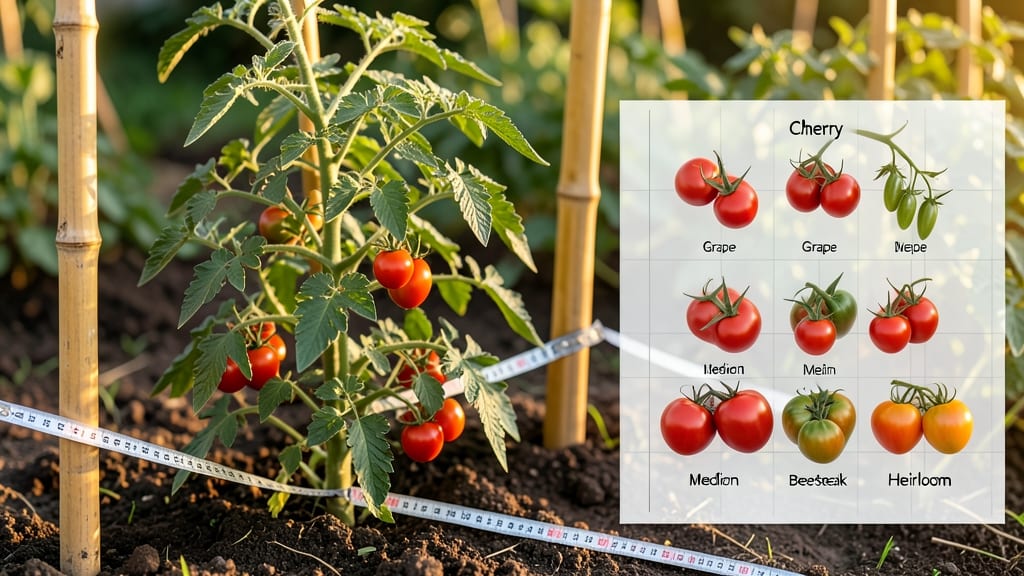
The tomato sizes chart makes all the difference in your harvest. 🌱 From pint-sized cherries to football-sized beefsteaks, each variety needs its own space, support, and care to thrive. I’ve grown them all—here’s how their mature sizes impact everything from staking to spacing in your garden.
Cherry tomatoes top out at 18-24 inches but produce hundreds of 1-inch fruits, while beefsteaks reach 4-5 feet and yield just 4-6 massive tomatoes per plant. The chart below shows how height and spread dictate your garden layout, from trellises to container sizes.
You’ll see which varieties fit where: bush types for small spaces, indeterminates for cages, and vining heirlooms for vertical gardens. Proper spacing prevents disease and maximizes airflow—critical for big, juicy tomatoes. Whether you’re planning a raised bed or a balcony setup, this guide ensures your tomato choices match your space.
Let’s get those plants sized just right!
What Shrinks Or Swells Tomatoes
If your tomatoes aren’t growing to the sizes you expect—or if they’re wildly inconsistent—it’s usually due to a mix of environmental, genetic, and cultural factors. Understanding these causes helps you adjust your growing strategy for more predictable (and delicious) results.
Here’s why your tomatoes might be smaller, larger, or all over the map:
Not all tomato varieties are created equal—and their sizes are hardwired into their DNA. Some heirlooms, like the massive Brandywine or Black Krim, are bred to grow into beefsteak-sized fruits (2–4 lbs each!), while cherry tomatoes like Sungold or Sweet 100 stay tiny (½–1 oz) by design.
Even within a variety, size can vary slightly due to:
- Determinate vs. Indeterminate Growth:
- Determinate (bush) tomatoes set all their fruit at once and stop growing when they flower, leading to uniform, smaller tomatoes (e.g., Roma or Celebrity).
- Indeterminate (vining) tomatoes keep producing new flowers and fruit all season, often yielding larger, irregularly sized tomatoes (e.g., Beefmaster or Cherokee Purple).
- Hybrid vs. Heirloom Traits: Hybrids (like Better Boy) are often bred for disease resistance and consistent size, while heirlooms may surprise you with giant or stunted fruit due to genetic quirks.
Actionable Tip: If you want uniform, predictable sizes, stick to determinate varieties for canning or sauces. For larger tomatoes, choose indeterminate heirlooms—but be prepared for variability!
Tomatoes are sun worshippers, and without enough light, they’ll prioritize leaf growth over fruit development. Here’s how sunlight (or lack of it) affects size:
- Insufficient Light: Plants in shade or under dense canopies produce smaller, paler tomatoes because photosynthesis slows down. Cells in the fruit don’t divide as much, leading to underdeveloped (but often more acidic) tomatoes.
- Too Much Heat: While tomatoes love sun, extreme heat (above 90°F/32°C) can cause blossom drop—where flowers fall off before fruiting—or lead to sunscald, where exposed sides of tomatoes turn white and leathery, stunting growth.
- Uneven Light: If one side of the plant gets more sun (e.g., near a fence or trellis), tomatoes on that side may grow larger while shaded ones stay small.
Actionable Tip:
- 🌞 Aim for 6–8 hours of direct sunlight daily—move containers or prune nearby plants to improve access.
- 🌡️ Use shade cloth (30–50%) in scorching climates to protect blossoms during peak heat.
- ⏳ Train vines upward with trellises or cages to ensure even light exposure.
Water stress—whether from drought or overwatering—directly impacts tomato size and quality. Here’s how:
- Underwatering: When soil dries out, tomatoes stop expanding and may develop cracking or blossom-end rot (a calcium deficiency caused by uneven water uptake). Cells in the fruit shrink, leading to small, tough tomatoes.
- Overwatering: Soggy soil suffocates roots, preventing them from absorbing nutrients efficiently. Tomatoes may grow large but hollow or split due to rapid, uneven growth.
- Inconsistent Watering: Fluctuations in moisture cause cellular stress, leading to misshapen or stunted fruit. Tomatoes need 1–1.5 inches of water per week, delivered deeply at the base.
Actionable Tip:
- 💦 Water deeply 2–3 times per week (early morning is best) rather than daily shallow watering.
- 🌱 Use mulch (straw or grass clippings) to retain moisture and regulate soil temperature.
- 📉 Monitor soil moisture with your finger—if the top 1–2 inches are dry, it’s time to water.
Tomatoes are heavy feeders, and their size reflects what’s available in the soil. Too little or too much of the wrong nutrients throws off their growth patterns.
| Nutrient Issue | Effect on Tomato Size | Solution |
|---|---|---|
| Nitrogen (N) Excess | Leads to lush foliage but small, bland tomatoes because energy goes to leaves instead of fruit. | Switch to a balanced fertilizer (e.g., 5-10-10) or add compost for slow-release nutrients. |
| Phosphorus (P) Deficiency | Delays flowering and fruiting, resulting in fewer, smaller tomatoes that ripen slowly. | Apply bone meal or rock phosphate at planting time. |
| Potassium (K) Deficiency | Weakens cell walls, causing small, shriveled, or cracked tomatoes with poor flavor. | Use wood ash or greensand; avoid over-fertilizing with nitrogen-heavy feeds. |
| Calcium (Ca) Deficiency | Leads to blossom-end rot (black, leathery bottoms) and stunted growth. | Side-dress with crushed eggshells or lime; ensure even watering. |
Actionable Tip:
- 🌱 Conduct a soil test before planting to identify deficiencies.
- 🍅 Feed tomatoes with a low-nitrogen, high-potassium fertilizer (like 2-4-4) when flowers appear.
- 💡 Avoid synthetic fertilizers late in the season—they can promote leafy growth over fruit.
Hidden threats like pests and pathogens can divert a tomato plant’s energy away from fruit development, leading to smaller harvests. Common culprits include:
- Sap-Sucking Pests (Aphids, Whiteflies, Spider Mites): These insects inject toxins and steal sap, causing stunted growth and deformed tomatoes. Infested plants may produce tiny, malformed fruit or none at all.
Fixing Tomato Sizing Issues
Now that you understand why tomato sizes vary, let’s tackle how to optimize growth and achieve the perfect fruit size for your garden. Whether you’re dealing with stunted cherry tomatoes, oversized beefsteaks, or inconsistent sizing, these practical solutions will help you take control.
Problem: Overcrowding or improper planting depth stunts growth, leading to small or misshapen tomatoes. Fix:
- 🌱 Dig deeper: Bury stems up to the first set of leaves (not just the roots) to encourage stronger root systems.
- 📏 Space properly: Follow the tomato sizes chart for your variety—dwarf tomatoes need 12–18 inches apart, while indeterminate types require 24–36 inches.
- 🌿 Prune suckers: Remove aggressive side shoots (suckers) to direct energy into fewer, larger fruits.
Prevention Tip: 💡 Use tomato cages or stakes early to prevent sprawling, which can lead to uneven sizing.
Problem: Inconsistent sunlight or water stress causes uneven ripening and stunted growth. Fix:
- ☀️ 6+ hours of direct sun: Place plants where they get full sun (morning sun is ideal to prevent scorching).
- 💧 Deep watering: Water deeply 1–2 times per week (not daily shallow watering) to encourage strong roots.
- 🌡️ Mulch heavily: Use straw or grass clippings to retain moisture and regulate soil temperature.
Prevention Tip: ✨ Drip irrigation keeps soil evenly moist without wetting leaves (reducing disease risk).
Problem: Poor soil or nutrient imbalances lead to small, weak tomatoes. Fix:
- 🌿 Test your soil: Use a DIY soil test kit (or lab test) to check pH (ideal: 6.0–6.8) and nutrient levels.
- 💪 Fertilize right:
- Early growth: High-nitrogen (for foliage) like 10-10-10.
- Fruiting stage: Switch to low-nitrogen, high-phosphorus (like 5-10-10) to boost fruit size.
- 🍅 Add compost: Mix in aged compost or worm castings before planting for steady nutrients.
Prevention Tip: 🔥 Avoid over-fertilizing—too much nitrogen = leafy plants, fewer tomatoes!
Problem: Poor airflow from dense foliage leads to disease and uneven sizing. Fix:
- ✂️ Prune lower leaves: Remove leaves touching the soil to prevent rot and improve airflow.
- 🌿 Limit branches: For indeterminate tomatoes, prune suckers to 2–3 main stems per plant.
- 🍅 Thin fruit clusters: If overloaded, snip small tomatoes to let remaining ones grow larger.
Prevention Tip: ⏰ Prune in the morning so wounds dry quickly, reducing disease risk.
Problem: Pests (like aphids) or diseases (blight) weaken plants, stunting growth. Fix:
- 🐜 Inspect regularly: Check undersides of leaves for aphids, hornworms, or whiteflies.
- 🌿 Natural remedies:
- Neem oil spray (for pests).
- Copper fungicide (for early blight).
- 🚫 Remove infected leaves: Prevents spread to other plants.
Prevention Tip: 🎯 Rotate crops yearly to avoid soil-borne diseases.
Final Pro Tip: 📊 Track progress! Keep a simple growth journal (or app) to note spacing, watering, and pruning—this helps refine your approach next season.
By adjusting planting depth, sunlight, nutrients, pruning, and pest control, you’ll see bigger, healthier tomatoes that match your ideal size chart! 🍅✨
Frequently asked questions about tomato variety sizes
1What’s the biggest tomato variety I can grow at home?
Heirloom varieties like Brandywine and Black Krim regularly produce tomatoes weighing 1–4 pounds each! For container growing, try Big Beef (hybrid) or Cherokee Purple, which can reach 12–16 ounces per fruit. Just give them 3–4 feet of vertical space with sturdy stakes.
2How do I know if my tomato plant is determinate or indeterminate?
Determinate tomatoes grow to a fixed height (3–5 feet) and produce fruit all at once, like Roma or Celebrity. Indeterminate types keep growing (6–10+ feet) and yield continuously, like Sungold or Beefmaster. Check the plant tag or variety description—indeterminates need pruning and support!
3Can I grow cherry tomatoes in containers?
Cherry varieties like Sweet 100 or Tiny Tim thrive in 5-gallon containers with 12–18 inches of spacing between plants. Use lightweight potting mix and ensure the pot has drainage holes. For larger varieties, opt for 10+ gallon containers and prune aggressively to control size.
4Why are my tomatoes smaller than the chart says?
Common causes include overcrowding, nutrient deficiencies (especially phosphorus), or inconsistent watering. Check your spacing (follow the chart!), test soil pH (6.0–6.8), and water deeply 2–3 times per week
5What’s the best way to compare tomato sizes visually?
Use familiar objects! A cherry tomato is about the size of a ping pong ball (1 inch), while a beefsteak can be as big as a softball (4–6 inches). For heirlooms, think baseball-sized (3–4 inches). Pro tip: Take photos of your harvest next to these objects for a quick reference chart!