
Vegetables
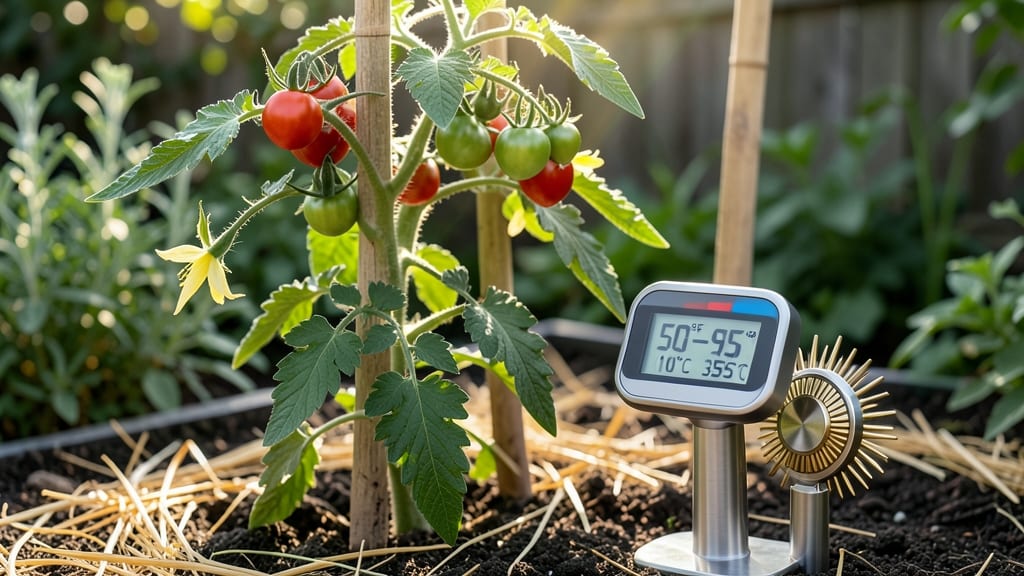
Growing tomatoes thrives in a specific temperature range that keeps them healthy and productive from seed to harvest.
Did you know tomatoes can wilt, fail to set fruit, or even die if temperatures stray too far from their ideal range? Mastering the perfect tomato temperature range is the secret weapon for gardeners aiming for bountiful harvests—whether you're growing in greenhouses, containers, or open fields.
Too hot, and your plants may drop blossoms before fruit forms; too cold, and growth slows or stops entirely. In USDA Zone 6a, where spring and fall temperatures swing wildly, understanding these ranges becomes even more critical for success.
Below, I’ll break down the ideal temperatures for every stage—germination, flowering, fruiting—and share practical tips to keep your 🍅 tomatoes thriving, no matter the weather.
Optimal temperature ranges for tomato growth stages (seedling to harvest)
Tomatoes thrive within precise temperature ranges that shift dramatically from seedling to harvest. Too hot or cold at any stage can cause blossom drop, stunted growth, or even plant death.
Understanding these ranges helps you adjust your growing conditions—whether you're using row covers, greenhouses, or container gardening—to maximize your harvest. Let’s break down the ideal temperatures for each critical phase.
Most gardeners focus on daytime temperatures, but nighttime temps also matter. For example, while daytime highs of 85°F (29°C) can stress plants, nighttime temps below 55°F (13°C) slow growth.
Balancing both ensures healthy vegetative growth and fruit set. Below, we’ll explore how to fine-tune your environment for each stage, including adjustments for heatwaves and early frosts.
🌱 Did You Know? Tomatoes are native to tropical climates but evolved to thrive in temperate zones with cooler nights. This dual adaptation explains why they struggle in extreme heat or cold—both can disrupt their natural growth cycles.
The germination stage is the most sensitive to temperature fluctuations. Seeds need consistent warmth—70–85°F (21–29°C)—to sprout efficiently. If your soil stays below 60°F (15°C), consider using a seedling heat mat or starting seeds indoors under grow lights.
I’ve had the best success with bottom heat in early spring when daytime temps still dip at night.
Once seedlings emerge, they enter the vegetative growth phase, where temperatures between 65–75°F (18–24°C) during the day and 55–65°F (13–18°C) at night promote sturdy stems and lush foliage.
This is also when you should harden off seedlings before transplanting. I recommend gradually exposing them to outdoor conditions over 7–10 days to avoid shock.
When tomatoes transition to flowering and fruit set, the stakes get higher. Ideal daytime temps
How to protect tomatoes from heat stress and cold damage
Tomatoes thrive in ideal temperature ranges, but when summer heat spikes or unexpected cold snaps hit, your plants can suffer. Heat stress causes blossom drop and sunscald, while cold damage leads to chilling injury and stunted growth. Understanding these threats helps you safeguard your harvest before problems arise.
Even hardy tomato varieties struggle outside their optimal temperature range. For example, heat waves above 90°F (32°C) can halt fruit production, while temperatures below 50°F (10°C) slow growth and increase disease risk. The key is proactive protection—whether through shade, mulch, or seasonal adjustments.
Tomatoes thrive between 60-85°F (15-29°C) for growth and fruiting. Above 90°F (32°C) causes blossom drop, and below 50°F (10°C) stunts growth. Act now to protect your plants!
For heat stress protection, focus on shade solutions like floating row covers or shade cloth (30-50% coverage). I’ve had success with white woven fabric draped over cages during peak afternoon heat. Water deeply in the early morning to cool roots and reduce evaporation.
Cold damage is equally damaging. Use black plastic mulch to absorb heat or plant near south-facing walls for passive warmth. In frost-prone areas, cover plants with row covers or move containers to sheltered spots. Even a lightweight blanket can protect seedlings overnight.
Greenhouses and cold frames extend the season but require ventilation. On hot days, crack vents to prevent overheating, while insulated frames trap warmth on chilly nights. I’ve used thermometers inside my greenhouse to monitor conditions—critical for avoiding both heat stress and cold damage.
Finally, choose heat-tolerant varieties like 'Solar Fire' or cold-hardy types such as 'Stupice' if your climate is extreme. Combine these strategies with consistent watering and balanced fertilization to keep tomatoes productive year-round.
With these tactics, you’ll shield your tomatoes from temperature extremes and enjoy a bountiful harvest—no matter the weather! 🌱