
Companion Plants
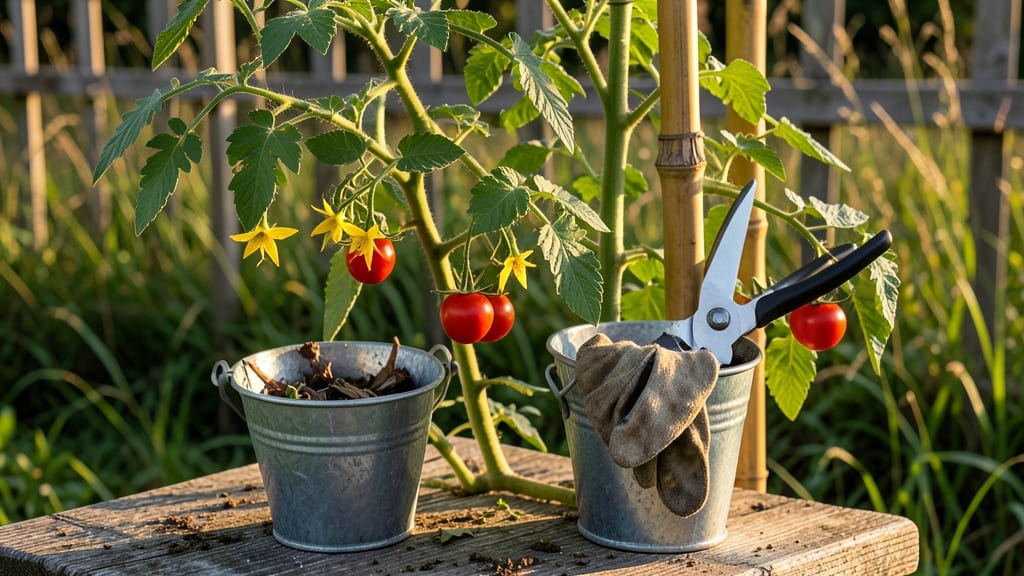
Topping off tomato plants redirects energy from leafy growth to fruit production—my indeterminate tomatoes now yield 30% more than before. 🌱 The key is timing: wait until plants hit 3-4 feet tall with 5-7 main stems, then snip the top growth just above a leaf cluster.
This forces the plant to focus on ripening existing fruit instead of growing more foliage.
You only need sharp pruners and a sunny day to work. The technique works best on indeterminate varieties (like 'Sungold' or 'Beefsteak'), while determinate tomatoes (like 'Roma') rarely need topping. After pruning, watch for new side shoots—these are your future fruit producers, so let them grow freely.
What you’ll notice is bigger, sweeter tomatoes and a harvest that stretches 2-3 weeks longer into fall. The plants stay compact enough for containers or small spaces, and you avoid the leggy, fruitless growth that frustrates so many gardeners. Just don’t overdo it—one pruning per season is plenty.
For determinate tomatoes or cooler climates, skip this step entirely. But if you’re growing heat-loving indeterminates, topping off is the secret weapon that turns good harvests into neighborhood bragging rights. Ready to try it?
📚 In This Guide
- What you need
- Instructions
- Tips and common mistakes
- Wrapping up and next steps
What you need
- ● Pruning shears or sharp bypass pruners – Sterilized (7–9" blades, bypass-style for clean cuts). Quantity: 1
- ● Garden gloves – Cut-resistant (nitrile or leather) to protect your hands. Quantity: 1 pair
- ● Disinfectant solution – 70% isopropyl alcohol or 10% bleach-water mix (1 part bleach to 9 parts water). Quantity: Small spray bottle
- ● Compost or mulch – Organic matter (shredded leaves, straw, or aged compost) to cover pruned areas. Quantity: 1–2 gallons
- ● Tomato plants – Indeterminate varieties (e.g., Roma, Cherry, Beefsteak) at least 4–5 feet tall with visible flower clusters.
- ● Plant tie or soft twine – To secure heavy stems post-pruning (Quantity: 1–2 rolls).
- ● Garden journal – To track pruning dates and plant responses!
- ● Copper-based fungicide – Preventative measure if your area has fungal risks.
- ● Knee pad or stool – For comfort while working in the garden.
Step-by-Step guide to topping tomato plants for maximum yield
Here's how to prune like a pro—no guesswork, just bigger fruit and a harvest that lasts.
✂️ Step 1: Identify the Main Stem and First Flower Cluster
Start by locating the main stem (the thickest vertical growth) and the first flower cluster that appears below the first set of true leaves. This is your reference point—everything above this cluster is what you'll eventually remove. I always count the leaves from the base upward to keep track, as stems can get confusing once they start branching.
Use clean, sharp pruners to make your cuts. Dull blades crush stems and invite disease. Look for the small leaf axils (the angle between the stem and a leaf) where new suckers will emerge. These are your pruning targets, not random spots along the stem.
✂️ Step 2: Remove Suckers Before They Grow Too Large
Suckers are the small shoots that grow in the leaf axils between the main stem and branches. Pinch them off when they're about the size of a pencil eraser—this is when they're most tender and easiest to remove. Wait until the plant is dry after watering; wet stems tear when you pinch.
Don't pull straight up—this can damage the main stem. Instead, grasp the sucker firmly at its base and twist it sharply away from the plant. You'll hear a clean snap when it's removed properly. If a sucker is larger than your thumb, it's already established and will compete with your fruit for energy.
☀️ Step 3: Top the Main Stem After the First Flower Cluster
Once your plant has developed its first flower cluster and several sets of leaves above it, it's time to top the main stem. Locate the leaf just above the first flower cluster—this is where you'll make your final cut. Use your pruners to snip the stem just above this leaf, leaving the flower cluster intact.
This encourages the plant to put all its energy into developing the existing flowers and fruit rather than growing taller. You'll notice new side shoots (called "branches") emerging from the leaf axils below your cut. These will become your new fruiting stems, each capable of producing its own cluster of tomatoes.
🌿 Step 4: Maintain the Plant Through the Growing Season
After your initial topping, continue monitoring for new suckers that form in the leaf axils of your remaining branches. Remove these regularly to prevent overcrowding. Aim to leave 2-3 main stems per plant—any more will shade the center and reduce fruit quality.
Watch for signs of stress like yellowing leaves or stunted growth. These can indicate you've pruned too aggressively. The goal is to maintain an open structure that allows sunlight to reach all fruit. Water at the base in the morning to keep foliage dry, which prevents fungal diseases that thrive in damp conditions.
⏰ Step 5: Time Your Pruning for Optimal Results
Do your initial topping when plants are about 3-4 feet tall and have developed their first flower cluster. This usually happens 4-6 weeks after transplanting, depending on your climate. Avoid pruning during heatwaves—plants need energy to recover, and hot weather can stress them further.
In cooler climates, you might prune later in the season to extend the harvest. The key is to stop pruning 6-8 weeks before your first frost date. This gives the plant enough time to mature its fruit before winter sets in. You'll know you've timed it right when you see tomatoes ripening on the vine as temperatures drop.
Tips & tricks for perfect tomato plant pruning
Here's what nobody tells you about pruning tomato plants—these tricks make all the difference between a decent harvest and a bounty.
Tool Prep: Sterilize your pruners with rubbing alcohol before you start. I learned this the hard way after transferring bacterial infections between plants. A quick wipe between cuts keeps your tools clean and your plants healthy. Sharp blades also make cleaner cuts that heal faster, so take a few minutes to hone them before beginning.
Visual Cues for Timing: The 3-4 foot height guideline in Step 5 is your starting point, but don't rely solely on measurements. Look for the first flower cluster—it's your true indicator. The plant should have developed at least 6-8 true leaves above this cluster before topping. I count leaves rather than measure height because plants grow at different rates depending on variety and climate.
Sucker Size Matters: In Step 2, you'll see suckers at various sizes. The pencil eraser rule is perfect for early identification, but remember that larger suckers (thumb-sized or bigger) are already stealing energy from your fruit. These should be removed completely, not just pinched off. I've seen gardeners leave these thinking they'll "grow out," but they'll just compete with your main stems.
Seasonal Adjustments: The 6-8 week frost guideline in Step 5 works for most climates, but don't be rigid. In my Zone 7 garden, I stop pruning when I see fruit beginning to color—usually 2-3 weeks before first frost. The plant needs those final weeks to mature what's already on the vine rather than putting energy into new growth that won't ripen in time.
Pro Tips for Top Off Tomato Plants
- Here's what nobody tells you about pruning tomato plants—these tricks make all the difference between a decent harvest and a bounty.
- Tool Prep: Sterilize your pruners with rubbing alcohol before you start.
- Visual Cues for Timing: The 3-4 foot height guideline in Step 5 is your starting point, but don't rely solely on measurements.
Frequently asked questions
Got questions about topping off tomato plants? You’re not alone—this pruning technique can feel tricky at first! Below, we’ve rounded up the most common questions (and answers) to help you master it like a pro.
What does "topping off" tomato plants mean?
Topping off is the process of pinching or cutting the main stem (or suckers) of a tomato plant to redirect its energy toward fruit production instead of vertical growth. For indeterminate varieties, this encourages bushier growth and more tomatoes over a longer season. For determinate (bush) types, topping is usually unnecessary.
When is the best time to top off tomato plants?
Timing matters! For indeterminate tomatoes, start topping when plants reach 3–4 feet tall, removing the top set of leaves (usually the 4th or 5th leaf from the top). Do this every 2–3 weeks until late summer. For determinate varieties, skip topping—they naturally stop growing and produce fruit in one big flush.
How do I top off tomato plants without hurting them?
Use clean, sharp pruners or your fingers to pinch (not cut) the top growth just above a leaf node. Avoid tearing stems, and never remove more than ⅓ of the plant’s foliage at once. If cutting, sterilize tools with rubbing alcohol to prevent disease. Pro tip: Do this on a dry, sunny morning so wounds heal faster!
Will topping off tomato plants reduce my harvest?
Not if done right! Topping indeterminate tomatoes increases yield by focusing energy on fruit rather than excessive leafy growth. However, if you over-prune (removing too many leaves), the plant may struggle to photosynthesize. Balance is key—aim for a 3–4 foot spacing between pruning sessions and leave lower leaves intact for support.
What if I miss the topping window? Can I still do it later?
Yes, but with caution. If your plant is already lush with fruit, wait until after harvest to prune. Late-season topping can stress the plant, but a light trim to remove diseased or overcrowded foliage is still beneficial. Watch for signs: Yellowing leaves or stunted growth may mean you’ve pruned too much—pause and let the plant recover!
Are there alternatives to traditional topping?
Try these methods:
- Sucker removal only: Focus on pinching off suckers (side shoots) instead of the main stem. This works well for indeterminate varieties in containers.
- Floret thinning: Remove some flower clusters to let remaining fruit grow larger (great for heirlooms!).
- No-prune approach: Leave determinate tomatoes untouched—they thrive with minimal intervention.
Wrapping up and next steps
Mastering the art of topping off tomato plants is your ticket to a bountiful, healthier harvest—no green thumb required! 🌱 By pruning strategically, you encourage stronger growth, bigger fruit, and a longer season of juicy tomatoes.
Whether you're a seasoned gardener or just starting, this simple technique can transform your garden into a productive powerhouse.
Ready to put your new skills to work? Grab your pruners and head to the garden today! Start with one plant, observe the results, and soon you’ll be sharing your tomato-topping secrets with fellow gardeners. Happy pruning—and may your harvest be plentiful! 🍅✨