
Planting
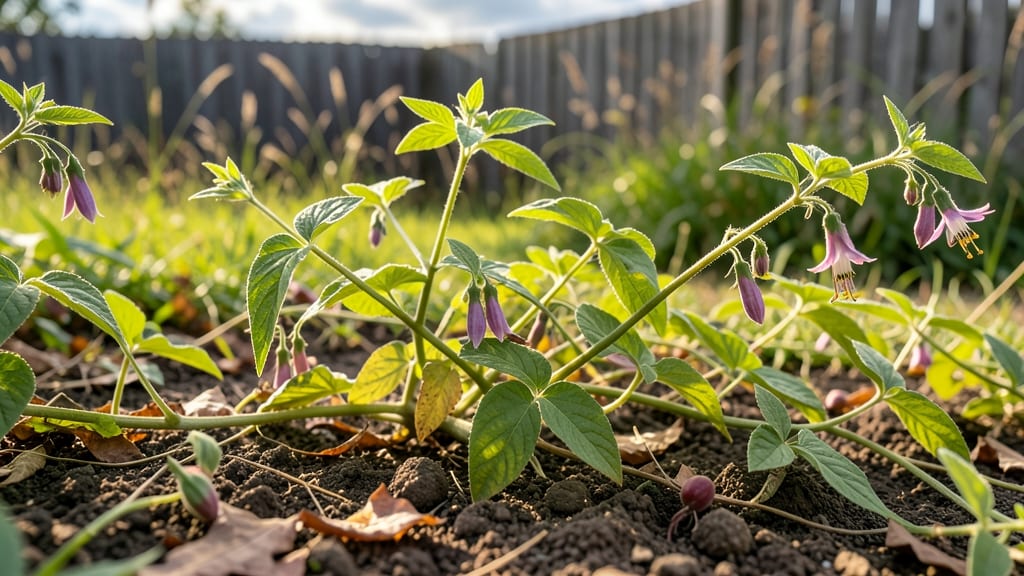
Toxic wild tomato plants, like Solanum dulcamara (bittersweet nightshade) or Solanum carolinense (horse nettle), contain solanine and other alkaloids that cause skin irritation, nausea, or vomiting if ingested. Identify them by spiny stems, lobed leaves, and yellow berries, then remove gloves-on to avoid contact with toxic sap.
These invasive plants often lurk in gardens and wild areas, posing risks to pets and humans alike. 🌿 The solanine compounds in their leaves and stems can trigger allergic reactions or digestive upset, while the berries—though not always toxic—may still cause irritation.
I've seen gardeners accidentally confuse them with edible tomatoes, so always double-check before harvesting. The key is acting fast: once these plants establish roots, they spread aggressively and become harder to eradicate.
For identification, focus on three visual cues: the spiky stems that can puncture gloves, the deeply lobed leaves resembling maple leaves, and the yellow-orange berries that persist through winter. Unlike cultivated tomatoes, these plants grow aggressively along fences or in disturbed soil, often forming dense patches.
If you spot them, treat them as garden pests—never compost them, as the toxic compounds can linger in soil.
💡 In This Article
- How to Identify Toxic Wild Tomato Species
- Safe Removal and Disposal Methods for Toxic Nightshades
How to identify toxic wild tomato species
The most reliable way to spot toxic nightshades is by examining their leaf structure. Unlike smooth-edged tomato leaves, these plants have deeply lobed leaves with 3-5 pointed segments, resembling miniature maple leaves.
For example, Solanum carolinense (horse nettle) features hairy stems with sharp spines up to 1/2 inch long, while Solanum dulcamara (bittersweet nightshade) has smoother stems but still produces lobed leaves with jagged edges.
The key difference from edible tomatoes lies in these leaf patterns—tomatoes have serrated but not lobed leaves.
Berry color serves as another critical identifier. Toxic species produce yellow-orange berries that persist through winter, while cultivated tomatoes bear red fruit that ripens and falls by late fall. The berries of Solanum nigrum (black nightshade) start green, turn black when ripe, but remain toxic at all stages.
These berries often attract wildlife, spreading seeds through droppings—this is why you might find patches of these plants in areas frequented by birds or rodents.
Stem texture provides the final clue. Toxic nightshades develop spiny or hairy stems that can puncture gardening gloves, unlike the smooth stems of cultivated tomatoes. The sap contains solanine, which causes skin irritation upon contact—this is why experienced gardeners recommend wearing long sleeves and thick gloves when handling these plants.
The sap's milky texture when crushed is another telltale sign, though some species may not produce noticeable sap.
Regional variations matter when identifying these plants. In the southeastern U.S., Solanum carolinense dominates, while Solanum dulcamara thrives in northern climates along riverbanks. The Pacific Northwest often sees Solanum xantii (yellow nightshade), which produces bright yellow berries.
Always cross-reference with local botanical guides, as some regions have introduced species that mimic native plants. A magnifying glass helps examine fine details like leaf vein patterns or stem hair density.
Here's a quick comparison to edible tomatoes:
- Leaf shape: Toxic nightshades have deeply lobed leaves; tomatoes have serrated edges
- Stem texture: Toxic plants have spines or hairs; tomatoes are smooth
- Berry color: Toxic berries are yellow/orange/black; tomatoes are red
- Growth habit: Toxic plants spread via aggressive roots; tomatoes grow on determinate vines
What most people overlook is how these plants change seasonally. In spring, toxic nightshades produce purple flowers that resemble small eggplants, while their leaves emerge with a reddish hue before turning green.
This early coloration can help spot them before berries form. Always examine plants from multiple angles—some toxic species develop underground tubers that regrow if roots aren't fully removed.
If you're still unsure, take a photo and compare it with verified sources like the University of Florida IFAS Extension or your local cooperative extension service. These resources often include side-by-side comparisons that highlight subtle differences most guides miss.
Remember: when in doubt, treat it as toxic—better safe than sorry with these aggressive invaders! 🌿