
Companion Plants
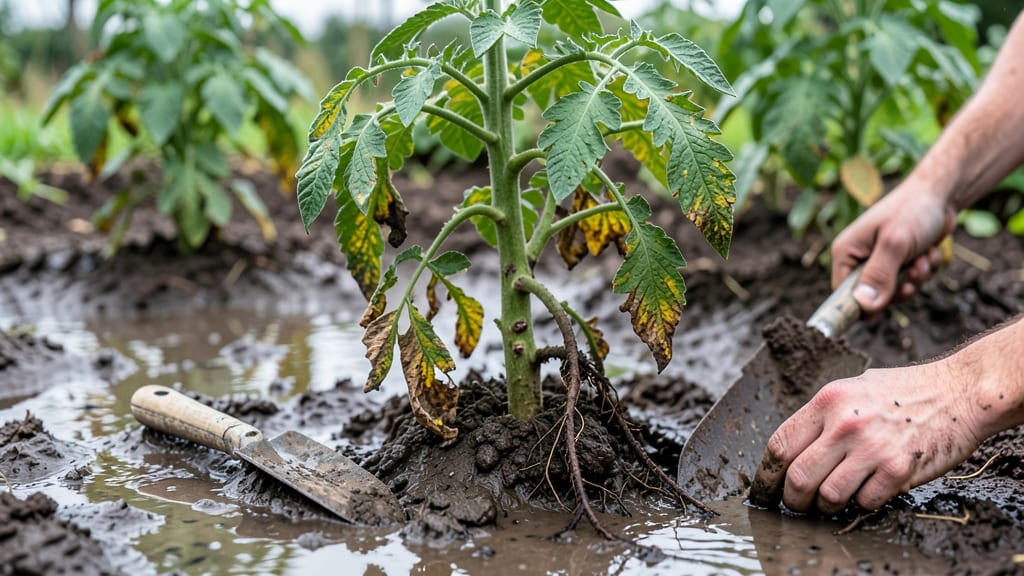
Your tomato plants are drowning in their own soggy soil, and every leaf looks like it’s fighting for air. 🌱 Waterlogged tomato plants don’t just wilt—they suffocate, turning yellow and stinking up your garden before you know it.
The good news? This isn’t a death sentence, just a call for action.
Most gardeners make two big mistakes: ignoring the soil’s drainage or assuming mulch is the fix. The truth? You need both—proper drainage to let water escape and organic matter to improve soil structure.
I’ve saved plants from root rot by adding 3 inches of compost and installing French drains in heavy clay soil. It’s not rocket science, just smart adjustments.
Within 48 hours, you’ll see leaves perk up as roots get oxygen again. Long-term, raised beds or container growing keeps soil loose, and drip irrigation gives plants steady moisture without drowning them. The key is balance—tomatoes need water, but not a swamp.
Prevention is easier than rescue: test your soil’s drainage before planting, and never skip the mulch (but keep it 2-3 inches away from stems). Your harvest is worth the effort—let’s get those plants thriving again.
Root of the Problem
Understanding why your tomato plants end up waterlogged is the first step to saving them—and your harvest! 🌱💦 Overwatering or poor drainage can turn your garden into a soggy swamp, suffocating roots and inviting pests.
Let’s break down the real culprits behind this common issue, so you can tackle it head-on.
Tomatoes thrive with consistent moisture, but too much water can drown their roots. When soil stays saturated for days, oxygen levels plummet, and roots struggle to absorb nutrients.
This leads to: - Stunted growth (plants look weak or wilted despite wet soil). - Yellowing leaves (a sign of oxygen deprivation). - Fungal diseases (like Phytophthora, which thrives in waterlogged conditions).
Why it happens:
- Automatic irrigation set on a timer without soil checks.
- Heavy rainfall followed by no drainage adjustment.
- Mistaking thirst for waterlogging—tomatoes need 1–2 inches of water per week, not daily soaks.
Clay-heavy or compacted soil acts like a sponge, holding water instead of letting it drain. If your garden bed or pots lack perforations or organic matter, excess water pools around roots, cutting off oxygen.
Why it happens:
- No amendments like compost or perlite to improve soil structure.
- Raised beds or containers without drainage holes.
- Native soil that’s naturally dense (common in clay or loam-heavy areas).
Even well-meaning gardeners can create traps for excess water. Containers without drainage or garden beds in low-lying areas become death zones for tomato roots.
Why it happens:
- Pots without holes—water has nowhere to escape.
- Garden beds in depressions where rainwater pools.
- Mulch piled too high, blocking water evaporation and trapping moisture.
Mother Nature plays a role too! Prolonged rain, high humidity, or poor air circulation can turn your garden into a disease hotspot.
Why it happens:
- Heavy, frequent rain (especially in tropical or monsoon climates).
- Shady spots where water lingers longer.
- No airflow (crowded plants or windbreaks trap moisture).
Once soil stays soggy, pathogens like Pythium or Fusarium move in, attacking roots. These fungi block nutrient uptake, leading to:
- Black, mushy roots (a classic sign of rot).
- Wilting despite wet soil (roots can’t absorb water).
- Leaf spots or mold (secondary infections from stress).
Why it happens:
- Chronic waterlogging (roots suffocate and decay).
- Reusing infected soil without sterilization.
- Ignoring early signs (yellowing leaves are a red flag!).
Quick Fixes for Soggy Soil
Soggy soil can turn your thriving tomato plants into a sad, wilted mess—but don’t panic! With the right steps, you can rescue your plants and prevent future waterlogging. Below are practical, step-by-step solutions tailored to the most common causes, plus prevention tips to keep your tomatoes happy and productive.
If your soil stays soggy after rain or overwatering, drainage is the issue.
How to Fix It:
- 🔥 Stop Watering Immediately
- Waterlogged roots can’t breathe, leading to rot. Pause irrigation until the top 2–3 inches of soil feel dry to the touch.
- 🍳 Create Drainage Channels
- Use a trowel to dig shallow trenches (1–2 inches deep) around the base of the plant to redirect excess water away from the roots.
- 👨🍳 Raise the Plant (Temporarily or Permanently)
- Short-term fix: Prop up the plant with small bricks or wooden blocks to lift roots out of standing water.
- Long-term fix: Move potted tomatoes to a raised bed or add compost/perlite to improve soil structure.
- ⏰ Monitor & Adjust
- After fixing drainage, water only when the top inch of soil is dry. Use a moisture meter for accuracy.
💡 Prevention Tip:
- Test your soil before planting. If it’s heavy clay, mix in sand, perlite, or coconut coir to improve drainage.
- Plant in mounds (for in-ground tomatoes) to help water run off during heavy rains.
Too much love (in the form of water) can drown your tomatoes.
How to Fix It:
- 🔪 Trim Damaged Foliage
- Yellow or black leaves? Snip them off to reduce stress on the plant and prevent disease spread.
- 🥘 Switch to Deep, Infrequent Watering
- Water deeply 1–2 times per week (early morning) instead of daily shallow watering. This encourages strong root growth.
- 🌡️ Check Your Pot’s Drainage (For Containers)
- Ensure pots have drainage holes and empty saucers underneath. If roots are circling, repot into a larger container with fresh, well-draining soil.
💡 Prevention Tip:
- Use mulch (straw, wood chips, or grass clippings) to retain moisture without suffocating roots. Keep mulch 2–3 inches away from the stem.
If your garden is underwater, time is critical.
How to Fix It:
- 🔥 Dig a Moat Around the Plant
- Create a shallow trench 6–12 inches away from the stem to divert water away from the roots.
- 🍳 Prop Up the Plant
- Use stakes or cages to lift the plant slightly, giving roots access to air.
- 👨🍳 Improve Soil Aeration
- Gently loosen compacted soil around the roots with a fork (be careful not to damage them). Mix in compost or aged manure to help recovery.
- ⏰ Wait & Watch
- If the plant is still standing, it may recover in 1–2 weeks. If stems turn mushy or black, the plant is likely beyond saving—focus on preventing future flooding.
💡 Prevention Tip:
- Elevate garden beds or plant tomatoes on sloped ground to avoid pooling water.
- Install a swale (a shallow trench filled with water-absorbing plants like comfrey) to capture and redirect rainwater.
Once your tomatoes are back on track, keep soil happy with these proactive habits:
- 🎯 Test soil pH (aim for 6.0–6.8).
Amend with lime (to raise pH) or sulfur (to lower it) if needed. - ✨ Plant companion crops like basil, marigolds, or onions to improve soil structure and deter pests. - 🌡️ Rotate crops—don’t plant tomatoes in the same spot year after year to prevent disease buildup.
Remember: A little effort now saves big rewards later—your tomatoes will thank you with juicy, flavorful fruit all season long! 🍅💚
Frequently asked questions
How can I tell if my tomato plant is waterlogged vs. underwatered?
Check the soil and leaves: waterlogged plants have soggy soil that stays wet for days, yellowing lower leaves, and a foul smell. Underwatered plants have dry, cracked soil, crispy leaf edges, and wilting that improves after watering. The key difference? Waterlogged plants stay wilted even when soil is wet.
Can I save a tomato plant with root rot from waterlogging?
It depends on how severe the damage is. If only the roots are mushy but the stem is still firm, you can try pruning affected roots and repotting in fresh, dry soil with perlite. If the stem is black or hollow, the plant is likely beyond saving. Prevention is easier—always check soil moisture before watering!
What’s the best mulch to use for tomatoes in heavy clay soil?
Avoid thick mulch layers—stick to 2-3 inches of organic options like straw or shredded leaves. Keep mulch 2 inches away from the stem to prevent rot. For clay soil, mix in compost or coconut coir first to improve drainage before adding mulch. This combo helps retain moisture while preventing waterlogging.
How often should I water tomatoes in containers vs. garden beds?
Containers dry out faster—water when the top 1 inch of soil feels dry (usually every 1-2 days). Garden beds need less frequent watering: 1-2 inches per week (check soil 2 inches down). Always water at the base, not the leaves, to prevent fungal diseases. Morning watering gives foliage time to dry.
Will adding sand really help with waterlogged tomato soil?
Yes, but use coarse sand or perlite (never fine sand) mixed into the top 6 inches of soil. This improves drainage by creating air pockets. For heavy clay, blend equal parts sand, compost, and native soil. Test drainage first—if water pools after 30 minutes, you need more amendments.