
Planting
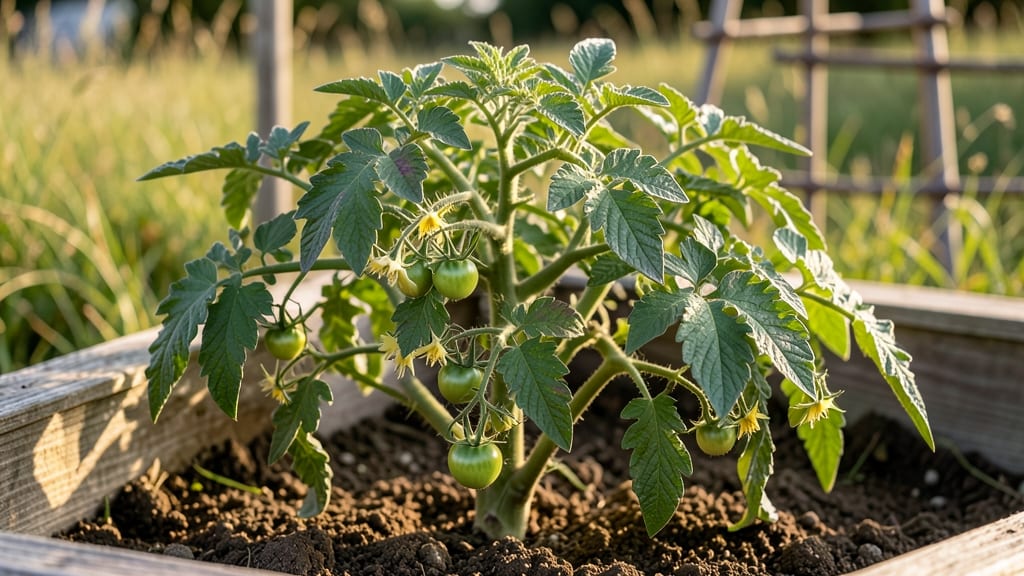
An indeterminate tomato plant is a vine that keeps growing and producing fruit throughout the entire growing season until frost stops it, unlike determinate varieties that stop growing after a set time. These sprawling plants can grow 6-12 feet tall and need strong support like stakes or cages to keep them upright and maximize their fruit production.
Indeterminate tomato plants are the gardeners' dream for continuous harvests because they don't stop growing or fruiting once they reach a certain size. 🌱 Instead of producing all their fruit at once, they develop blossoms and tomatoes along the entire vine, giving you a steady supply from early summer until frost.
This makes them perfect for fresh eating, canning, or selling at farmers' markets—just be prepared for the extra work of pruning and staking to keep them productive and healthy.
What sets these plants apart is their genetic makeup—they lack the natural growth-limiting genes found in determinate varieties. This means they'll keep reaching upward and outward unless you prune them, which also helps improve air circulation and reduce disease risk.
If you're planning your garden layout, consider giving these vines plenty of space and support upfront, as they'll need it to thrive and produce that coveted late-season bounty.
💡 In This Article
- How Indeterminate Tomato Vines Grow Differently Than Determinate Varieties
- Best Practices for Cultivating Indeterminate Tomato Plants
How indeterminate tomato vines grow differently than determinate varieties
Indeterminate tomato plants grow like perpetual motion machines in your garden, fueled by a genetic quirk that keeps their vines extending upward and outward indefinitely.
Unlike determinate varieties that stop growing once they reach a certain height—typically around 4 feet—indeterminate plants lack the growth-limiting genes that trigger flowering and fruiting at a specific point.
This means they'll keep producing new stems, leaves, and blossoms along their entire length, creating a sprawling vine that can reach 6-12 feet tall and 3-5 feet wide if left unchecked.
The biological magic happens in their meristem cells, the growth centers at the tips of their stems. In indeterminate plants, these meristems remain active year-round (or until frost), continuously generating new shoots and leaves.
At the same time, they produce flowers in the leaf axils (the angle between the stem and leaf) rather than in a single terminal cluster.
This dual process—unlimited vertical growth and simultaneous flowering—creates the classic "tomato vine" look with fruit developing at multiple points along the plant. 🌿 For comparison, determinate plants focus all their energy on a single flowering event at the top, then stop growing entirely after that.
This growth pattern dramatically changes how tomatoes are produced. While determinate plants yield a single, massive harvest all at once (often within a 2-3 week window), indeterminate plants deliver a staggered bounty.
Early in the season, you might get 10-20 tomatoes per week, but as the vine matures, that number can climb to 50-100 tomatoes per week during peak production—if you provide proper care. The trade-off?
You'll need to monitor the plant weekly for new blossoms and ripening fruit, as tomatoes can ripen at different rates along the vine's length.
Another key difference lies in the plant's structure. Indeterminate vines develop a main stem with lateral branches that grow from the leaf axils, creating a bushy, sprawling habit.
These lateral branches often bear the most fruit, which is why gardeners prune the suckers (side shoots) to redirect energy to the main stem and fruit-bearing branches. Without proper pruning, the plant can become overcrowded, leading to poor air circulation and increased susceptibility to diseases like blight or powdery mildew.
The vine's flexibility also means it requires sturdy support—like 6-foot cages or bamboo stakes—to prevent breakage from fruit weight and wind.
Climate plays a crucial role in how indeterminate plants perform. In warm regions with long growing seasons (like USDA Zones 8-10), these plants can keep producing until the first hard frost, sometimes yielding 20-30 pounds of tomatoes per plant over the season.
In cooler climates, gardeners often use black plastic mulch or row covers to extend the growing season and protect blossoms from late-season frosts.
The plant's ability to keep growing also means it can outpace determinate varieties in regions with 120+ frost-free days, making it the preferred choice for commercial growers and home gardeners alike.
Here's what happens under the microscope: indeterminate plants produce a hormone called gibberellin in higher concentrations than determinate varieties. This hormone promotes cell elongation, allowing the vine to grow taller and longer. Meanwhile, the plant's auxin levels (growth hormones) remain balanced to support both vertical growth and lateral flowering.
This hormonal dance is what enables the vine to keep producing new growth points while simultaneously bearing fruit at multiple stages. 🌟