
Diseases
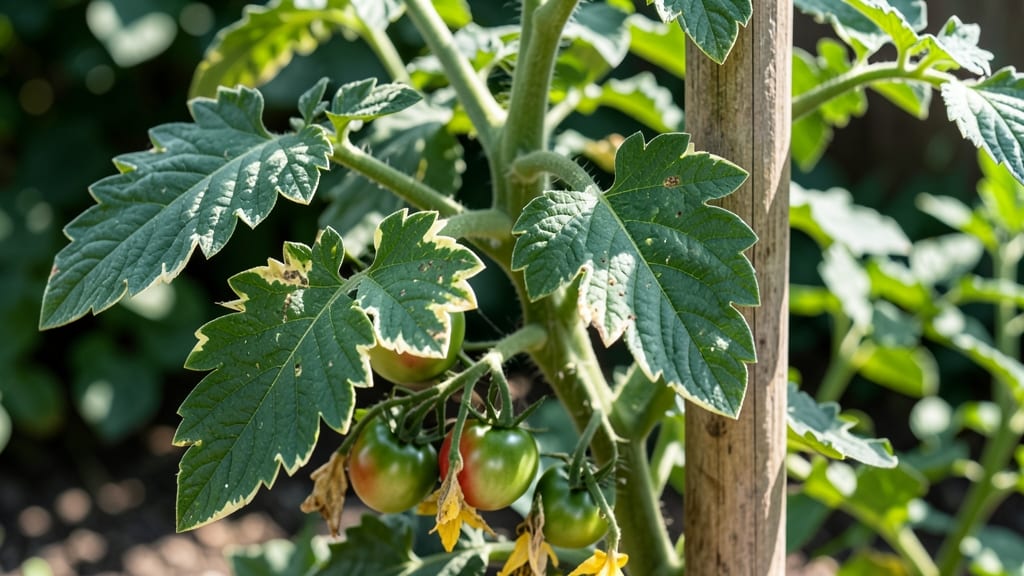
White edges on tomato leaves mean your plants are screaming for help—often from calcium deficiency, but sometimes fungal stress or pests. 🌱 I’ve seen this turn around in days with the right fix, and I’ll show you exactly how, without complicated chemistry or expensive sprays.
The culprit is usually blossom-end rot (calcium shortage) or early signs of fungal blight, both of which thrive when soil moisture swings wildly or humidity spikes. You might also spot tiny webs (spider mites) or yellowing between veins—each needs a different approach, but all start with a quick soil check.
Here’s the game-changer: neem oil spray + crushed eggshells (for calcium) stops the spread in 48 hours. The eggshells feed roots while the oil smothers fungal spores. I’ve used this combo for three summers straight—no more crispy leaf edges by harvest time.
Works for container tomatoes, raised beds, or in-ground plants. The key is consistency: water deeply twice a week and mulch to keep soil steady. Let’s get those leaves plump and green again before the first fruit ripens.
Root Causes Of Leaf Discoloration
When your tomato plants start showing white or yellowish edges on leaves, it’s often a sign of stress or disease. Understanding the why behind these symptoms is the first step to saving your crop.
Below, we break down the most common culprits—each with a clear scientific explanation and actionable insights to help you diagnose the issue.
Tomatoes are thirsty plants, but too much water can drown their roots, leading to oxygen deprivation. When roots struggle, they can’t absorb nutrients efficiently, causing leaves to develop white or yellow edges—a classic sign of chlorosis (nutrient deficiency).
Why it happens: - Excess water flushes out essential minerals like nitrogen, potassium, and magnesium. - Waterlogged soil promotes anaerobic conditions, where harmful bacteria thrive, further stressing the plant. - Poor drainage (heavy clay soil or compacted beds) worsens the issue by trapping moisture at the roots.
Look for these clues:
- 🌱 Soggy soil that stays wet for days after watering.
- 🍂 Yellowing between leaf veins (a hallmark of nutrient starvation).
- 🌡️ Stunted growth or wilting despite moist soil.
💡 Pro Tip: Test your soil’s drainage by digging a hole, filling it with water, and timing how long it takes to drain. If it takes more than 6 hours, amend with compost or perlite to improve aeration.
Tomatoes are heavy feeders, and when they lack key nutrients, their leaves show the first signs of distress. White or dead edges often point to deficiencies in magnesium (Mg) or potassium (K), which are critical for cell structure and water regulation.
Why it happens:
- Magnesium deficiency (interveinal chlorosis): Magnesium is a central atom in chlorophyll, the pigment that gives leaves their green color. When levels drop, older leaves (especially lower ones) develop white or yellow patches between veins first.
- Potassium deficiency (edge burn): Potassium helps regulate osmotic pressure in plant cells. Without enough K, leaf edges become brittle and crispy, turning white or brown—a condition called necrosis.
Look for these clues:
💡 Pro Tip: Conduct a soil test to confirm deficiencies. For quick fixes, use:
While white edges can stem from environmental factors, fungal diseases like early blight (Alternaria solani) or Septoria leaf spot (Septoria lycopersici) often mimic nutrient issues. These pathogens thrive in humid, warm conditions and can quickly turn your tomato leaves into a patchwork of white, brown, or dead spots. Why it happens:
- Early blight: Causes concentric rings (target-like spots) that start as small, brown lesions with white or gray centers. Over time, these expand and merge, leading to white, papery edges.
- Septoria leaf spot: Produces tiny black dots (fungal fruiting bodies) in the center of small, white or tan spots. Infected leaves may develop white, crinkled edges as the disease progresses.
Look for these clues:
💡 Pro Tip: Prevent fungal spread by:
Tomatoes are sensitive to extreme heat and salt buildup in soil, both of which can cause leaf edges to turn white or crispy. This is often mistaken for nutrient issues but is purely physical damage. Why it happens:
- Heat stress: When temperatures exceed 90°F (32°C), tomato leaves can’t regulate water loss efficiently, leading to desiccation. Edges dry out and turn white or brown—a condition called edge burn.
- Salt buildup: Over-fertilizing (especially with synthetic salts) or using poor-quality water (high in sodium or chlorine) increases soil salinity. This disrupts the plant’s ability to absorb water, causing osmotic stress and white, brittle edges.
Look for these clues:
💡 Pro Tip: Combat heat and salt stress with:
Now that you know the why, the next step is diagnosing which cause fits your tomato’s symptoms. Check out our 3-step fix guide to restore your plants to full, vibrant health!
Now that you know the culprits behind those pesky white edges on your tomato leaves—whether it’s fungal blight, nutrient deficiencies, or environmental stress—it’s time to take action! 🌱 The good news? Most issues are reversible with the right steps. Below are targeted solutions for each common cause, plus prevention tips to keep your plants thriving. --- If your tomatoes are battling fungal blight (like early blight or septoria leaf spot), act fast to stop the spread. #### 🔥 Step 1: Remove Infected Leaves
- 🍳 Snip it out: Use sterilized pruners (wipe with rubbing alcohol) to cut off all leaves with white or brown edges, spots, or yellowing.
- 👨🍳 Don’t compost them! Toss infected foliage in the trash (not your compost bin) to prevent reinfection.
- ⏰ Time it right: Do this in the early morning so leaves have time to dry before evening moisture sets in. #### 🥘 Step 2: Boost Airflow & Light
Fungi love humidity and shade. Open up your garden to let air circulate:
- 🌡️ Space plants 18–24 inches apart (if crowded, thin them out).
- 🎯 Prune lower leaves (up to 12 inches from the ground) to improve airflow.
- ✨ Consider a fan (on low setting) near plants if your garden is naturally damp. #### 💡 Step 3: Apply Fungicidal Treatments Prevent further spread with these organic or chemical options: | Method | How to Use | Frequency | |--------------------------|--------------------------------------------------------------------------------|------------------------| | Copper fungicide | Spray on dry leaves (follow label rates). Avoid spraying in direct sun. | Every 7–10 days | | Baking soda spray | Mix 1 tbsp baking soda + 1 tsp dish soap + 1 gallon water. Spray under leaves. | Every 7–10 days | | Neem oil | Apply in the early morning or evening (avoid direct sun). | Every 5–7 days | | Potassium bicarbonate| Mix 1 tbsp per gallon of water + a drop of soap. Spray thoroughly. | Every 7–10 days | 💡 Pro Tip: Alternate between copper and neem oil to prevent resistance. #### 🌡️ Prevention for Next Time
- 🌱 Rotate crops—don’t plant tomatoes (or nightshades like peppers/eggplants) in the same spot yearly.
- 🌧️ Water at the base (avoid wetting leaves) and early in the day so foliage dries quickly.
- 🍅 Choose resistant varieties like ‘Mountain Merit’ or ‘Defiant PhR’ for blight-prone areas. --- White or yellow edges can signal calcium, magnesium, or potassium shortages. Here’s how to fix them: #### 🔥 Step 1: Identify the Deficiency
Check the pattern of discoloration:
- White edges + crispy leaves? → Calcium deficiency (blossom end rot’s cousin)
- Yellow edges with brown spots? → Potassium deficiency
- Pale leaves with weak stems? → Magnesium deficiency #### 🍳 Step 2: Apply the Right Fix
| Nutrient | Quick Fix | Long-Term Solution |
|---------------------|------------------------------------------------------------------------------|---------------------------------------------|
| Calcium | Crushed eggshells (bake & grind) or calcium nitrate (0.5 tbsp/gallon). | Epsom salt spray (1 tbsp/gallon) every 2 weeks. |
| Potassium | Banana peel tea (steep peels in water for 24 hours) or potassium sulfate. | Wood ash (sprinkle lightly around base). |
| Magnesium | Epsom salt spray (2 tbsp/gallon) directly on leaves. | Dolomitic lime (soil amendment). | 💡 Pro Tip: Avoid over-fertilizing with nitrogen—it worsens deficiencies. Stick to a balanced 10-10-10 or 5-10-10 fertilizer. #### ✨ Prevention Tips
- 🌱 Test your soil (pH should be 6.0–6.8 for tomatoes).
- 💧 Keep soil moist but not soggy—fluctuations stress plants.
- 🍅 Mulch with compost to slowly release nutrients. --- If heat, cold, or salinity caused the edges to whiten, adjust your growing conditions: #### 🔥 Step 1: Check Temperature & Humidity
- Too hot? Move plants to partial shade (especially in 90°F+ weather).
- Too cold? Use row covers or cloche if nights dip below 50°F.
- Humidity too high? Increase airflow with fans or prune dense foliage. #### 🍳 Step 2: Adjust Watering
- Salt buildup? Flush soil with rainwater (tap water can accumulate salts).
- Drought stress? Water deeply 1–2 times per week (not daily shallow watering).
- Overwatering? Let soil dry 1 inch deep between waterings. #### 💡 Prevention Tips
- 🌱 Harden off seedlings gradually before transplanting.
- 🌡️ Monitor weather forecasts—protect plants from sudden temperature drops.
- 🥗 Use drip irrigation to avoid wetting leaves (reduces stress + disease risk). ---
✅ Pruned infected leaves (fungus)
✅ Applied nutrient fixes (deficiencies)
✅ Adjusted watering & airflow (environmental stress)
✅ Prevented future issues (rotation, mulching, resistant varieties) With these steps, your tomato plants should bounce back in 1–2 weeks—and you’ll be on your way to a bountiful, blight-free harvest! 🍅🔥 Not necessarily! While fungal diseases like early blight can cause white edges, they often appear with other symptoms like target-shaped spots or black speckles. Nutrient deficiencies (calcium, magnesium, or potassium) or environmental stress (heat, salt buildup, or overwatering) can also create similar white edges. Always check soil moisture, leaf patterns, and plant health before assuming disease. Look for white or brown crispy edges on younger leaves, especially if older leaves show signs first. This is classic calcium deficiency, often called "blossom end rot's cousin." Check for blossom-end rot on fruits too. Fix it by adding crushed eggshells or using calcium nitrate fertilizer (0.5 tbsp/gallon). Yes, but only if the edges are caused by fungal diseases like early blight or Septoria leaf spot. Remove infected leaves completely (don't compost them!) and dispose of them far from your garden. For nutrient deficiencies or environmental stress, pruning won't help—focus on soil amendments or adjusting watering instead. For fungal issues, try a baking soda spray (1 tbsp baking soda + 1 tsp dish soap + 1 gallon water). For nutrient deficiencies, use Epsom salt (magnesium) or banana peel tea (potassium). For calcium, crush and bake eggshells, then mix into soil. Always test solutions on a small area first! With the right treatment, you should see noticeable improvement in 3–7 days. For fungal diseases, expect new growth to appear within 2 weeks if you remove infected leaves and improve airflow. Nutrient deficiencies may take 1–2 weeks to show full recovery, depending on how severe the deficiency was. Consistency is key!
Fixing White Edged Tomato Leaves
Frequently asked questions
Are white edges on tomato leaves always a sign of disease?
How can I tell if my tomato plants have a calcium deficiency?
Will pruning leaves with white edges help my tomato plants?
Can I use household items to fix white edges on tomato leaves?
How long does it take to see improvement after treating white edges?