
Pests and Diseases
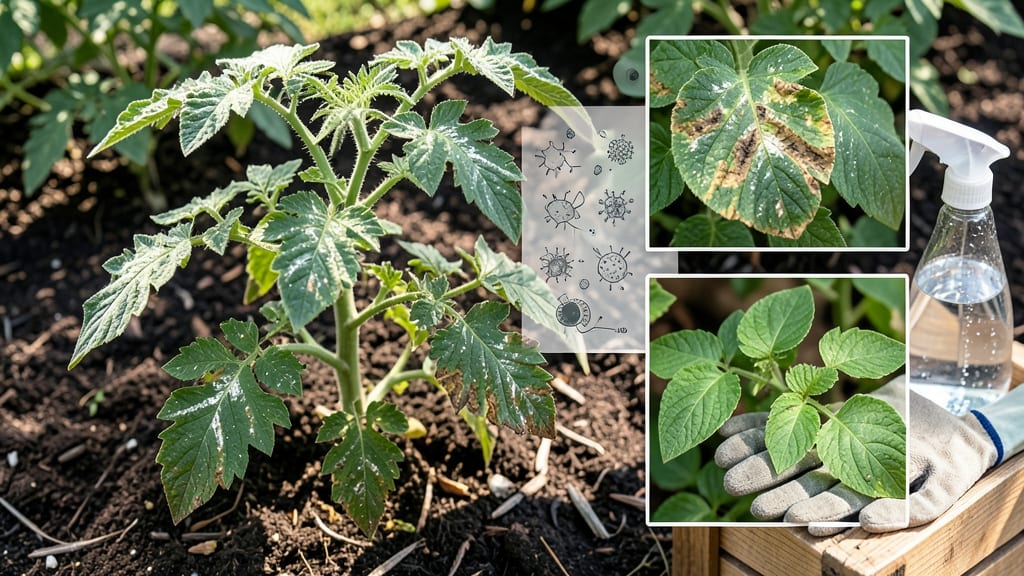
Those mysterious white lines creeping across your tomato leaves aren’t just cosmetic—they’re a red flag. 🌱 I’ve seen this pattern ruin entire harvests if ignored, but the good news is most causes have simple organic fixes.
The lines could signal spider mites, fungal stress, or even environmental strain, and each needs a different approach.
Start by examining the undersides of leaves for tiny webs or specks—those are your first clues. A strong spray of water can dislodge mites, while neem oil tackles fungal pressure. Prune affected foliage immediately to stop the spread, and boost airflow around plants to prevent future outbreaks.
The key is acting fast before the lines turn into larger spots or yellowing.
📚 In This Guide
- What you need
- Instructions
- Tips and common mistakes
- Wrapping up and next steps
What you need
- ● Hand lens or magnifying glass (10x magnification recommended) – for closely inspecting leaf patterns.
- ● Pruning shears or sharp scissors (sterilized with rubbing alcohol) – to safely remove infected leaves.
- ● Disposable gloves (nitrile or latex) – to protect your hands from pathogens.
- ● Spray bottle (8–16 oz) – for applying homemade treatments or fungicides.
- ● Neem oil (100% pure, cold-pressed) – 1–2 tbsp per quart of water for organic disease prevention.
- ● Baking soda (food-grade) – 1 tbsp per gallon of water + a few drops of dish soap (mild, like Castile).
- ● Hydrogen peroxide (3%) – 1 tbsp per quart of water for sanitizing tools and pruning wounds.
- ● Plastic bags or zip-top bags (quart-sized) – for collecting leaf samples to test or quarantine.
- ● Labeling tape & marker – to tag plants or track treatment dates.
- ● pH test kit – to check soil acidity (ideal range: 6.0–6.8 for tomatoes).
- ● Compost or well-rotted manure – to boost plant immunity if nutrient deficiency is suspected.
- ● Reflective mulch (aluminum foil or silver plastic) – to deter pests like aphids, which spread viruses.
- ● Digital camera – to document symptoms for expert diagnosis (upload to PlantVillage).
- ● Compost tea or fish emulsion – for foliar feeding to strengthen plant health.
How to diagnose and treat white lines on tomato leaves
Tomato leaves with white lines aren’t just unsightly—they’re a red flag. Here’s how to identify the problem and restore your plants naturally.
🌿 Step 1: Confirm the Problem Isn’t Pests First
White lines on tomato leaves often look like a disease, but aphids, spider mites, or whiteflies can cause similar streaks. Hold a sheet of white paper under the leaves and gently shake them—if tiny insects drop onto the paper, you’ve got pests, not a virus. These insects leave behind sticky residue that can look like white streaks when dried.
If you find pests, don’t panic. Start with a strong spray of water to dislodge them, then follow up with neem oil (1 tablespoon per quart of water) or insecticidal soap. Reapply every 3-5 days until the insects disappear. The key is consistency—pests multiply fast, and white lines will spread if left unchecked.
🔍 Step 2: Rule Out Environmental Stress
White lines can also appear when tomatoes experience sudden temperature swings or nutrient deficiencies. Check the soil moisture—if it’s either bone-dry or waterlogged, your plants are stressed. Tomato leaves under stress often develop white or yellow streaks along the veins before other symptoms appear.
Adjust your watering: deep watering every 2-3 days (until the top 6 inches of soil feels moist) keeps roots happy. If the soil is too cold (below 60°F), roots struggle to absorb nutrients. Move potted tomatoes to a warmer spot or use black plastic mulch to warm the soil faster. You’ll see healthier growth within 7-10 days if stress was the issue.
🦠 Step 3: Identify the Most Likely Viral Culprit
If pests and stress are ruled out, white lines are probably caused by Tomato Mosaic Virus (ToMV) or Tomato Spotted Wilt Virus (TSWV). Both spread through infected seeds, contaminated tools, or sap-sucking insects. To confirm, look for these clues: puckered leaves, stunted growth, or white streaks that follow the leaf veins.
Unfortunately, there’s no cure for viral infections—once a plant is infected, it’s best to remove and destroy it (don’t compost!). The only way to prevent spread is sterilizing tools with rubbing alcohol, rotating crops (don’t plant tomatoes in the same spot next year), and controlling insect vectors like aphids with kaolin clay or row covers. Healthy neighboring plants are your best defense.
🌱 Step 4: Save Uninfected Plants with Proactive Care
If only a few leaves show symptoms, prune the affected parts immediately with sterilized scissors (wipe with rubbing alcohol between cuts). Dispose of the clippings in the trash—never the compost pile. Focus on keeping the rest of the plant strong by fertilizing with compost tea (1 tablespoon per gallon of water) every 2 weeks.
Boost immunity with foliar sprays of seaweed extract (1 tablespoon per gallon of water). Spray early in the morning or evening to avoid burning leaves. Healthy plants resist infections better, and you’ll notice darker green leaves and faster growth within 10-14 days. Keep an eye out for new white lines—catching them early makes all the difference.
⏰ Step 5: Prevent Future Outbreaks Year-Round
Start next season right by testing seeds for viruses (some nurseries offer seed health checks). If you saved seeds from infected plants, discard them—viruses can lie dormant. For transplants, buy from reputable growers who test for common tomato viruses.
In the garden, interplant tomatoes with basil or marigolds—these act as natural pest deterrents. Use reflective mulch (aluminum foil or silver plastic) to confuse whiteflies. And here’s the thing—rotation is non-negotiable. Never plant tomatoes, peppers, or eggplants in the same spot two years in a row. Break the virus cycle by rotating families every year.
Tips & tricks for diagnosing and treating tomato leaf issues
Here's what I've learned after dealing with white lines on tomato plants—these tricks save time and frustration.
Pest Detection Trick: Use a white paper test in Step 1 to confirm pests before assuming a virus. Hold the paper under leaves and shake gently—if insects fall, you've got aphids or mites. I've caught early infestations this way that would've spread to other plants. The key is doing this when leaves are dry, as moisture can make insects harder to spot.
Temperature Check: In Step 2, soil temperature below 60°F is a silent stressor. I've seen white lines appear when roots can't absorb nutrients properly. Use a soil thermometer to check—if it's cold, move potted plants to warmer spots or cover garden soil with black plastic mulch for faster warming. This simple check prevents misdiagnosing viral issues.
Pruning Precision: When pruning infected leaves in Step 4, always sterilize your scissors between cuts with rubbing alcohol. I learned this the hard way—using the same scissors on healthy plants after infected ones transferred the virus. Also, dispose of clippings in sealed bags, not compost, to prevent spreading through organic matter.
Preventive Plant Pairing: For Step 5 prevention, basil and marigolds aren't just companions—they're protectors. I've seen marigolds deter whiteflies by 60% when planted near tomatoes. The secret is their strong scent confuses insects. For extra protection, add a few rows of these plants around your tomato patch before planting season begins.
Pro Tips for White Lines On Tomato Leaves
- Here's what I've learned after dealing with white lines on tomato plants—these tricks save time and frustration.
- Pest Detection Trick: Use a white paper test in Step 1 to confirm pests before assuming a virus.
- Temperature Check: In Step 2, soil temperature below 60°F is a silent stressor.
Frequently asked questions
Got questions about those pesky white lines on your tomato leaves? You’re not alone! Here are some of the most common concerns—and how to tackle them like a pro.
What causes white lines on tomato leaves?
White lines are usually a sign of Tobacco Mosaic Virus (TMV) or Tomato Mosaic Virus (ToMV). These viruses spread through contaminated tools, infected plants, or even your hands after handling infected leaves. Fungal infections like powdery mildew can also cause white, powdery streaks—but they’re less likely to form distinct lines.
Are white lines on tomato leaves contagious to other plants?
Yes! Viruses like TMV and ToMV are highly contagious. They can spread to peppers, eggplants, cucumbers, and even weeds in your garden. Isolate infected plants immediately and disinfect tools with rubbing alcohol (70% or higher) to prevent cross-contamination. Never compost infected plant material—dispose of it in the trash instead.
How long does it take for white lines to appear after infection?
Symptoms like white lines can show up within 1–2 weeks of infection, but sometimes it takes several weeks—especially in cooler weather. If you notice yellowing leaves, stunted growth, or distorted fruits alongside the lines, your plant is likely already infected. Act fast to limit damage!
Can I save a tomato plant with white lines?
Unfortunately, there’s no cure for viral infections like TMV or ToMV. Remove the infected plant completely (roots and all) to stop the spread. For fungal issues (like powdery mildew), you may save the plant with organic fungicides or homemade sprays—but act quickly!
How can I prevent white lines on tomato leaves in the future?
Prevention is key! Follow these steps to keep your tomatoes healthy:
- Sterilize tools with rubbing alcohol between uses.
- Avoid touching plants when they’re wet (viruses spread easier then).
- Buy disease-resistant varieties like ‘Defiant PhR’ or ‘Mountain Merit.’
- Rotate crops—don’t plant tomatoes in the same spot year after year.
- Remove weeds (they can harbor viruses!).
If you suspect a viral infection, test your soil and monitor for pests like aphids (they spread viruses too!).
Wrapping up and next steps
Spotting white lines on tomato leaves can feel alarming, but with the right knowledge and organic care, your plants can bounce back stronger than ever! 🌱 Whether it’s Tomato Mosaic Virus, powdery mildew, or even environmental stress, early action—like removing infected leaves, improving airflow, or applying neem oil—makes all the difference.
Don’t let this setback discourage you; healthy tomatoes are just a few steps away!
Ready to take action? Start by inspecting your garden today—catch those signs early, and your plants will thank you with a bountiful harvest. Happy growing! 🍅✨