
Planting
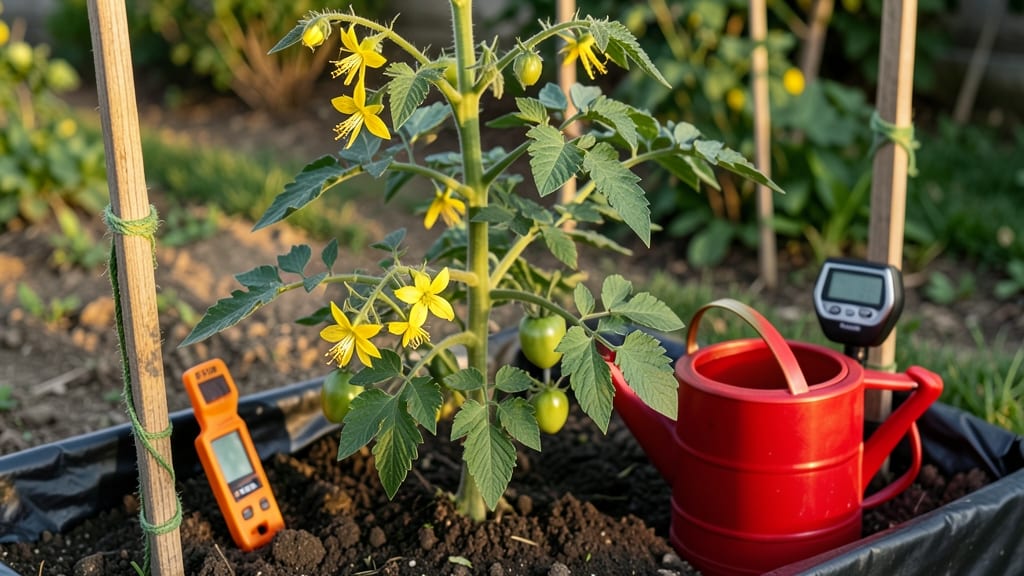
Why is my tomato plant growing but not producing fruit?—frustrating, right? 🌱 The problem isn’t a lack of effort; it’s usually one of five common issues hiding in plain sight, and fixing them means a harvest just around the corner.
Most often, the culprit is too much nitrogen—lush leaves mean the plant is prioritizing growth over fruit. Other times, it’s not enough sunlight (6+ hours of direct sun is non-negotiable), poor pollination (wind or bees aren’t doing their job), or stress from inconsistent watering or pests.
I’ve seen all of these sabotage even the healthiest-looking plants.
You’ll diagnose the issue by checking the plant’s lower leaves (yellow? Overwatered), the flowers (drooping? Needs water), and the stems (tiny bugs? Aphids are stealing nutrients). Once you spot the problem, the fixes are simple: adjust fertilizer, prune for airflow, or hand-pollinate with a paintbrush.
Within 2-3 weeks of correcting the root cause, you’ll see flowers setting fruit. The key is acting fast—tomato plants wait for no one, and neither should you. Let’s turn that leafy mess into a productive vine.
Root Causes Behind Leafy Tomatoes
If your tomato plant is thriving with lush green leaves but stubbornly refuses to produce fruit, the issue likely stems from one (or more) of these key biological and environmental factors.
Understanding why this happens is the first step to fixing it—so let’s break down the science behind the struggle.
Tomatoes are warm-weather plants, and their fruit production is highly sensitive to temperature fluctuations. Here’s how heat (or lack of it) plays a role:
- Cold Stress (Below 55°F/13°C):
- Pollination fails because tomato flowers need warm days (70–90°F/21–32°C) and cool nights (50–70°F/10–21°C) to set fruit.
- Stamen (male parts) shrivel in cold weather, preventing pollen from reaching the pistil (female part).
- Solution: Use a row cover or move potted plants indoors at night if temps dip. Hand-pollinate with a small brush if flowers appear but drop.
- Heat Stress (Above 90°F/32°C):
- Flower abortion occurs—buds form but drop off before fruiting due to extreme heat.
- Pollen becomes sterile at high temps, even if flowers bloom.
- Solution: Provide afternoon shade (e.g., shade cloth) or mulch to keep roots cool. Choose heat-tolerant varieties like ‘Solar Fire’ or ‘Heatmaster.’
Tomato plants need 6–8 hours of direct sunlight daily to produce fruit. If they’re not getting enough light, they prioritize leaf growth over flowering:
- Insufficient Light:
- Photosynthesis slows, so the plant focuses energy on leaves (high in chlorophyll) instead of flowers/fruit.
- Stems grow leggy, and flowers may form but fail to set fruit.
- Solution: Move plants to a sunnier spot or supplement with a grow light (12–16 hrs/day). Prune lower leaves to improve airflow and light penetration.
- Too Much Light (Sunburn Risk):
- While rare, excessive midday sun (especially in hot climates) can stress plants, leading to flower drop.
- Solution: Use light shade cloth (30–50%) during peak hours if leaves show scorch marks.
Water and nutrients directly impact flower and fruit development. Here’s how imbalances derail production:
- Overwatering or Poor Drainage:
- Root rot or waterlogged soil starves roots of oxygen, reducing nutrient uptake (especially calcium and boron).
- Result: Blossom-end rot (black spots on fruit) or no fruit at all due to stress.
- Solution: Ensure pots/containers have drainage holes and water deeply but infrequently (1–1.5 inches per week). Use well-draining soil (mix compost with perlite).
- Underwatering or Drought Stress:
- Plants conserve water by dropping flowers before they mature into fruit.
- Solution: Water at the base (not leaves) during early morning to prevent evaporation. Use mulch to retain moisture.
- Nutrient Deficiencies (Especially Calcium & Boron):
- Calcium deficiency → Blossom-end rot or weak cell walls (fruit may form but drop early).
- Boron deficiency → Poor pollen tube growth, preventing fertilization.
- Solution: Amend soil with crushed eggshells (calcium) or use a balanced fertilizer (10-10-10) at flowering. For boron, try borax (1/4 tsp per gallon of water, applied monthly).
Too much nitrogen (or the wrong fertilizer) can promote leafy growth at the expense of flowers. Here’s how it backfires:
- Excess Nitrogen (N):
- Leaves grow rapidly, but the plant prioritizes foliage over reproductive growth.
- Solution: Switch to a low-nitrogen, high-phosphorus fertilizer (e.g., 5-10-10) when flowers appear. Avoid fresh manure (high in N) during flowering.
- Lack of Phosphorus (P):
- Phosphorus is critical for flower and fruit development. Without it, buds may form but fail to open or set fruit.
- Solution: Use a phosphate-rich fertilizer (like bone meal) or compost tea when plants start flowering.
Tomatoes are self-pollinating but rely on vibrations or wind to transfer pollen. If pollination fails, flowers drop without fruiting:
- Lack of Bees or Wind:
- Indoor plants or those in bee-sparse areas may need manual help.
- Solution: Gently shake plants in the morning (when flowers are open) or use a small paintbrush to transfer pollen from stamen to pistil.
- Poor Flower Health:
- Stressed or diseased flowers (e.g., from fungal infections) may not produce viable pollen.
- Solution: Remove yellowing or wilted flowers and treat plants with neem oil if pests/fungi are present.
Pro Tip: 🔍 Inspect your plant’s flowers—if they’re small, pale, or dropping quickly, the issue is likely environmental (heat, water, or light). If flowers form but no fruit sets, pollination or nutrient issues are the culprits. Act fast, and your tomato plant will shift its energy from leaves to juicy, homegrown fruit!
Quick Fixes for Leafy (But Fruitless) Tomatoes
If your tomato plant is thriving with lush green leaves but leaving you with empty hands, don’t panic! 🌱🍅 The good news is that most issues are fixable with a few targeted tweaks.
Below, we’ve mapped out practical solutions for the most common causes—plus prevention tips to keep your plant productive season after season.
Cause: Tomatoes need warmth to set fruit, but extreme heat or cold stress can halt production. Fix:
- For heat stress (temps above 90°F/32°C):
- Provide afternoon shade with a lightweight row cover or shade cloth (30-50% coverage).
- Mulch heavily with straw or grass clippings to keep roots cool.
- Water deeply in the morning to prevent wilting (aim for 1-2 inches of water per week).
- Pro tip: 💡 Prune lower leaves to improve airflow and reduce heat buildup near the fruit.
- For cold stress (temps below 55°F/13°C):
- Move potted plants to a sheltered spot or bring them indoors overnight if possible.
- Use black plastic mulch to absorb and retain heat in the soil.
- Avoid fertilizing until temperatures rise—cool soil locks up nutrients.
Prevention:
- Plant heat-tolerant varieties like ‘Solar Fire’ or ‘Heatmaster’ if you live in a hot climate.
- Start seeds indoors 6-8 weeks before the last frost to ensure strong, heat-ready plants.
Cause: Irregular watering leads to blossom drop or poor fruit set. Fix:
- Check soil moisture by sticking your finger 1-2 inches deep—water when it’s dry.
- Water consistently at the base of the plant (avoid wetting leaves to prevent disease).
- Use drip irrigation or soaker hoses for steady moisture (early morning is best).
- Avoid overhead sprinklers—they can cause fungal issues and uneven watering.
Prevention:
- Group plants with similar water needs to simplify care.
- Mulch to retain moisture and reduce evaporation (straw or wood chips work well).
Cause: Too much nitrogen = leafy growth, but not enough phosphorus (P) and potassium (K) = no fruit. Fix:
- Stop high-nitrogen fertilizers (like lawn fertilizer) immediately.
- Switch to a balanced or fruit-focused fertilizer (look for labels like 5-10-10 or 3-4-6).
- Add compost or worm castings for organic nutrients—tomatoes love phosphorus for blooms!
- Epsom salt trick: 🍳 Dissolve 1 tablespoon of Epsom salt in a gallon of water and spray foliage weekly for magnesium (helps with blossom set).
Prevention:
- Test your soil before planting (kits are cheap and available at garden centers).
- Side-dress with compost mid-season for a slow-release nutrient boost.
Cause: Tomatoes need 6-8+ hours of direct sunlight daily to produce fruit. Fix:
- Move the plant to a sunnier spot if possible (even a few extra hours helps).
- Prune nearby shade trees/shrubs or remove competing plants.
- Use reflective surfaces (like white mulch or mirrors) to bounce light onto the plant.
- For container growers: Place pots in the sunniest part of your patio and rotate them weekly for even exposure.
Prevention:
- Choose dwarf or bush varieties (like ‘Tiny Tim’) if space is limited—they fruit faster in partial sun.
- Start with strong seedlings from a reputable nursery (weak plants struggle even in good light).
Cause: Tomatoes rely on pollination (wind or bees) to form fruit. Without it, flowers drop off. Fix:
- Hand-pollinate by gently shaking the plant early in the morning when flowers are open.
- Use a small paintbrush to transfer pollen from one flower to another (great for indoor growers).
- Attract pollinators by planting basil, marigolds, or borage nearby.
- Avoid over-fertilizing with nitrogen—it can cause excessive vegetative growth that crowds out flowers.
Prevention:
- Plant flowers alongside tomatoes to lure bees naturally.
- Choose determinate varieties (like ‘Roma’)—they produce fruit in clusters, making hand-pollination easier.
Cause: Crowded roots or transplant shock can divert energy away from fruiting. Fix:
- Check root health: Gently loosen soil around the base—if roots are circling or compacted, it’s time to repot or transplant.
- Transplant carefully: Dig a hole twice as wide as the root ball and mix in compost.
- Avoid disturbing roots when moving plants—water well before and after transplanting.
- For containers: Use large pots (5+ gallons) with drainage holes and fresh potting mix every season.
Prevention:
- Space plants 18-24 inches apart in the garden (or follow variety-specific guidelines).
- Use raised beds for better drainage and root expansion.
Final Thought: 🎯 Most tomato troubles are quick to fix—start with the most likely culprit (heat, water, or nutrients) and adjust one thing at a time. Within 2-4 weeks, you should see flowers converting to fruit! 🍅✨
(Need a deeper dive? Check out our Tomato Growing Guide for variety-specific tips!)
Frequently asked questions
Why do my tomato plant leaves look healthy but no flowers appear?
This usually means your plant is getting too much nitrogen fertilizer, which fuels leaf growth at the expense of flowering. Switch to a balanced fertilizer (like 5-10-10) when you see buds forming, and reduce watering slightly—tomatoes need stress to bloom. Prune some leaves to redirect energy to flower production.
Can I still save my tomato plant if flowers keep dropping before fruiting?
Yes! Flowers drop most often due to temperature stress (below 55°F/13°C or above 90°F/32°C) or inconsistent watering. Move potted plants to a sheltered spot during cold snaps, provide afternoon shade in heatwaves, and water consistently at the base. Hand-pollinate with a paintbrush if bees aren't visiting.
How do I know if my tomato plant needs more sunlight?
Check for these signs: leggy stems, pale yellow leaves, and flowers that form but don't set fruit. Tomatoes need 6-8+ hours of direct sun daily. If your plant is in partial shade, try moving it closer to a south-facing window or use a grow light for 12-16 hours/day if growing indoors.
What should I do if my tomato plant has blossom-end rot?
Blossom-end rot (black spots on fruit) signals a calcium deficiency, often caused by inconsistent watering or poor drainage. Water deeply 1-2 times per week (1-2 inches total), add crushed eggshells to the soil, and use a balanced fertilizer. Mulch heavily to prevent soil moisture fluctuations.
Is it too late to fix my tomato plant if it's already flowering?
Never! Even if flowers are present, you can still improve fruit set. Adjust watering to be consistent, switch to a phosphorus-rich fertilizer (like bone meal), and hand-pollinate daily. With these changes, you'll see fruit develop within 2-3 weeks. Just avoid making multiple changes at once—focus on one fix first.