
Flowers
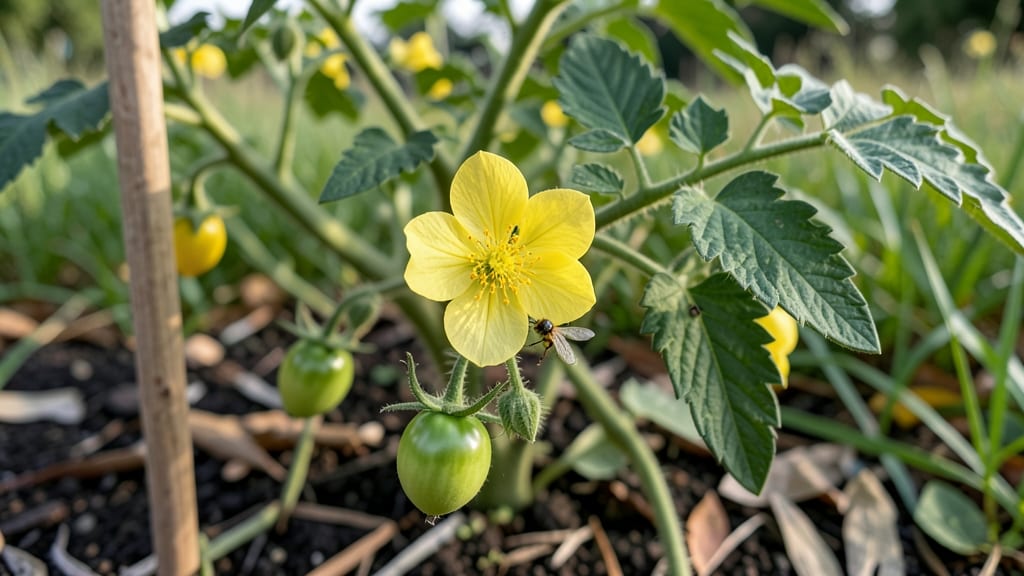
Tomato flowers need to be pollinated to develop fruit, since their male and female reproductive parts require pollen transfer. Without this process, blossoms often drop or fail to grow tomatoes, particularly in enclosed spaces like greenhouses.
This biological process relies on natural helpers like bees or wind, but tomatoes often self-pollinate when shaken gently. 🌱 The key is timing—pollination works best on dry mornings when flowers are open.
Greenhouses frequently need human intervention since controlled environments lack natural pollinators, which is why hand-pollination becomes essential for consistent fruit production.
For gardeners, understanding this process means you can troubleshoot why some flowers drop without setting fruit. The good news? With simple tools like a paintbrush or cotton swab, you can mimic nature's work and boost your harvest significantly.
💡 In This Article
- How Tomato Pollination Works Naturally
- Step-by-Step Guide to Hand-Pollinating Tomato Plants
How tomato pollination works naturally
Tomato flowers have a unique biological structure where the male and female reproductive parts sit close together—this is why they often self-pollinate. The yellow anthers (male parts) produce pollen that needs to transfer to the stigma (female part) at the flower's center.
In nature, bees carry pollen between plants, but tomatoes can also self-pollinate when vibrations from wind or gentle shaking dislodge pollen onto the stigma. This self-pollination capability makes them more resilient than many other crops.
The process becomes more complex when environmental factors interfere. High humidity (above 80%) can prevent pollen from drying properly, making it sticky and less effective at reaching the stigma.
Similarly, temperatures below 55°F or above 90°F can disrupt pollen viability. 🌡️ In greenhouses, where humidity and temperature are controlled but pollinators are absent, flowers often fail to set fruit without intervention.
The pollen grains in tomatoes are also sensitive to moisture—they need to dry slightly after release to adhere properly to the stigma.
What's fascinating is how tomato flowers respond to successful pollination. Within 24-48 hours of effective pollen transfer, you'll notice the flower's petals start to curl and drop while the ovary at the base begins swelling—this is the first sign of fruit development.
Without pollination, the flower may simply wilt and fall off without any fruit formation. This biological response explains why gardeners often see blossoms dropping without explanation, especially in windless conditions or enclosed spaces.
Tomatoes also exhibit a phenomenon called "parthenocarpy" in some varieties, where fruit can develop without pollination. However, these seedless fruits are usually smaller and less flavorful.
Most gardeners rely on natural pollination for optimal yields, which is why understanding the process helps troubleshoot common issues like blossom drop or poor fruit set. The key is creating conditions that mimic nature's pollination triggers—whether through natural helpers or human intervention.
Consider this comparison: outdoor tomato plants in a garden with bees may achieve 80-90% pollination success rate, while greenhouse plants without intervention might see only 10-30% success. This dramatic difference highlights why pollination awareness is crucial for consistent harvests.
The good news is that with simple techniques, you can dramatically improve these odds, even in controlled environments.
For those curious about the mechanics, tomato pollen grains are roughly 0.0004 inches in diameter—tiny enough to require precise conditions for successful transfer. The stigma's surface is sticky and designed to capture these microscopic particles, but only when the pollen is properly released and dry.
This delicate balance between pollen production, release, and capture explains why environmental factors play such a critical role in tomato fruit development.