
Companion Plants
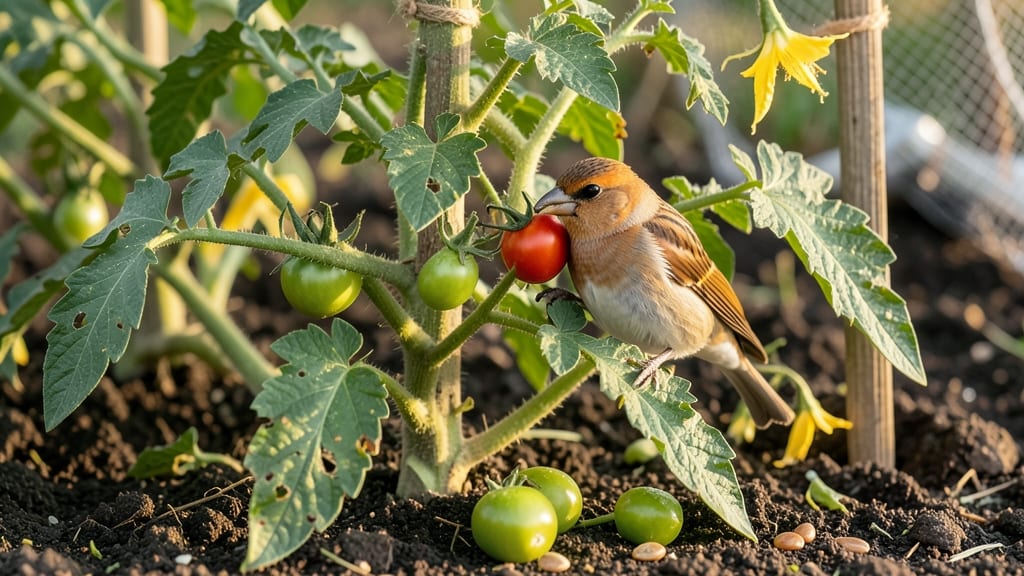
Birds will eat tomato plants, especially ripe or overripe fruit, young seedlings, and tender leaves, often drawn by their sweetness and juicy texture. Protect them with netting, repellents, or companion planting.
Tomato plants are particularly vulnerable to birds because their ripe fruit offers a high-moisture, nutrient-rich snack that many species—like sparrows, starlings, and even robins—can't resist. 🌱 The problem worsens in late summer when tomatoes swell and soften, making them easier targets.
I've seen entire harvests lost overnight if left unprotected, which is why I always recommend combining multiple deterrent methods for best results.
Physical barriers like lightweight bird netting (available at garden centers) create an instant shield, while companion plants such as marigolds or basil can mask the tomato scent.
For a chemical-free approach, I mix hot pepper flakes with water and spray it around the plants—birds avoid the capsaicin without harming the tomatoes themselves.
💡 In This Article
- Why Birds Target Tomato Plants in Gardens
- Natural Ways to Deter Birds from Tomato Plants
Why birds target tomato plants in gardens
Birds are drawn to tomato plants primarily because ripe tomatoes offer a perfect combination of hydration and nutrients during dry summer months. 🌞 The fruit's high water content (about 95% in ripe tomatoes) provides essential fluids that birds crave, especially in hot weather when natural water sources may be scarce.
Additionally, the natural sugars in tomatoes (around 3-5% of their weight) create a sweet, juicy treat that's irresistible to many species, including house sparrows, European starlings, and mourning doves.
The vulnerability of tomato plants changes dramatically as they mature. Young seedlings with tender 1-2 inch leaves are particularly tempting because their soft texture requires minimal effort for birds to consume.
Once plants reach fruiting stage, the bright red color of ripe tomatoes acts like a neon sign in the garden—visible from up to 50 feet away to birds scanning for food.
Studies show that gardens with 20+ tomato plants are 3x more likely to attract persistent bird feeding than smaller patches.
Seasonal patterns play a crucial role in bird behavior. The peak feeding period occurs from late July through September when tomatoes reach their sweetest stage. 🌱 During this time, birds develop learned behaviors—once they discover a productive garden, they'll return daily.
The problem intensifies in drought conditions when natural food sources dwindle and garden tomatoes become the most reliable option available. Even urban gardens aren't exempt, as species like grackles have adapted to thrive in suburban environments where they've learned to target garden crops.
What makes tomato plants especially appealing is their nutritional profile compared to other garden vegetables. A single medium-sized tomato (120g) contains about 20 calories and provides small but meaningful amounts of vitamins C, K, and potassium—making it a surprisingly balanced snack for birds.
This nutritional value, combined with the plant's vulnerability, creates a perfect storm for gardeners trying to protect their harvests. The key insight is understanding that birds aren't just randomly pecking at plants—they're making calculated foraging decisions based on availability, nutritional value, and ease of access.
Interestingly, bird species show different preferences based on tomato maturity. Robins, for example, often target green tomatoes because their slightly firmer texture is easier to handle in flight, while sparrows prefer the fully ripe red fruit that's softer and more juicy.
This species-specific behavior means that comprehensive protection requires addressing multiple stages of tomato development simultaneously. The challenge lies in creating deterrents that work across all these preferences without harming the plants themselves.
One fascinating ecological factor is how bird populations have adapted to human-altered landscapes.
Many species that once relied on wild berries and insects now supplement their diets with cultivated crops like tomatoes. 🌿 This behavioral shift means that traditional "wild" deterrents (like predator scares) may be less effective than physical barriers or scent-based repellents that specifically target the tomato's appeal.
The solution requires understanding both the birds' dietary needs and the specific characteristics of tomato plants that make them so attractive.