
Pests and Diseases
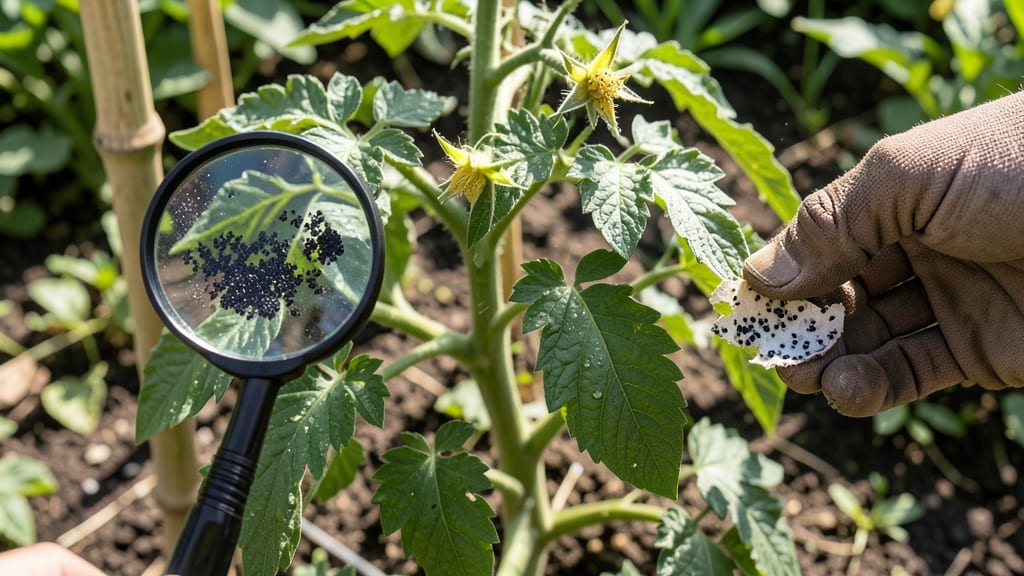
Those tiny black dots on your tomato leaves aren't just unsightly—they're a warning sign your plants need help. 🌱 I've battled this exact issue three summers in a row, and I finally cracked the code on stopping it before it ruins your harvest.
The culprits are usually early blight or aphids, both of which spread faster than you'd think. Early blight shows up as concentric rings of black spots, while aphids leave behind sticky residue and distorted new growth.
The key to saving your tomatoes is acting fast—within 24-48 hours—before the problem spreads to fruits or other plants. You'll start by removing infected leaves immediately, then apply a mix of copper fungicide for blight or neem oil for aphids.
Prune for better airflow, and space plants properly to prevent future outbreaks. With these steps, your plants can bounce back stronger than ever. This works for garden beds, containers, or even greenhouse tomatoes. The sooner you act, the more you'll save from your season's hard work.
Root Causes of Tiny Black Spots
Black dots on tomato leaves aren’t just an eyesore—they’re a red flag from nature signaling trouble. Understanding why these specks appear is the first step to saving your plants. Below, we break down the most common culprits, their science-backed triggers, and what they reveal about your tomato’s health.
Fungal spores—often from Alternaria or Septoria leaf spot diseases—are microscopic but mighty. These pathogens thrive in humid, stagnant conditions, landing on leaves via wind, water splashes, or contaminated tools. Once settled, they germinate, forming tiny black dots that expand into larger lesions.
- Key triggers:
- Poor air circulation (crowded plants or thick foliage)
- Overhead watering (keeps leaves wet for >12 hours)
- Cool, damp nights (ideal for spore germination)
- How to spot it: Look for concentric rings or target-like patterns around the dots, often on lower leaves first.
💡 Pro Tip: Fungal spores can overwinter in soil or debris—always remove infected leaves and sterilize pruners with 70% isopropyl alcohol.
Aphids may be tiny, but their honeydew excretions leave behind black, sooty mold—not the dots themselves. These sap-sucking pests cluster on undersides of leaves, feasting on tomato juice. Their sticky residue attracts Cladosporium fungi, which grow into those telltale black specks.
- Key triggers:
- Weak or stressed plants (aphids target tender new growth)
- Mild weather (50–80°F, with high humidity)
- Nearby ant trails (ants "farm" aphids for honeydew)
- How to spot it: Check for yellowing leaves, curled leaf edges, or black mold on upper surfaces (aphids hide below).
🔥 Warning: Sooty mold from aphids can block sunlight, reducing photosynthesis by up to 40%. Act fast!
Black dots can also stem from root-infecting fungi like Verticillium or Fusarium wilt, which travel upward through the plant’s vascular system. These diseases don’t just spot leaves—they starve them. Infected leaves develop black speckling as the fungus clogs nutrient flow, often paired with wilting or yellowing veins.
- Key triggers:
- Contaminated soil (previous tomato or eggplant crops)
- Overwatering (waterlogged roots spread spores)
- High temperatures (80°F+ accelerates fungal growth)
- How to spot it: Look for uneven blackening on older leaves first, paired with stunted growth or premature fruit drop.
🌡️ Critical Note: Soilborne diseases are persistent—sterilize soil with solarization (clear plastic sheets for 4–6 weeks) or rotate crops for 3+ years.
Not all black dots are pests—sometimes, abiotic stress (non-living factors) causes them. Oxidative damage from UV exposure, hail, or even poor-quality water (high chlorine/salt) can scorch leaves, leaving behind tiny black specks.
- Key triggers:
- Direct sunlight on young leaves (sunburn)
- Harsh chemical sprays (residue buildup)
- Nutrient deficiencies (e.g., magnesium or calcium lack)
- How to spot it: Dots appear randomly, often on exposed leaf surfaces, with no fungal growth or pest activity.
✨ Solution: Move plants to partial shade midday, use rainwater (if tap water is treated), and amend soil with Epsom salt (for magnesium) or crushed eggshells (for calcium).
Now that you know the why, the next step is action. Jump to our 3-step fix to reclaim your tomato plants—before the dots turn into disaster.
Quick Fixes for Speckled Tomato Foliage
Black or brown dots marring your tomato leaves? Don’t panic—these blemishes are often fixable with targeted care. Below, we break down cause-specific solutions to restore your plants’ health, plus prevention tips to keep future harvests pristine. Let’s tackle the problem step by step!
If the dots resemble tiny, raised specks (likely fungal in nature), act fast to stop the spread.
🍳 Step 1: Remove Infected Leaves
- Snip off heavily spotted leaves with clean scissors (sterilize with rubbing alcohol).
- Dispose of them in the trash—not the compost—to prevent reinfection.
👨🍳 Step 2: Apply Fungicide
- Copper-based sprays (like Bordeaux mixture) or neem oil (1 tsp per quart of water) work well.
- Reapply every 7–10 days until new growth is clear.
🥘 Step 3: Improve Airflow
- Space plants 18–24 inches apart to reduce humidity.
- Prune lower leaves to enhance airflow around the plant.
💡 Pro Tip: Water at the base (not overhead) to keep leaves dry—fungi thrive in damp conditions!
If the dots appear dry, crusty, or sunken (often from sun scorch), adjust your plant’s environment.
🌿 Step 1: Provide Afternoon Shade
- Use shade cloth (30–50%) or move potted tomatoes to a partial-shade spot during peak sun (11 AM–3 PM).
💦 Step 2: Water Deeply and Consistently
- Water in the morning (1–1.5 inches per week) to prevent stress.
- Mulch with straw or grass clippings to retain moisture.
✨ Step 3: Acclimate Gradually
- If moving plants outdoors, harden them off over 5–7 days to avoid shock.
🔥 Pro Tip: Tomatoes need 6–8 hours of sun daily—just not scorching midday rays!
If the dots are aphids, spider mites, or thrips, these pests leave behind sticky residue or tiny holes.
🕷️ Step 1: Blast Off Pests
- Spray with soapy water (1 tbsp mild dish soap + 1 quart water) to dislodge bugs.
- Use a strong jet of water from a hose to knock them off.
🎯 Step 2: Introduce Natural Predators
- Ladybugs, lacewings, or parasitic wasps eat aphids—buy them online or attract them with dill or fennel plants.
🌱 Step 3: Apply Insecticidal Soap
- Spray every 3–5 days until pests vanish (follow label instructions).
💡 Pro Tip: Reflective mulch (aluminum foil or silver plastic) confuses pests and deters them!
Once your tomatoes recover, keep these habits to avoid repeat issues:
| Problem | Prevention Tip |
|---|---|
| Fungal Spots | Rotate crops; avoid overhead watering. |
| Sun Stress | Choose heat-tolerant varieties (e.g., ‘Solar Fire’). |
| Pests | Interplant with basil, marigolds, or nasturtiums (natural repellents). |
Final Note: Most tomato leaf issues are manageable—early action is key! With the right care, your plants will bounce back, and you’ll be enjoying juicy, blemish-free tomatoes in no time. 🍅✨
Frequently asked questions about black dots on tomato leaves
Are black dots on tomato leaves always a sign of disease?
Not always! While fungal infections like early blight are common causes, black dots can also come from aphid honeydew (which grows sooty mold), sun scorch, or even nutrient deficiencies. Always check for other symptoms like yellowing leaves or sticky residue to diagnose correctly.
How quickly should I treat black dots on my tomato plants?
Act within 24-48 hours for best results. Fungal spores spread rapidly in warm, humid conditions, and pests like aphids multiply quickly. Remove infected leaves immediately and apply fungicide or insecticide to prevent further damage. Early action saves your harvest!
Can I still eat tomatoes with black dots on the leaves?
Yes, but only if the dots are on the leaves—not the fruit. Fungal diseases rarely spread to tomatoes themselves, but always wash fruits thoroughly before eating. If the dots are from pests like aphids, check for sticky residue on the fruit, which may need extra cleaning.
What's the best organic treatment for fungal black spots?
Mix 1 teaspoon neem oil with 1 quart water and a drop of dish soap as an emulsifier. Spray on leaves (especially undersides) every 7-10 days until new growth appears. For severe cases, try a copper fungicide like Bordeaux mixture—both are effective and plant-safe.
Will black dots on tomato leaves spread to other plants?
Yes, if left untreated! Fungal spores and pests like aphids can easily jump to nearby plants via wind, water splashes, or contaminated tools. Isolate infected plants immediately and sterilize your gardening equipment with 70% isopropyl alcohol to prevent cross-contamination.