
Planting
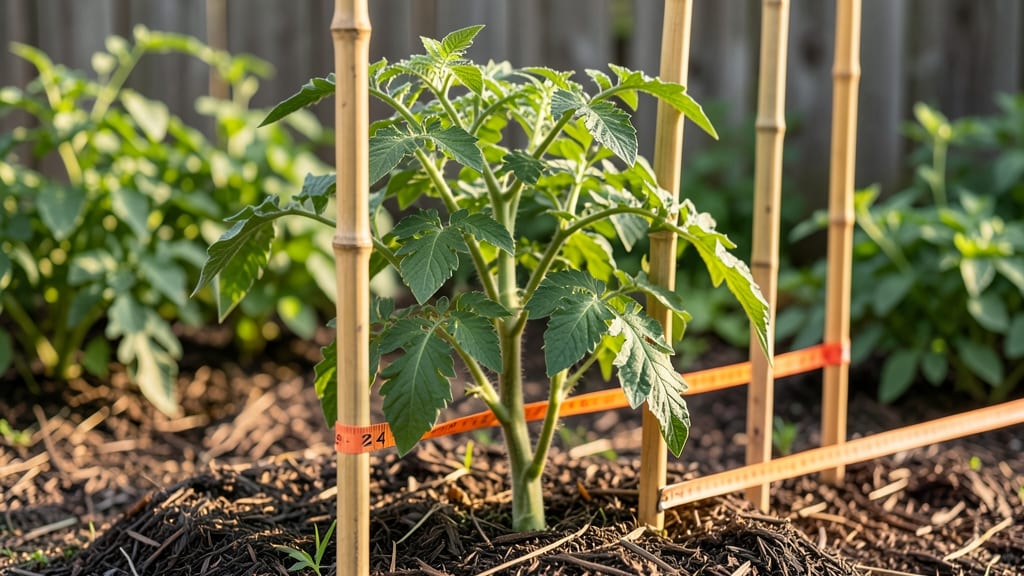
Spacing Cherokee Purple tomatoes correctly is the secret to unlocking their full potential—18 to 24 inches apart in rows 3 feet apart—so they thrive instead of fight for resources.
Picture this: your 🍅 Cherokee Purple plants sprawling into a dense, tangled mess, their leaves brushing against each other, trapping moisture and inviting blight. That’s what happens when spacing is ignored.
But with the right layout, you’re not just preventing problems—you’re setting up a high-yield machine that produces heirloom tomatoes until the first frost.
Why does spacing matter so much? It’s all about airflow, sunlight, and disease prevention. Crowded plants struggle to dry out after rain, leading to fungal issues like early blight. Meanwhile, proper spacing ensures every plant gets its share of sunlight, which means more flowers, more fruit, and fewer stressed vines.
In this guide, I’ll walk you through the exact spacing rules for garden beds, containers, and even vertical growing. You’ll learn how to adjust as your plants grow, spot common mistakes before they ruin your harvest, and keep your Cherokee Purples producing like champs all season.
Optimal Cherokee Purple tomato spacing by growing method (indoor, container, and garden)
The Cherokee Purple tomato thrives when given proper spacing to prevent disease and maximize fruit production. Unlike smaller varieties, these indeterminate plants grow 4-6 feet tall and sprawl widely, requiring careful planning.
Whether you're growing in containers, raised beds, or in-ground gardens, spacing directly impacts airflow, sunlight exposure, and root development. Poor spacing leads to blight, poor pollination, and stunted growth, while optimal spacing ensures robust vines and heavy yields.
For Cherokee Purple tomatoes, the key is balancing proximity for support with enough room for foliage to breathe. In-ground gardens need 18-24 inches between plants with rows spaced 3-4 feet apart, while containers demand even tighter control.
Let’s break down the ideal spacing for each growing method to help you plan your tomato patch for a bumper crop.
In in-ground gardens, spacing Cherokee Purple tomatoes 18-24 inches apart ensures strong airflow and reduces humidity around the foliage, which is critical for preventing fungal diseases like blight. The 3-4 foot row spacing allows you to easily move between plants for pruning and harvesting without disturbing the soil.
Pair this with 5-foot tomato cages or stakes to support the vines as they grow vertically, freeing up ground space for more plants.
For raised beds, slightly tighter spacing of 20-24 inches between plants works because the confined space helps retain moisture and warmth. However, 3 feet between rows is essential to avoid shading. Use trellises or tall cages to guide the vines upward, which also makes harvesting easier.
Raised beds are ideal for small-space gardens and allow you to grow 3-4 plants per 100 square feet without sacrificing yield.
Container gardening with Cherokee Purple tomatoes requires one plant per 5-gallon container to accommodate their sprawling roots and large fruit. The 5-gallon minimum ensures enough soil volume for nutrients and water retention. Place containers in full sun (6+ hours daily) and use sturdy trellises or cages to support the vines.
If you’re growing multiple containers, space them 2 feet apart to allow airflow between plants.
Indoor growers face unique challenges with Cherokee Purple tomatoes due to limited space. If you’re using grow lights, place plants 12-18 inches apart to maximize light exposure.
A single plant in a large container (7+ gallons) is ideal, but if you’re growing two, ensure they’re near a south-facing window or strong LED grow lights. Use small cages or stakes to keep vines upright and prevent sprawling.
Regardless of your growing method, vertical support is non-negotiable for Cherokee Purple tomatoes. Without it, vines sprawl, leading to broken stems, poor airflow, and disease. Install cages, trellises, or stakes at planting time and secure the main stem as it grows.
Prune suckers (shoots in the leaf axils) regularly to direct energy to fruit production rather than excessive foliage.
Proper spacing isn’t just about fitting more plants into your garden—it’s about creating an environment where Cherokee Purple tomatoes thrive. With the right layout, you’ll enjoy larger fruit, healthier plants, and fewer pests, all while making harvesting a breeze.
Start with these guidelines, and you’ll be on your way to a bountiful harvest of smoky, purple tomatoes all season long. 🌱
How to adjust Cherokee Purple tomato spacing for high-yield harvests
The Cherokee Purple tomato thrives when its spacing evolves alongside its growth. What works at planting (18-24 inches apart) may become too tight as vines sprawl 4-6 feet tall.
I’ve learned the hard way—crowded plants lead to blight, poor fruit set, and stunted growth. But with strategic adjustments, you can transform your garden into a high-yield powerhouse.
Start by monitoring your plants’ canopy spread. When leaves begin touching neighbors, it’s time to act. This usually happens 4-6 weeks after transplanting. The key is balancing airflow and sunlight exposure—both critical for preventing disease and maximizing fruit production.
I’ll share my proven techniques for pruning, trellising, and seasonal spacing tweaks that keep Cherokee Purples productive all season.
- 1 Prune suckers aggressively—remove all side shoots below the first flower cluster to redirect energy to fruit production. Use clean, sharp pruning shears to avoid tearing stems.
- 2 Install trellises early—use 6-foot tall stakes or tomato cages to elevate plants. This creates vertical space and improves air circulation at ground level, reducing fungal risks.
- 3 Thin crowded stems—if multiple main stems emerge, prune all but the strongest. This prevents overcrowding and ensures better fruit quality.
- 4 Adjust row spacing mid-season—if plants are competing for light, thin to 36 inches apart in rows spaced 4 feet apart. This works best in raised beds or container setups.
- 5 Harvest early fruit to reduce plant stress and encourage continuous blooming. Remove overripe tomatoes promptly to prevent disease spread and improve airflow.
Don’t overlook seasonal adjustments. In early summer, when growth is rapid, I increase pruning frequency to every 10-14 days. This prevents leaf canopies from merging and keeps sunlight reaching lower leaves.
By late summer, when fruit production peaks, I focus on supporting heavy vines with additional ties to trellises.
For container gardening, use 5-gallon pots with only one plant per container. This mimics in-ground spacing and prevents root competition. If growing in raised beds, space plants 24 inches apart in rows 3 feet apart to allow for easy movement and maintenance.
Proper spacing isn’t just about distance—it’s about creating an ecosystem where your Cherokee Purples can thrive. With these adjustments, you’ll see larger fruit, fewer diseases, and a harvest that lasts well into fall. Happy growing! 🌱