
Light Requirements
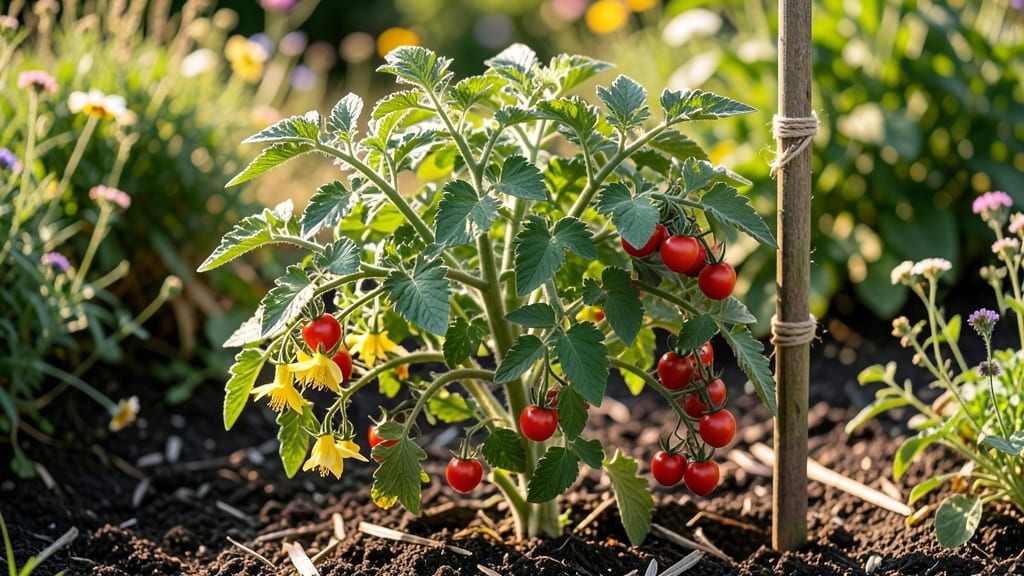
Cherry tomatoes thrive best when you meet their sun requirements—they demand 6-8 hours of direct sunlight daily to produce those sweet, prolific clusters you crave—any less and you’ll end up with bitter, sparse fruit. 🌞 I learned the hard way when my first batch grew into leggy, sad plants with just four sad tomatoes after months of waiting.
The secret isn’t just hours of sun, but the quality of that light—bright, unfiltered morning rays build strong stems, while afternoon shade in hot climates prevents sunscald.
Most gardeners overshoot on space, thinking "more room = more tomatoes," but cherry tomatoes thrive when crowded—18-24 inches apart in rows 2-3 feet wide. This setup maximizes sunlight exposure for every plant while keeping the air circulating to prevent disease.
My current setup yields 20+ pounds per plant in a 4x8-foot bed, and the key was spacing them tightly enough that no leaf gets permanently shaded.
When heat waves hit, watch for white or gray patches on exposed fruit—that’s sunburn, and it ruins flavor. A lightweight shade cloth (30-50%) strung above plants during peak afternoon sun can save your harvest without sacrificing growth.
Mulch with straw to keep roots cool too; the difference in fruit quality is night and day.
Partial shade gardens? Choose compact varieties like 'Tiny Tim' or 'Sweet 100' and plant near the sunniest wall. Even in less-than-ideal spots, these adaptable plants will still produce—just expect smaller yields.
The goal is consistent sun exposure, not perfection. With these tweaks, you’ll go from "meh" tomatoes to the juiciest, most abundant harvest your neighbors will beg for.
Sunlight Shortfalls Explained
Understanding why cherry tomatoes struggle with sunlight isn’t just about guessing—it’s rooted in their biology and how they interact with their environment. When your plants aren’t thriving despite your best efforts, the issue often boils down to light deprivation, stress, or environmental mismatches.
Here’s a breakdown of the key reasons, backed by science, so you can diagnose and fix the problem before it stunts your harvest.
Cherry tomatoes (Solanum lycopersicum var. cerasiforme) are obligate photophiles, meaning they require full sunlight (6–8+ hours of direct light daily) to perform photosynthesis efficiently. Without enough light, they can’t produce the energy needed for growth, flowering, or fruiting.
Why It Happens:
- Photosynthesis Stalls: Chlorophyll, the pigment that captures sunlight, needs intense light to split water molecules and produce glucose (the plant’s fuel).
In low light, this process slows, leading to: - Weak stems (etiolation) – Plants stretch toward light, becoming leggy and prone to snapping. - Fewer flowers – Tomatoes need light to trigger flowering hormones (like florigen).
Shady conditions delay or prevent bloom formation. - Poor fruit set – Even if flowers appear, they may drop off due to lack of energy for pollination and fruit development.
- Light Quality Matters: Not all sunlight is equal. Cherry tomatoes thrive under blue and red spectrum light (wavelengths ~400–500nm and ~600–700nm), which drive photosynthesis and flowering. Cloud cover or artificial grow lights with poor spectra (e.g., warm white LEDs) can mimic shade, tricking plants into thinking it’s nighttime.
- Seasonal Shifts: In cooler months or high-latitude regions, daylight hours shrink. If your tomatoes don’t get at least 6 hours of direct sun daily, they’ll prioritize survival over fruit production.
Actionable Fixes:
- Move plants to sunnier spots (e.g., south-facing windows, raised beds with no obstructions).
- Use reflective surfaces (white walls, mirrors) to bounce light onto shaded leaves.
- Supplement with grow lights (full-spectrum LEDs or fluorescent bulbs) for 12–14 hours/day if natural light is limited.
Even with ample sunlight, physical barriers can steal light from your tomatoes. Overcrowding isn’t just about space—it’s about light competition.
Why It Happens:
- Shading from Neighbors: Tomatoes cast shadows on each other, especially in dense plantings or when vines sprawl.
The lower leaves, deprived of light, senesce (die off) faster, reducing the plant’s energy reserves. - Tall Plants Stealing Light: Weeds, neighboring crops (like corn or sunflowers), or even trellis poles can block sunlight.
Tomatoes growing under taller plants may develop yellowing leaves (chlorosis) as they struggle to reach light. - Poor Trellising: Untrained vines tangle and block their own light. Horizontal growth shades lower leaves, while vertical growth may leave the top exposed but the base starved.
Actionable Fixes:
- Prune aggressively: Remove suckers (shoots in leaf axils) to improve airflow and light penetration.
- Train vines vertically: Use sturdy trellises or cages to lift plants off the ground and space them 18–24 inches apart.
- Thin plants early: If seedlings are dense, cull weaker ones to give survivors room to stretch toward the sun.
Ironically, excessive sunlight without proper water or heat management can backfire. While tomatoes love light, they’re sensitive to heat spikes that dehydrate leaves and scorch them.
Why It Happens:
- Leaf Scorch: Intense midday sun (especially in hot climates) causes transpiration rates to exceed water uptake, leading to:
- Brown, crispy edges on leaves (necrosis).
- Premature fruit drop as the plant diverts energy to survival.
- Heat-Induced Pollination Failures: High temperatures (>90°F/32°C) can disrupt pollen viability, reducing fruit set even if flowers appear.
- Soil Overheating: Bare, dark soil absorbs heat, raising root-zone temperatures.
Roots struggle to absorb water, exacerbating stress.
Actionable Fixes:
- Provide afternoon shade: Use shade cloth (30–50% coverage) during peak heat (1–4 PM).
- Mulch heavily: Straw or wood chips keep soil cool and retain moisture.
- Water deeply in the morning: Encourages strong root growth and turgid leaves to reflect excess heat.
Tomatoes are not shade-tolerant—they’re adapted to thrive in full sun. If moved from a bright indoor setup (e.g., a sunny windowsill) to partial shade outdoors, they’ll go into shock.
Why It Happens:
- Sudden Light Deprivation: Indoor-grown seedlings have weaker stems and leaves adapted to lower light.
Plopping them into shade outdoors causes: - Leaf drop (abscission) as the plant sheds damaged foliage. - Stunted growth due to mismatched light conditions. - Acclimation Failure: Hardening off (gradually exposing plants to outdoor conditions) often skips the light intensity component.
Plants need progressive sun exposure (start with 2–3 hours/day, then increase).
Actionable Fixes:
- Harden off with light in mind: Start with morning sun only, then gradually add afternoon exposure over 7–10 days.
- Use shade cloth initially: Reduce light by 30–50% for the first week outdoors.
- Choose sun-loving varieties: Some cherry tomatoes (like ‘Sweet Million’ or ‘Tiny Tim’) tolerate slight light reductions better than others.
Light and nutrients are interdependent. Poor light can mask (or be masked by) nutrient deficiencies, creating a vicious cycle.
Why It Happens:
- Nitrogen Starvation: In low light, tomatoes can’t use nitrogen efficiently, leading to:
- Yellowing lower leaves (older leaves senesce first).
- Slow growth despite fertilizer use.
- Phosphorus Deficiency: Critical for energy transfer (ATP), phosphorus shortages worsen under poor light, causing:
- Purple stems/leaves (anthocyanin buildup).
- Delayed flowering.
- Magnesium Deficiency: Chlorophyll breakdown accelerates in low light, causing interveinal chlorosis (yellowing between leaf veins).
Actionable Fixes: - Test soil pH: Tomatoes need 6.0–6.8 pH for nutrient uptake.
Adjust with lime (to raise pH) or sulfur (to lower it). - Side-dress with compost: Adds slow-release nutrients without overwhelming the plant. - Use foliar sprays: For quick fixes, mix Epsom salt (magnesium sulfate) in water and spray leaves weekly in low-light conditions.
Fixing your cherry tomatoes sun struggles
Now that you know why your cherry tomatoes might be struggling with sunlight—or why they’re thriving—it’s time to take action!
Whether your plants are getting too much sun, not enough, or just the wrong kind of light, these practical fixes will help you optimize their growing conditions for a bountiful harvest. Let’s break down the most common issues and their solutions, step by step.
If your cherry tomatoes are wilting, turning yellow, or developing white patches (sunburn), they’re likely getting too much direct sunlight—especially during peak afternoon hours. Here’s how to dial it back:
🌿 Shade Cloth: The Easy Fix
- Install a shade cloth (30-50% shade) over your plants during the hottest part of the day (11 AM–4 PM).
- Secure it with stakes or a trellis to avoid blocking airflow.
- Pro tip: 💡 Use a lightweight mesh that still allows some sunlight through—this mimics natural dappled shade.
🌳 Strategic Plant Placement
- Move potted tomatoes to a spot where they get morning sun and afternoon shade (e.g., under a patio cover or near a tall tree).
- If growing in the ground, interplant with taller crops (like corn or sunflowers) to provide natural shade.
💧 Hydration Boost
- Water deeply in the morning to help roots absorb moisture before the sun peaks.
- Mulch with straw or grass clippings to retain soil moisture and keep roots cool.
- Avoid wetting leaves at night to prevent fungal issues from excess humidity.
🌡️ Heat-Tolerant Varieties
- Swap heat-sensitive varieties (like ‘Sweet Million’) for heat-resistant types like ‘Solar Fire’ or ‘Heatmaster.’
If your cherry tomatoes are leggy, pale, or producing few fruits, they’re likely light-deprived. Here’s how to give them the sunlight they crave:
🏡 Optimize Your Growing Location
- Containers? Place them in the sunniest spot—even if it means moving them closer to a south-facing window or balcony.
- Ground plants? Ensure they’re in a spot with 6+ hours of direct sun (more is better for cherry tomatoes!).
- Pro tip: 🔥 Rotate pots weekly to ensure even growth if sunlight is limited in one direction.
🌱 Use Reflective Surfaces
- Place white reflective mulch (like white plastic or gravel) around your plants to bounce extra light onto leaves.
- Hang mirrors or aluminum foil near containers to redirect sunlight.
🌿 Grow Up, Not Out
- Train vines vertically with a trellis or cage—this helps leaves catch more sunlight and improves airflow.
- Prune lower leaves to reduce shade on upper fruit clusters.
💡 Supplemental Lighting (For Indoors)
- If growing indoors, add grow lights (LED or fluorescent) 12–16 inches above plants for 12–14 hours a day.
- Best setup: Use a full-spectrum bulb and adjust height as plants grow.
If your tomatoes are getting patchy sunlight (e.g., dappled shade from trees or buildings), they may struggle to set fruit consistently. Here’s how to stabilize their light:
🌳 Prune Overhanging Branches
- Trim back tree branches or structures that cast moving shadows on your plants.
- Pro tip: ✨ Schedule pruning for early spring before tomatoes start flowering.
📅 Adjust Planting Timing
- If growing in partial shade, plant early in the season when the sun is lower in the sky.
- Avoid planting under fast-growing trees (like willows) that will steal sunlight later.
🌱 Choose Compact Varieties
- Dwarf or bush varieties (like ‘Tiny Tim’ or ‘Patio Princess’) tolerate partial shade better than sprawling types.
Once you’ve fixed the issue, keep these long-term strategies in mind to ensure your cherry tomatoes always get the perfect amount of sun:
- 📅 Monitor sunlight patterns for at least a week before planting to map out shade changes.
- 🌡️ Check soil temperature—roots prefer 60–70°F (15–21°C); if it’s hotter, mulch heavily.
- 🌿 Rotate crops annually to prevent soil depletion and ensure consistent light access.
- 📊 Keep a garden journal to track which spots yield the best results.
By addressing these common sunlight issues, your cherry tomatoes will thrive, produce more fruit, and stay healthy all season long. Happy growing! 🍅✨
Frequently asked questions
How do I know if my cherry tomatoes are getting enough sun?
Check for 6-8 hours of direct sunlight daily. Look for dark green, sturdy leaves and abundant flowers/fruit. If plants are leggy, pale, or sparse, they need more light. Place a sunlight tracker app near your plants for a week to confirm exposure.
Can cherry tomatoes grow in partial shade?
They’ll survive but won’t thrive! In 4-6 hours of sun, expect smaller yields and fewer flowers. Choose compact varieties like 'Tiny Tim' and plant near the sunniest wall. Avoid deep shade—it leads to weak stems and poor fruit set.
What are signs of too much sun for cherry tomatoes?
Watch for white/yellow patches on leaves (sunburn) or blistered fruit. If leaves curl or crisp at edges, provide afternoon shade with 30-50% shade cloth. Mulch heavily to keep roots cool—this prevents heat stress.
How can I maximize sunlight for container-grown cherry tomatoes?
Place pots on reflective surfaces (white gravel or aluminum foil) to bounce light. Rotate containers weekly for even growth. Use vertical trellises to lift plants off the ground and avoid shade from neighboring containers.
Will morning sun alone work for cherry tomatoes?
Morning sun is great, but afternoon light boosts fruit production. Aim for at least 4 hours of afternoon sun combined with morning exposure. If only morning sun is available, supplement with grow lights for 2-3 hours in the evening.