
Size
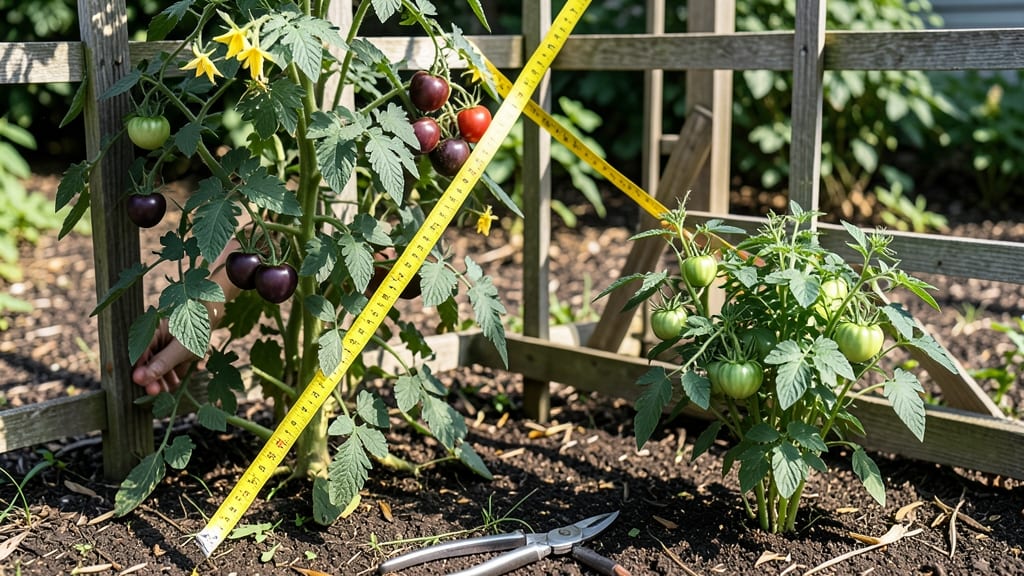
Tomato plants grow from compact bushes to towering vines—here’s how to plan your space. Determinate varieties top out at 3-5 feet and spread wide, while indeterminate types can reach 6-12 feet or more if left unchecked.
The difference isn’t just height—it’s how you’ll support them and where you’ll place them in your garden. Determinate tomatoes (like Roma or Bush Early Girl) stay manageable with 4-foot cages or sturdy stakes, making them perfect for small spaces or containers.
Indeterminate varieties (like Sungold or Brandywine) need 6-foot trellises or strong stakes to handle their weight and keep fruit off the ground. Without support, they’ll sprawl everywhere—literally. You’ll end up with cleaner, healthier plants and easier harvesting when you match the variety to the right support.
A well-trained vine produces more fruit and fewer diseases because airflow improves. Plus, you’ll avoid the heartbreak of broken stems or lost harvests from unmanaged growth. For container gardeners, choose determinate types or dwarf indeterminate varieties like ‘Tiny Tim’—they’ll fit in 5-gallon pots without taking over.
If you’re growing in-ground, leave 18-24 inches between determinate plants and 2-3 feet between indeterminate vines for optimal airflow and sunlight. Space matters just as much as the variety you pick.
📚 In This Guide
- What you need
- Instructions
- Tips and common mistakes
- Wrapping up and next steps
What you need
- ● Tomato Seeds or Seedlings: Choose determinate varieties (e.g., Roma, Bush Early Girl) for compact growth (3–5 ft tall). Opt for indeterminate varieties (e.g., Cherry, Beefsteak) for vining growth (6–12+ ft tall).
- ● Containers or Garden Space: For determinate tomatoes: 12–18" deep pots or garden beds with 18–24" spacing.
- ● For indeterminate tomatoes: 5-gallon+ containers or trellises with 24–36" spacing.
- ● Potting Mix: 5–10 lbs of high-quality, well-draining mix (e.g., Miracle-Gro Moisture Control).
- ● Fertilizer: Balanced 10-10-10 or tomato-specific fertilizer (e.g., Espoma Tomato-Tone).
- ● Stakes or Trellis: For indeterminate tomatoes: 6–8 ft tall bamboo stakes or metal cages.
- ○ For determinate tomatoes: Optional 3–4 ft stakes for support.
- ● Pruning Shears: Sharp, clean shears for trimming suckers and dead leaves.
- ● Mulch: Straw or shredded leaves to retain moisture (2–3 inches thick).
- ● Watering Can or Hose: With a gentle spray nozzle to avoid damaging leaves.
- ● Gloves: For handling plants and soil comfortably.
- ● Plant Tags: To label varieties and track growth.
- ○ Sunlight Meter (Optional): To confirm your plants get 6–8+ hours of sun daily.
- ○ Shade Cloth (Optional): For hot climates to protect plants from scorching.
- ● 🌡️ Temperature: Tomatoes thrive in 70–85°F soil temps. Use a soil thermometer if needed!
- ● ✨ Support Early: Install stakes or trellises before plants get too heavy to handle.
- ● 🔥 Prune Regularly: Pinch off suckers (side shoots) on indeterminate varieties to boost fruit production.
Understanding tomato plant growth: determinate vs indeterminate heights
Tomato plant size isn't just about space—it determines yield, support needs, and even flavor. Here's how to predict growth and plan accordingly.
Identify Your Tomato Variety's Growth Habit
All tomato plants fall into two distinct growth categories: determinate and indeterminate. Determinate varieties grow to a fixed height—typically 3 to 5 feet—before flowering and fruiting. They produce a single, compact harvest all at once, making them ideal for canning or fresh eating in bulk. Look for terms like "bush," "dwarf," or "compact" on seed packets to spot these types.
Indeterminate varieties, on the other hand, keep growing indefinitely until frost kills them, often reaching 6 to 12 feet or more. These plants produce fruit continuously throughout the season, perfect for gardeners who want a steady harvest. Varieties like 'Sungold,' 'Cherokee Purple,' or 'Brandywine' are classic indeterminate types. If your plant continues growing past 5 feet with no signs of stopping, it’s likely indeterminate.
Plan Support Structures Based on Expected Height
Determinate tomatoes, with their 3-5 foot height, often don’t need much support beyond a sturdy cage or small trellis. These varieties are self-supporting once established, but a cage prevents sprawling and makes harvesting easier. I recommend 4-foot cages for most determinate types, as they provide enough room without crowding the plant.
Indeterminate tomatoes, however, demand stronger support to handle their 6-12 foot reach. Use 6-foot cages, tall trellises, or floral wire stakes to keep the plant upright. Without support, the weight of the fruit can break stems, leading to lost harvests. I’ve seen indeterminate plants topple over when left unsupported, so don’t skip this step—it’s critical for both yield and plant health.
Adjust Pruning and Training for Optimal Growth
Determinate tomatoes benefit from minimal pruning—just remove suckers (the small shoots that form in the leaf axils) if they appear. These plants focus their energy on producing fruit quickly, so excessive pruning can delay harvest. Instead, focus on removing lower leaves to improve airflow and reduce disease risk. You’ll know you’re doing it right when the plant looks bushy and the fruit sets near the top.
Indeterminate tomatoes require regular pruning to manage their height and direct energy toward fruit production. Pinch off suckers (the shoots between the main stem and branches) to encourage stronger growth and larger fruit. For these varieties, I recommend pruning every 1-2 weeks during the growing season. Additionally, train the main stem to grow vertically by tying it to the support structure. This prevents sprawling and ensures the plant’s energy goes into producing fruit rather than reaching for light.
Monitor Growth and Adjust Care as Needed
Determinate tomatoes grow quickly and reach their final height within 6-8 weeks after transplanting. Once they stop growing taller, focus on watering consistently and fertilizing lightly to support fruit development. You’ll notice the plant’s leaves start to yellow at the bottom as it shifts energy to flowering and fruiting. This is normal—just remove the yellowed leaves to keep the plant healthy.
Indeterminate tomatoes, however, keep growing until frost. Expect them to add 1-2 feet of height each month under ideal conditions. Watch for new shoots (suckers) and prune them regularly to maintain a strong structure. These plants also need more frequent watering—aim for 1-2 inches of water per week—to prevent blossom-end rot, a common issue in fast-growing indeterminate varieties. If your plant starts to sprawl or fruit sets poorly, it may need more support or adjusted watering.
Harvest Strategically Based on Plant Size
Determinate tomatoes produce fruit all at once, so harvest within 2-3 weeks of the first ripe tomato appearing. This prevents overripe fruit from splitting and ensures the best flavor. For these varieties, I recommend picking every other day during peak harvest to keep up with production. Once the plant stops producing new fruit, it’s done for the season—expect no further harvests.
Indeterminate tomatoes offer a continuous harvest throughout the growing season. Pick fruit every 2-3 days to encourage more production. These plants can keep yielding until frost, so don’t rush the harvest—let tomatoes ripen fully on the vine for the best flavor. If your plant is still growing tall but not producing much fruit, it may need more sunlight or a balanced fertilizer to boost flowering.
Tips & tricks for managing tomato plant heights
Understanding your tomato plants' growth patterns can make all the difference in maximizing your harvest. Here's how to work with their natural tendencies for healthier, more productive plants.
Support System Selection: For determinate varieties that top out at 3 to 5 feet, I've found that 4-foot cages work beautifully—they provide just enough space without crowding the plant. The key is to install them early, as these plants grow quickly and can become top-heavy with fruit. For indeterminate types reaching 6 to 12 feet, I recommend using a combination of 6-foot cages and sturdy bamboo stakes. This hybrid approach gives you the vertical support of a cage while allowing the plant to develop its natural branching pattern. The stakes should be placed at a slight angle for better stability.
Pruning Strategy: Determinate plants need minimal pruning—just remove any suckers that appear in the leaf axils, as these can divert energy from fruit production. The real focus should be on removing lower leaves to improve airflow, which is particularly important during humid weather. For indeterminate varieties, I've learned that pruning every 1-2 weeks is crucial. These plants produce suckers continuously, and allowing them to grow can lead to a tangled mess. Always prune just above a leaf node to encourage new growth in the right direction. This regular maintenance might seem tedious, but it pays off with larger, healthier fruit.
Watering Wisdom: The watering needs differ dramatically between these two types. Determinate plants, which mature quickly within 6-8 weeks, benefit from consistent moisture but don't require the same frequency as their indeterminate counterparts. For these, I recommend watering at the base every other day during dry spells. Indeterminate plants, however, need more frequent attention—aim for 1-2 inches of water per week, delivered directly to the soil rather than the leaves. This helps prevent blossom-end rot, which is particularly common in fast-growing indeterminate varieties. I've seen plants develop this condition when watering practices are inconsistent, so maintaining regular moisture is key.
Harvest Timing: The harvest approach should match your plant type. For determinate varieties, be prepared to harvest within 2-3 weeks of the first ripe tomato appearing, as these plants produce all their fruit at once. I recommend picking every other day during peak harvest to prevent overripe fruit from splitting. With indeterminate plants, you'll enjoy a continuous harvest until frost, so there's no rush. However, I've found that picking every 2-3 days encourages more production, as it signals the plant to keep flowering. The key is to let tomatoes ripen fully on the vine for the best flavor—this is especially important for heirloom varieties.
Pro Tips for How Big Do Tomato Plants Get
- Understanding your tomato plants' growth patterns can make all the difference in maximizing your harvest.
- Support System Selection: For determinate varieties that top out at 3 to 5 feet, I've found that 4-foot cages work beautifully—they provide just enough space without crowding the plant.
- Pruning Strategy: Determinate plants need minimal pruning—just remove any suckers that appear in the leaf axils, as these can divert energy from fruit production.
Frequently asked questions
How tall can indeterminate tomato plants grow?
Indeterminate tomato plants can grow indefinitely with proper care—some even reach 10-15 feet tall (or taller!) if supported with stakes, cages, or trellises. Without support, they’ll sprawl and may flop, reducing fruit production. Prune regularly to encourage vertical growth and focus energy on fruit development.
Do determinate tomato plants stay small?
Determinate tomato plants are compact, typically growing 3-5 feet tall and producing fruit in one flush before dying back. They’re great for containers or small gardens but require less pruning. If they grow taller than expected, it’s usually due to over-fertilization or weak stems—use cages early to prevent sprawling.
How long does it take for tomato plants to reach full size?
Most tomato plants reach 50-75% of their mature height in 4-6 weeks after transplanting, with full size (for determinates) or continued growth (for indeterminates) taking 6-8 weeks. Indeterminates grow throughout the season, so expect steady height gains until frost. Warmth and consistent watering speed up growth!
Can I grow tomato plants in containers if they get this big?
Yes! Indeterminate varieties need 5-gallon+ containers (bigger is better) and sturdy trellises, while determinates thrive in 1-3 gallon pots. Use lightweight potting mix, deep containers (12"+), and fertilize regularly. Dwarf or patio varieties (like ‘Tiny Tim’) are ideal for small spaces—just expect smaller yields.
Why is my tomato plant growing too tall but not producing fruit?
Overly leggy plants with few flowers often suffer from nutrient imbalance (too much nitrogen), poor sunlight, or overcrowding. Fix it by:
- Pruning suckers (side shoots) to redirect energy to fruit.
- Adding phosphorus-rich fertilizer (like 5-10-10) to boost blooms.
- Ensuring 6-8 hours of sun daily and thinning plants for airflow.
Will cold weather stunt my tomato plant’s growth?
Tomatoes hate cold—temperatures below 50°F (10°C) slow growth, and frost kills plants. If nights dip, use row covers or move containers to sheltered spots. Start seeds indoors 6-8 weeks before last frost to give plants a head start. Heat-loving varieties (like ‘Celebrity’) grow faster in warm climates.
Wrapping up and next steps
Now that you know the key differences between indeterminate and determinate tomato plants—and how their heights impact growth, care, and harvest—you’re ready to pick the perfect variety for your garden! 🌱 Whether you’re working with limited space or dreaming of a towering vine, understanding these sizes helps you plan smarter and grow bigger, juicier tomatoes.
Your next step? Sketch a simple garden layout (or use stakes/cages upfront) to match your tomato’s growth habit. Check out our guide on pruning and support to keep your plants thriving—no matter how tall they climb! 🌿